These three platforms come up in nearly every conversation about online learning for kids, but they are built on fundamentally different premises. Outschool is a live instruction marketplace. Khan Academy is a free self-paced academic resource. IXL is an adaptive practice and mastery-tracking tool. Using one as a substitute for another often ends in frustration, because they are designed to do different things.
Here is a direct comparison across the dimensions that matter most to families: instruction format, cost, flexibility, who it works best for, and where each one falls short.
The core difference
The most important distinction is whether a platform involves a live human teacher or not. Outschool does. Khan Academy and IXL do not. That single difference shapes nearly everything else about the experience, including how much the child actually engages, whether they get help when they are stuck, and whether the learning builds a relationship or just logs progress metrics.
Khan Academy and IXL are both strong tools. They are simply not substitutes for a live teacher. Families who switch from one of those platforms to Outschool frequently describe the change in terms of their child's engagement, not just academic results.
Outschool
Best for: families who want a live teacher, small-group social learning, enrichment alongside academics, ESA families, neurodiverse learners
Outschool offers over 140,000 live online classes for kids ages 3 to 18, across every academic subject and hundreds of enrichment topics. Classes are taught in small groups (usually five or fewer kids) or 1-on-1, by vetted teachers who have real parent reviews on their profiles. Every session involves a live person who knows your child's name, can answer questions in real time, and can adjust when the material is not landing.
Outschool is ESA-eligible in most states and works as a primary learning platform for homeschool families or as a supplement for traditional-school families who want enrichment or tutoring support. There is no subscription or curriculum requirement, so families can mix subjects, change teachers, and adjust as their kid's needs change.
- Live instruction across 140,000+ classes in academics and enrichment
- Small class sizes (usually 5 or fewer), strong fit for neurodiverse learners
- Every teacher is vetted; real parent reviews before you book
- ESA-eligible in most states through Odyssey and ClassWallet
- Flexible, no subscription or upfront commitment
Cons: Pay-per-class model; no built-in curriculum sequence to follow; class quality varies by teacher.
Khan Academy
Best for: self-motivated learners who will use it independently, free academic concept review, families supplementing school at no cost
Khan Academy is a nonprofit platform that offers free, self-paced K-12 academic instruction in math, science, ELA, history, and more. The video lessons are well-produced and genuinely useful for explaining concepts. For a family that wants a cost-free academic supplement and has a child who will sit down and use it consistently, Khan Academy is an excellent tool.
The limitation is the self-directed nature of the platform. There is no live teacher, no social element, and no mechanism for a child to get help when stuck beyond watching another video. Parent feedback in homeschool communities is consistent: Khan Academy works for motivated, self-directed learners and tends to fade out for everyone else.
- Completely free, no subscription
- Strong K-12 academic content, well-organized by subject and grade
- Self-paced, no pressure or deadlines
- No ads, no in-app purchases
Cons: No live instruction; requires the child to independently maintain their own learning routine; no social element; struggles as a primary program for kids who need accountability.
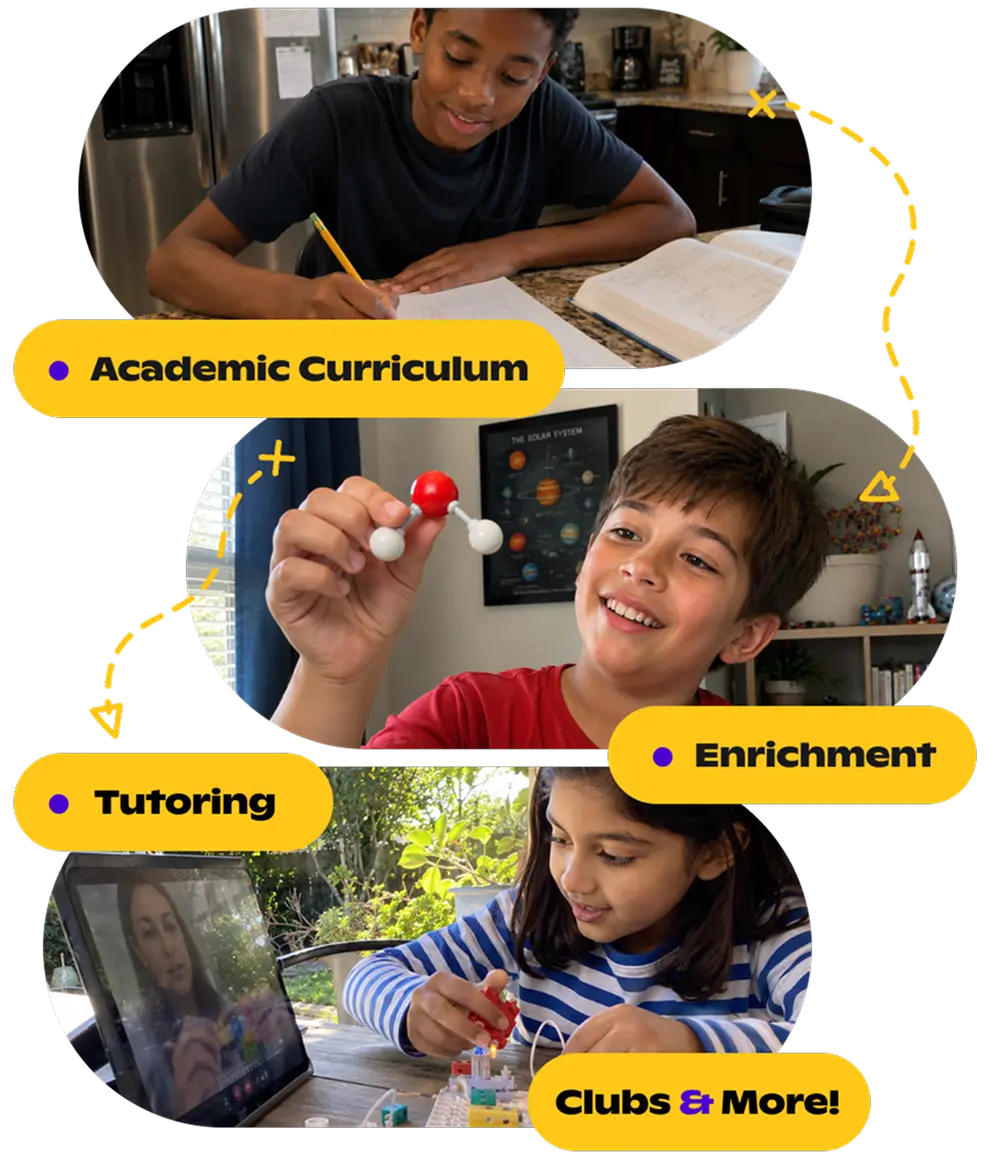
$20 off your first class WITH promo code: blog
Build the Education your Kid Deserves
Discover thousands of live classes taught by expert teachers, across academics and enrichment.
Browse classesIXL
Best for: tracking school-aligned mastery, identifying specific skill gaps, standards-based practice data
IXL covers math, ELA, science, and social studies across K-12, aligned to state standards. Its SmartScore system tracks mastery at the individual skill level and adjusts difficulty in real time, giving parents granular visibility into exactly where their child stands relative to grade-level expectations.
IXL's biggest trade-off is its impact on anxious learners. The SmartScore decreases when a child answers incorrectly, which can trigger avoidance and frustration in kids who already struggle. A widely shared Facebook thread, "Does IXL cause anxiety and depression in special needs kids?", drew thousands of responses from parents describing that exact pattern. For on-track learners who respond well to structured data and clear progress metrics, IXL is a strong supplement. For kids who are already behind or anxious about a subject, the pressure of a decreasing score often makes things worse.
- Detailed standards-aligned skill tracking across K-12
- Adaptive difficulty; adjusts in real time based on performance
- Good parent dashboard with subject-level reporting
Cons: SmartScore penalizes wrong answers; no live instruction; subscription cost adds up; not a standalone program.
Which one is right for your family?
- Your kid is falling behind and needs real help — Outschool. A live teacher who can identify the exact gap and explain it a different way is not something an adaptive algorithm replaces.
- You need a free academic supplement for a motivated learner — Khan Academy covers every K-12 subject at no cost and works for kids who will use it consistently on their own.
- You want visibility into where your kid stands relative to grade level — IXL gives the most granular standards-aligned tracking, as long as your kid responds well to that kind of structured feedback.
- Your kid needs live instruction but also loves independent exploration — Outschool for live sessions, Khan Academy for self-paced follow-up. Many families use both.
- Your kid already struggles and is anxious about a subject — Outschool or Khan Academy. IXL's SmartScore adds pressure that tends to make avoidance worse for struggling learners.
If you want to see what live, teacher-led instruction looks like in practice, browse classes on Outschool and compare for yourself.



.svg)
.svg)