Why the screen time conversation needs to change
For most of the past decade, the public conversation about screen time and children has centered on one number: daily hours. The American Academy of Pediatrics issued hour-based limits, parents counted minutes, and studies tracked total usage. The research that has accumulated since then tells a more complicated story, one that makes the daily-hour framework mostly inadequate for the question parents are actually trying to answer. [1]
The question parents need answered is not how much time their child spends on screens. It is what that time involves, and what it displaces.
What the research actually shows
A large-scale 2025 study published in JAMA Network Open examined the relationship between screen time and standardized academic test scores in children. The study found a statistically significant negative association between recreational screen time and academic performance, but the effect size was smaller than most media coverage suggested, and it varied substantially based on the type of content involved. [1]
A 2024 review from the European NESET expert network found that screen time's impact on academic success is largely indirect, mediated by factors like cognitive control, attention regulation, and emotion dysregulation, rather than through direct displacement of study time. In plain terms: it is not that screen time steals homework hours. It is that certain types of screen use affect the cognitive systems children need for learning. [2]
The distinction that runs through almost all current research is between passive and interactive screen use.
Passive vs. interactive: the distinction that matters most
Passive screen use, scrolling social media, watching short-form videos, playing repetitive mobile games, is the type most consistently associated with attention fragmentation, sleep disruption, and lower academic outcomes. The mechanism researchers point to is not the content itself but the delivery: fast cuts, unpredictable reward schedules, and continuous novelty that train attention toward rapid shifts rather than sustained focus.
Interactive and educational screen use, coding, live online classes, structured video learning, building games that require planning, shows a much more mixed picture in the research. Several studies find educational screen time has neutral or mildly positive effects on academic outcomes when the content is well-structured and age-appropriate. [1]
This matters practically because two children each spending three hours on screens are having very different experiences if one is on social media and the other is in a live online class. Treating those identically as "three hours of screen time" obscures more than it reveals.
The sleep displacement finding
The most consistent finding across the screen time research literature is not about academic outcomes directly. It is about sleep. Screen use in the hour before bed, particularly content that is emotionally stimulating or involves blue light exposure, is strongly and repeatedly associated with delayed sleep onset and shorter total sleep time in children. [2]
The academic impact of sleep loss is well-established and large: even moderate sleep deprivation impairs memory consolidation, attention, and executive function, all of which directly affect learning. Researchers increasingly argue that the academic harms associated with screen time are primarily sleep-mediated rather than direct, which reframes the intervention entirely. The most evidence-based action is not limiting total daily screen time. It is protecting the 60 to 90 minutes before bed from all screen use. [2]
Age matters: different effects at different developmental stages
Under 5
For children under five, the research is most consistent: high-quality video content with a co-viewing adult produces better outcomes than unsupervised passive viewing, and total screen time above 2 hours daily is associated with language and social development delays in this group. The younger the child, the more the content and context matter.
Ages 6 to 11
For school-age children, recreational social media and fast-paced entertainment content are the types most linked to attention difficulties and academic performance variation. Educational and interactive content shows minimal negative associations. Sleep displacement from evening screen use is a significant risk at this age.
Ages 12 to 17
For adolescents, the picture is more nuanced. Social comparison effects from social media are the primary concern for emotional regulation and mental health. The relationship between screen time and academic performance in this group is heavily moderated by sleep quality and content type.
$20 off your first class WITH promo code: blog
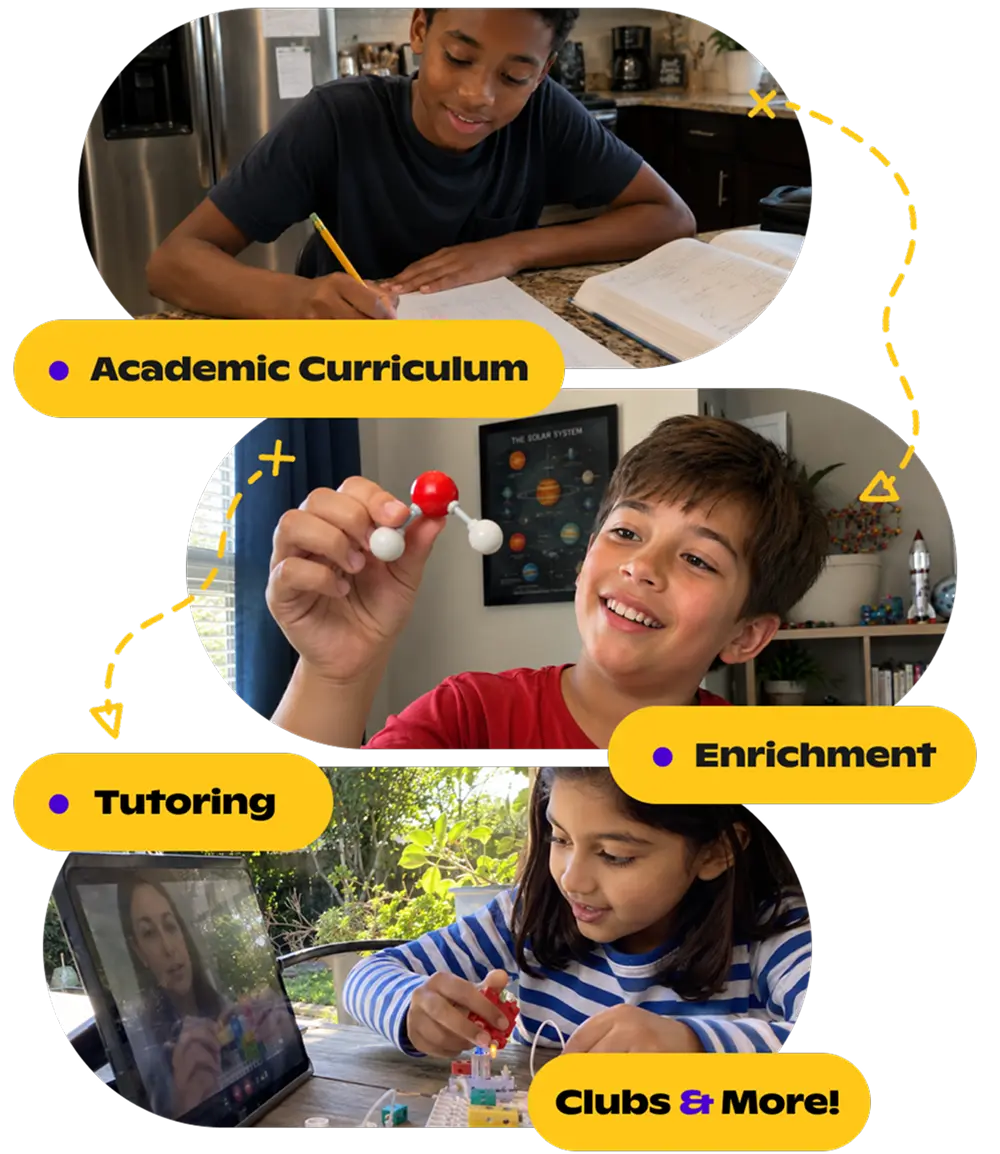
Build the Education your Kid Deserves
Discover thousands of live classes taught by expert teachers, across academics and enrichment.
Browse classesWhat does not appear in the research
A few findings worth noting for parents who have read fear-based coverage:
- There is no clean "screens cause lower grades" relationship. The effects are real but indirect, moderated by content, context, and what screen time displaces.
- Digital natives are not cognitively damaged by technology. The research does not support claims that children who grow up with technology have meaningfully shorter attention spans across the board. Attention is context-dependent, and children who play immersive games or take extended online classes routinely demonstrate sustained focus for those activities.
- Educational apps and live online learning are not equivalent to passive entertainment. The research treats them differently, and parents should too.
What actually moves the needle: practical guidance
Based on the current evidence, the most effective changes families can make are not about hitting a daily-hour target. They are about content, timing, and displacement.
- Protect the hour before bed. This is the single most evidence-backed action. Screens off 60 to 90 minutes before sleep protects the cognitive systems children need for learning the next day.
- Distinguish between screen types. Passive social scrolling and live interactive learning are not equivalent. Build your household framework around what the screen use involves, not just how long it lasts.
- Watch for displacement of physical activity, face-to-face play, and sleep. These are the pathways through which heavy screen use harms development and learning outcomes. If those are intact, total screen time is a less precise predictor of outcomes.
- Co-view or co-play with younger children. The research consistently shows that adult involvement in children's screen time, even brief discussion afterward, significantly improves learning outcomes from educational content.
Interactive learning vs. passive entertainment
One practical application of the research: live, interactive online classes are a categorically different type of screen use from passive video watching. They require sustained attention, social engagement, and active participation from the child, all features that distinguish educational from entertainment screen use in the literature.
If your child is spending two hours in live online classes and one hour watching short-form videos, the research would not suggest treating those three hours equivalently. The relevant question is whether the interactive learning time is producing outcomes you value and whether the passive entertainment time is displacing sleep or physical activity.
For more on building learning habits at home, our life skills guide covers skills by age group that interact with screen habits. Our guide on AI tools for kids covers how to evaluate new digital learning tools thoughtfully.
Frequently asked questions
Should I track my child's screen time in hours?
Tracking total hours gives you a starting point but not the full picture. More useful questions: What is the content? Does it displace sleep, physical activity, or face-to-face time? Is your child able to transition off screens without significant distress? Those questions are better predictors of outcomes than a daily hour count.
My child learns best through video. Is that a problem?
No, and the research does not suggest it. Video-based learning can be highly effective, especially when the learner is actively engaged (pausing, taking notes, replaying sections) rather than watching passively. The format itself is not the variable. Engagement and content quality are.
How do I know if my child's screen use is affecting their learning?
Look for the displacement signs: Is their sleep suffering? Are they less willing to engage with activities that require sustained effort? Do they have difficulty transitioning between activities? Those are more reliable signals than total screen hours.
Sources
- JAMA Network Open. (2025, October). Screen time and standardized academic achievement tests in children. jamanetwork.com/journals/jamanetworkopen/fullarticle/2839927
- NESET Expert Network. (2024). Screen time and educational outcomes of children and adolescents. European Commission Expert Network on Economics of Education.