What summer learning loss actually is
You've probably heard the term. Summer learning loss — sometimes called the "summer slide" — refers to the academic regression that can happen when kids go months without structured learning. Three large assessment studies tracking hundreds of thousands of U.S. students — using the MAP Growth, i-Ready, and ECLS-K assessments — found that test scores consistently flatten or drop during the summer months, with math showing more consistent declines than reading.
The effect isn't uniform. Kids in under-resourced homes have historically been assumed to experience greater losses, partly because they have less access to books, programs, and enrichment during the break. But recent NWEA research published through Brookings complicates that picture: MAP Growth data shows summer test score drops are not reliably concentrated among students in high-poverty schools — the classic finding that summers widen the income gap doesn't hold up in modern data.
You've probably seen it yourself without needing the research summary. The kid who was reading chapter books in May is suddenly back to simpler texts in August. The multiplication facts that were solid in June are fuzzy by September. That's the slide in action.
How much loss are we actually talking about?
Studies vary — and that variability is itself part of the story. A 2023 peer-reviewed study in Sociological Science by Workman, von Hippel, and Merry reviewed 100 years of summer learning research and found that most findings "did not generalize beyond a single test." Summer losses looked substantial on some assessments and negligible on others, even when studying the same students. Researcher Paul von Hippel, who has studied this question for two decades, put it plainly: "The problem could be serious, or it could be trivial. Children might lose a third of a year's learning over summer vacation, or they might tread water."
What the more reliable recent data does show: math slides are more consistent and measurable than reading slides, likely because kids encounter written language informally all summer in ways they don't encounter fractions. NWEA's analysis across multiple recent studies found that across grades 3–8, average math scores drop during the summer on every major assessment — the magnitude just varies by test.
It's worth putting this in perspective: these are averages, and your kid isn't an average. Research from NWEA found that just over half of students had test score drops during the summer, while the other half held steady or actually made gains. The data is useful context, not a verdict on what's going to happen to your specific child.
What actually prevents summer learning loss
Reading consistently. Even 20 minutes a day of reading — whatever the kid actually wants to read — meaningfully reduces reading loss. A meta-analysis of summer reading interventions spanning kindergarten through eighth grade found that reading programs, including home-based ones, produce meaningful literacy gains. The genre doesn't matter nearly as much as the habit. A kid reading graphic novels is doing more for their literacy than a kid who isn't reading at all.
Keeping math skills active. Formal practice isn't required, but some engagement helps. Math summer camps that run a few hours per week can maintain skills without the grind of daily worksheets. Board games, cooking measurements, and logic puzzles all count, too.
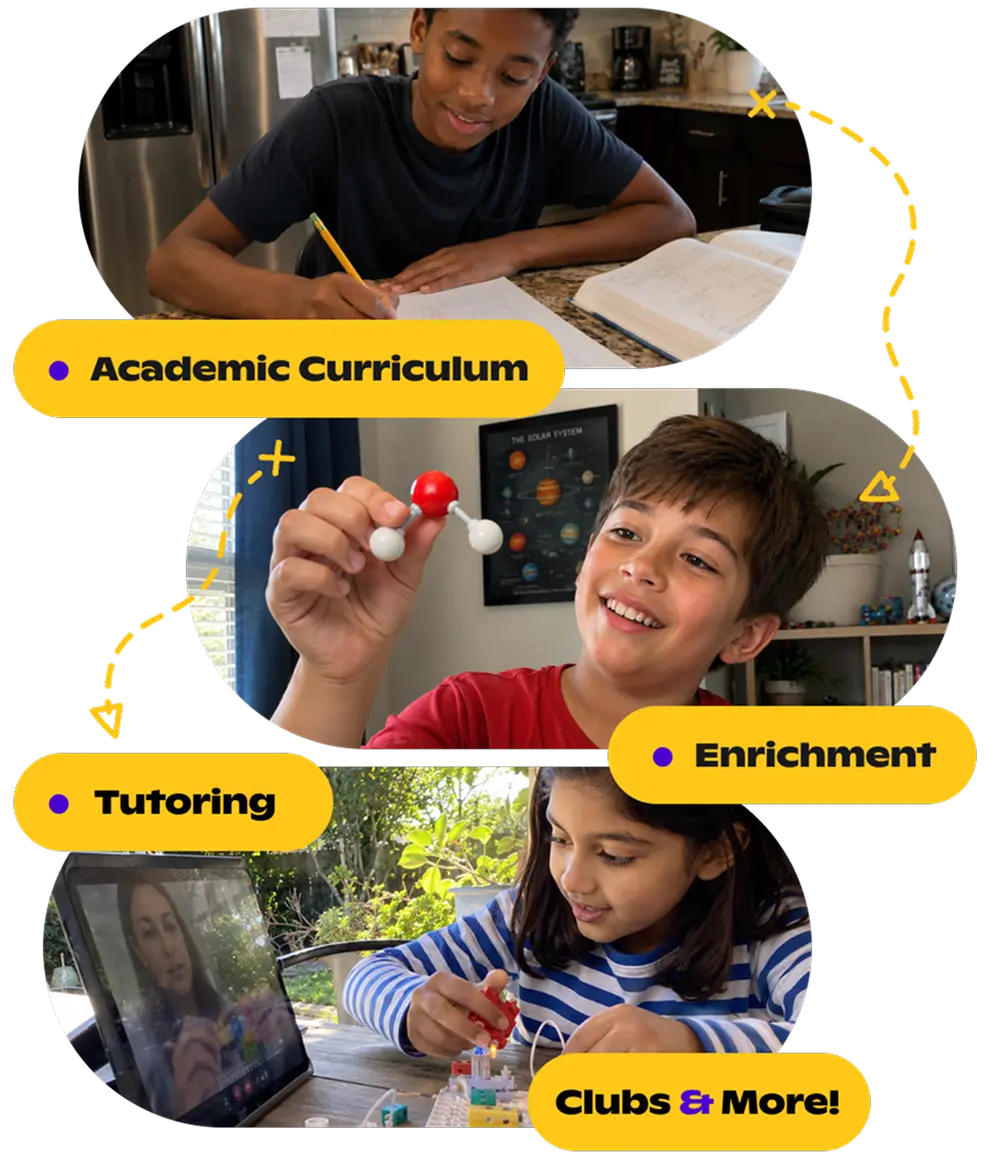
$20 off your first class WITH promo code: blog
Build the Education your Kid Deserves
Discover thousands of live classes taught by expert teachers, across academics and enrichment.
Browse classesEnrichment programs tied to real interests. Kids who spend summer in structured programs — camps, classes, clubs — show smaller losses across the board. The key word is "structured," not "academic." A kid who spends three hours a week in a coding camp or an art class is engaging the same cognitive skills that support school performance. NWEA research found that for summer programs to produce measurable academic benefits, they should run at least five weeks with at least three hours of instruction per day — a bar that well-structured online programs can meet without the commute.
A consistent daily rhythm. Full-time summer chaos doesn't have to be replaced with a school schedule, but some predictable structure in the day keeps kids in a learning mindset. A loose morning routine is usually enough.
What doesn't work
Workbooks that sit on the counter. Curriculum your kid didn't choose. Telling a 10-year-old they have to do 30 minutes of math every day before screens. These approaches work in a small number of households and backfire in most.
The approach that actually works looks a lot more like: find something your kid wants to do, find a class or program around it, and let the learning be a byproduct of engagement rather than the point of a daily chore.
Building a summer that actually prevents the slide
You don't need a formal curriculum or a rigid schedule. You need a handful of anchors: a few regular reading times, a class or two your kid is excited about, and enough downtime that summer still feels like summer.
Reading summer camps and summer academic practice classes are good starting points for families who want to keep skills sharp without turning June through August into an extension of the school year. Keep the list short, pick things your kid actually wants, and let the structure do its work quietly.
Browse online summer camps by subject and age to find the right fit for your kid this summer.


.svg)
.svg)