Understanding South Carolina's ESTF for families schooling at home
South Carolina's official ESA program, the Education Scholarship Trust Fund (ESTF), awards $7,634 per student for the 2026-27 school year (up from $7,500 in 2025-26) to help families build an unbundled education experience at home. This scholarship program gives families the flexibility to invest in individual learning resources like classes, curriculum, tutoring, and educational services, so they can design a personalized school-at-home path that isn't confined to a one-size-fits-all model.
2026-27 application status: The ESTF program has reached its maximum capacity of 15,000 awarded students for 2026-27 and is no longer accepting new applications for the current school year. Families can register for the 2026-27 waitlist to receive updates on the 2027-28 application window. For currently awarded students, the first quarterly scholarship payment will be released to ClassWallet accounts in late July 2026.
Rules and regulations for families using the ESTF program to school at home
Here are the specific requirements families choosing to school at home must understand to participate in this program:
- Enrollment Status: To be eligible for ESTF funds, students must not be enrolled in a public school during the scholarship year. This includes traditional public schools and charter schools. Additionally, students cannot be enrolled under South Carolina's traditional homeschooling options (Options 1, 2, or 3) as outlined in state law under Sections 59-65-40, 59-65-45, or 59-65-47 of the South Carolina Code.
- Income Eligibility: Household income must not exceed 500% of the federal poverty guidelines. For a family of four, the 500% FPL threshold is $160,750. Priority in application windows is given to families at or below 300% FPL.
- Instructional Requirements: Parents must agree to provide academic instruction in the core subjects: English/language arts (including writing), mathematics, science, and social studies. Instruction can be delivered through various approved education service providers or curricula.
- Use of Funds: ESTF funds can be used for:
- Tuition and fees for approved education service providers
- Textbooks, curriculum, and instructional materials
- Tutoring services approved by the South Carolina Department of Education
- Computer hardware and technological devices used primarily for educational needs
- Online courses from approved providers
- Fees for standardized tests, AP exams, and college entrance exams
- Educational therapies from licensed practitioners
- Contracted services from public school districts, including individual classes and extracurricular activities
- Transportation fees to and from eligible providers (up to $3,000 per year)
View the ESTF program participant handbook for more specifics.
- Fund Management: All ESTF funds are managed through ClassWallet, a platform contracted by the South Carolina Department of Education. Parents must use ClassWallet to make purchases and payments to approved providers.
- Assessment Requirements: Students receiving ESTF funds are required to participate in assessments as referenced in Section 59-8-150 of the South Carolina Code. If the student does not receive full-time instruction from an education service provider, parents must ensure assessments are administered in a similar manner through other means.
- Annual Agreement: Parents must sign an annual agreement with the South Carolina Department of Education, affirming their commitment to comply with all program requirements, including instructional obligations, assessment participation, agreement not to homeschool under options 1, 2, or 3, and appropriate use of funds.
Choosing an unbundled, school-at-home pathway with ESTF in South Carolina
When families use South Carolina's ESTF program to educate at home, they are participating in an unbundled education model, but it is important to understand how this differs from traditional homeschooling.
Families receiving ESTF funds cannot register under South Carolina's homeschool Options 1, 2, or 3. Those pathways operate under separate legal structures and are not compatible with ESA participation.
Instead, ESTF families build a school-at-home experience within the program's specific framework. Here's what that means:
- You are creating a home-based, unbundled education plan rather than enrolling in a single school.
- You are not legally registered as a homeschooler under traditional state homeschool statutes.
- You must provide instruction in English/language arts, math, science, and social studies.
- All educational services and materials must be purchased through ClassWallet from approved vendors.
- You must submit annual documentation of your learner's academic progress. For most students, this is standardized testing. For kindergarten through second grade students and those with documented disabilities that speak to testing exemption, alternative documentation such as portfolio work must be submitted.
This structure ensures accountability while still allowing families the flexibility to assemble a personalized education from approved providers.
Designing your unbundled education plan with ESTF
Unbundled education allows you to think differently about how learning happens. Instead of asking, "Which school should we choose?" families can ask, "Which combination of resources will help my child thrive?"
With ESTF funds, you can:
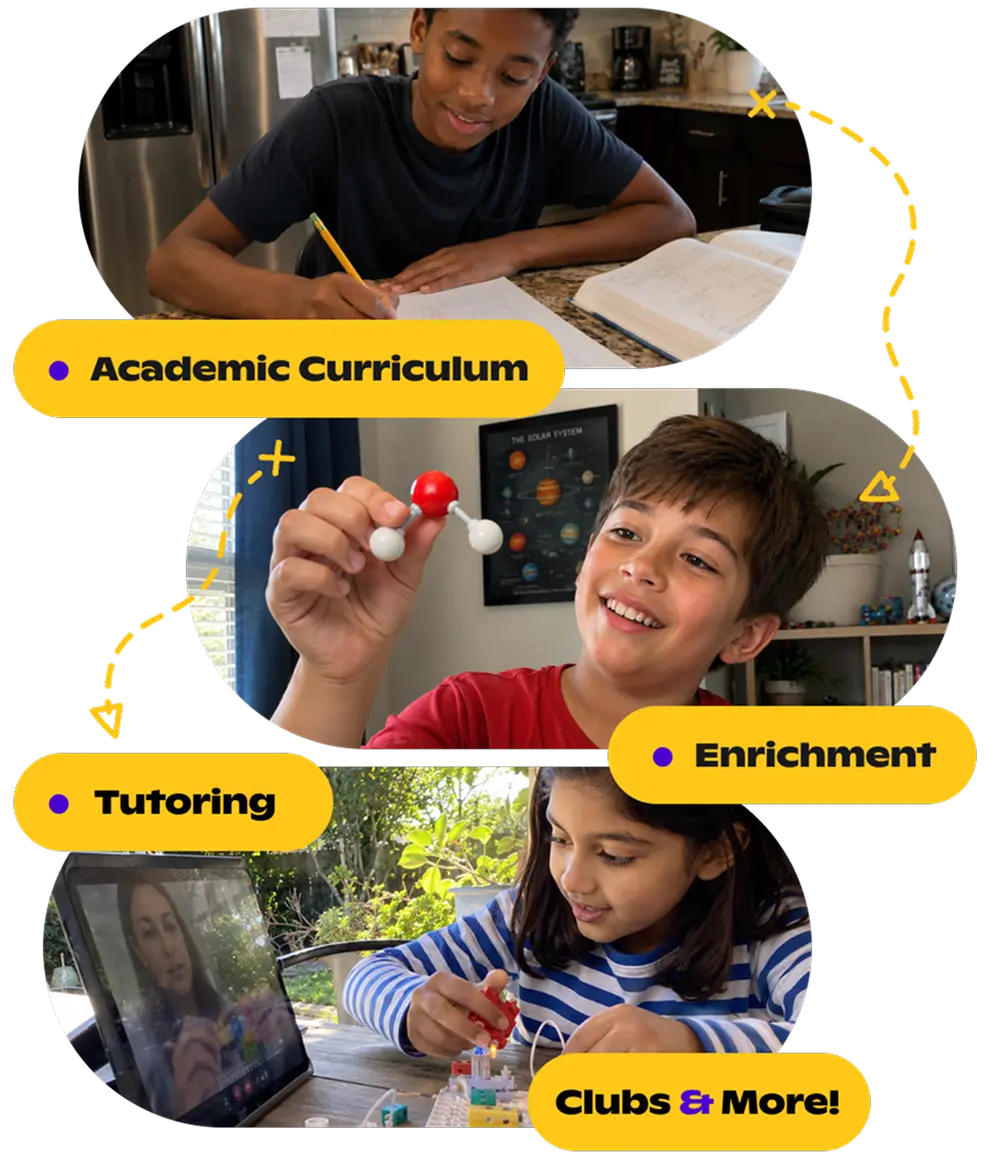
- Pair a structured core curriculum with live online classes
- Add tutoring for targeted support in specific subjects
- Incorporate hands-on kits, enrichment workshops, and creative electives
- Adjust your mix of providers as your learner grows
When building your plan, consider:
- Learning style: Does your learner respond best to discussion-based classes, independent study, visual instruction, or tactile projects?
- Level of structure: Do you want a comprehensive academic backbone with enrichment layered on top, or a modular, mix-and-match approach across subjects?
- Assessment plan: How will you monitor progress through built-in assessments, standardized testing, project-based work, or outside evaluations?
Reminder: ESTF participation requires following program rules. Families cannot combine ESA funds with traditional homeschool registration or public school enrollment during the same year. By staying within ESTF guidelines, you can design a cohesive, intentional school-at-home model that reflects your learner's goals.
How to use and maximize ESA funds for unbundled education at home
ESA funding gives families purchasing power. Thoughtful planning helps ensure those funds create a balanced and sustainable educational experience.
How to get started
Apply through the official ESTF program. Submit your application with required documentation, including proof of residency, income, and guardianship. Note: applications for 2026-27 are closed. Join the waitlist to be notified when the 2027-28 window opens.
Activate your ClassWallet account after approval. Once approved, you'll receive a Welcome Email from ClassWallet with next steps. For the 2026-27 school year, the first quarterly payment will be released to your ClassWallet account in late July 2026.
Map out your unbundled plan. Outline core subjects first, then layer in enrichment, tutoring, or supplemental programs that align with your learner's interests.
Purchase through approved providers. Use ClassWallet to browse and pay for eligible services, including live online classes such as those offered through Outschool.
Staying organized in an unbundled model
An unbundled, school-at-home approach offers flexibility, but coordination matters.
- Define clear academic and enrichment goals before spending.
- Review the approved expense list carefully.
- Monitor your ClassWallet balance regularly.
- Reevaluate mid-year and adjust your provider mix as needed.
- Connect with other ESTF families to exchange ideas and best practices.
Intentional planning turns separate educational pieces into a cohesive whole.
Frequently asked questions (FAQs)
Who is eligible for ESTF funds? Eligible families include South Carolina residents whose child is in kindergarten through twelfth grade, is not attending their zoned public school, and whose household income does not exceed 500% of the federal poverty guidelines.
Are 2026-27 ESTF applications still open? No. The program reached its cap of 15,000 awarded students and closed applications for 2026-27. Families can register for the waitlist to receive updates on the 2027-28 application cycle.
Is unbundled education the same as homeschooling? While both may involve learning at home, ESTF families do not register under South Carolina's traditional homeschool laws. ESA participation is governed by a separate legal framework with its own requirements.
What kinds of providers can we combine? Families can select from approved education service providers, curriculum vendors, tutors, online course platforms, therapists, and more, creating a customized combination that fulfills core subject requirements and enrichment goals.
How is spending tracked? All purchases are made through ClassWallet, which automatically records and tracks transactions. Families can view balances and spending history at any time.
Can ESA funds support specialized learning needs? Yes. Approved tutoring, licensed therapies, adaptive tools, and specialized instruction may qualify, allowing families to build a plan that reflects their learner's unique strengths and challenges.
When do funds become available? For the 2026-27 school year, awarded students will receive their first quarterly payment in their ClassWallet account in late July 2026.
Empowering your unbundled education journey
South Carolina's ESTF program awards $7,634 per eligible learner for 2026-27 to help families intentionally design education. If you missed the 2026-27 application window, registering for the waitlist now puts you first in line for 2027-28 updates.
Unbundled education shifts the model from selecting a single school to assembling a personalized learning ecosystem. Each chosen class, curriculum, or service becomes part of a larger, thoughtfully designed whole.
Explore ESA-eligible classes on Outschool and discover how unbundled education can help you create a flexible, engaging school-at-home experience tailored to your learner.



.svg)
.svg)