The 6-line definition
An education savings account (ESA) is a state-funded account that deposits public dollars into a family's account so they can spend it on approved educational expenses instead of attending a traditional public school. ESAs are not the same as a Coverdell ESA (a federal tax-advantaged savings vehicle) or a 529 plan. State ESAs are direct government funding. Families apply through their state's program, receive funds (typically $5,000 to $10,500 per year), and spend them through a state-approved marketplace or reimbursement system on things like online classes, tutoring, curriculum, and assessments. As of 2026-27, 18 states have active ESA or ESA-like programs, with more legislation pending. Starting January 1, 2027, a new Federal Scholarship Tax Credit (FSTC) will give dollar-for-dollar tax credits to donors who contribute to scholarship granting organizations (SGOs) across 31 opted-in states. The FSTC is a donor tax credit, not a direct family benefit, but it will expand the pool of scholarship money available to K-12 families with household income at or below 300% of their area gross median income.
At a glance
- What it is: A state-funded account that redirects public education dollars to your family for K-12 use
- How many states: 31 states now have some form of ESA or school choice program
- Award range: $2,000 to $40,000+, depending on state and student need
- Who qualifies: In 18+ states, nearly every K-12 family is eligible regardless of income
- How Outschool fits: Approved provider in most active state ESA programs via ClassWallet, Odyssey, or direct reimbursement
An education savings account, the state-funded kind, is one of the most practical tools available to homeschool and alternative-education families right now. More than 31 states have some form of school choice program, and in at least 18 of them, virtually every K-12 family qualifies. If you haven't looked at what your state offers recently, the landscape has changed fast.
This guide covers how state ESA programs work, what changed for the 2026-27 school year, how they differ from 529 plans and Coverdell accounts, and how to use your funds for live online classes through Outschool.
How a state ESA works
A state ESA redirects a portion of the public education funding that would have been allocated to your child's assigned school into a family-managed account. Once approved, you use those funds for qualifying educational expenses, which typically include:
- Private or microschool tuition
- One-on-one and small group tutoring
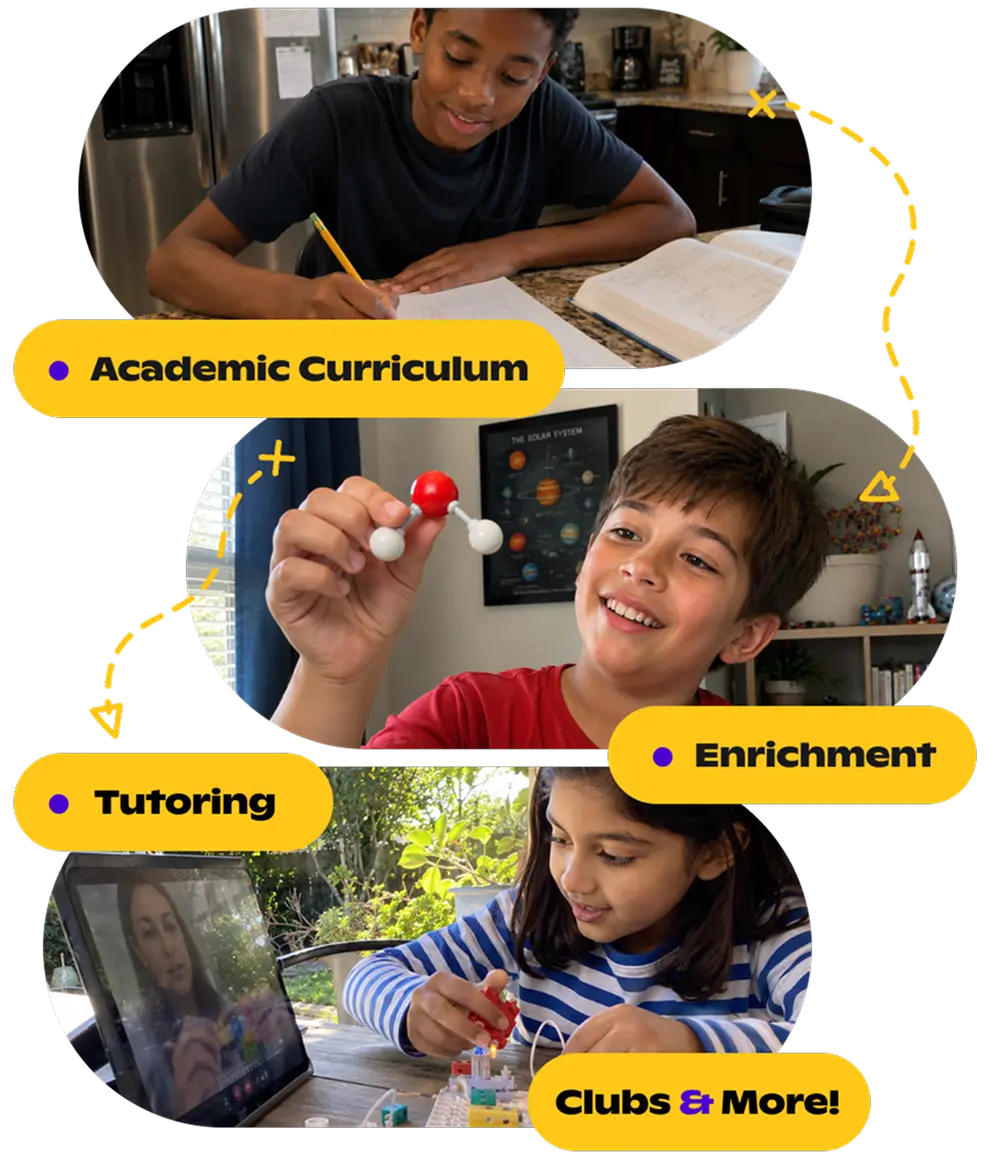
- Live online classes (including Outschool)
- Curriculum and educational materials
- Therapy and specialized learning services
- Enrichment activities and extracurricular programs
Funds are usually disbursed through an approved digital wallet or via direct reimbursement. The three most common platforms:
- ClassWallet: Used by Arizona, Alabama (CHOOSE Act), Idaho, and others. Families shop directly from approved providers, no upfront payment required.
- Odyssey: Used by Texas (TEFA), Utah (Fits All), and Louisiana (GATOR). Same concept: browse, select, and pay from your account balance.
- Direct reimbursement: Used by Mississippi, Montana, and others. Families pay upfront and submit receipts within the state's required window.
Outschool is an approved provider across all three models.
Important: two very different things share this name
Before going further, it's worth separating two programs that use the same acronym.
State ESA programs are government-funded accounts that redirect public education dollars to your family for K-12 use. The state contributes the funds. You don't.
Coverdell Education Savings Accounts are privately funded savings accounts defined by federal tax law, where you contribute up to $2,000 per year toward education costs with tax-deferred growth. You fund these yourself.
These are completely different programs that happen to share an acronym. This guide covers state ESA programs. For the private savings comparison, see our guide to ESA vs. 529 plans.
Which states have ESA programs in 2026-27?
31 states now have some form of ESA or private school choice program. The 18 states with near-universal eligibility (open to most or all K-12 families regardless of income) include:
- Alabama (CHOOSE Act)
- Arizona (Empowerment Scholarship)
- Arkansas (Education Freedom Account)
- Florida (FES-EO, FES-UA, PEP)
- Georgia (Promise Scholarship)
- Indiana
- Iowa
- Louisiana (GATOR)
- New Hampshire (Education Freedom Account)
- North Carolina (ESA+)
- South Carolina (Education Scholarship Trust Fund)
- Tennessee (Education Freedom Scholarship, select counties)
- Texas (TEFA)
- Utah (Fits All)
- West Virginia (Hope Scholarship)
- Wyoming
Award amounts range from $2,000 (Texas homeschool) to $40,000+ (Arizona, students with disabilities), with most states falling between $5,000 and $10,000. For a full breakdown of funding amounts, eligibility, and how to apply in your state, see our ESA state-by-state guide.
What changed for the 2026-27 school year
Several major updates hit between spring and summer 2026:
Texas TEFA funds went live July 1. Homeschool and other families who confirmed enrollment by June 15 received their full $2,000. Private school families received their first 25% installment. Nearly 100,000 students are now funded through one of the largest school choice programs in U.S. history. The next application cycle for 2027-28 opens in early 2027; an interest list is open now at educationfreedom.texas.gov.
Alabama's CHOOSE Act launched July 1. The program awards $7,000-$7,500 per student via ClassWallet. Outschool is listed as an approved Education Service Provider under "Online Education Classes/Courses." See our Alabama CHOOSE Act guide.
West Virginia expanded eligibility. The prior public school attendance requirement was eliminated for 2026-27. The Hope Scholarship is now open to all WV K-12 residents, including families already homeschooling or attending private school. The 75% funding window is open through September 15, 2026. See our West Virginia ESA guide.
Florida expanded FES-EO and PEP eligibility to all K-12 students regardless of income. PEP is now open to new students for 2026-27 with a capacity of 140,000. See our Florida scholarship guide.
The Federal Scholarship Tax Credit (FSTC) takes effect January 1, 2027. This incentivizes donors to fund Scholarship Granting Organizations (SGOs), which then distribute scholarships to qualifying K-12 families. 31 states have opted in. See our FSTC guide.
$20 off your first class WITH promo code: blog
Build the Education your Kid Deserves
Discover thousands of live classes taught by expert teachers, across academics and enrichment.
Browse classesWho is eligible and how to apply
Eligibility rules vary by state. Some programs are universal; others limit access to students with special needs, families below income thresholds, or students who previously attended public schools. The general application process looks like this:
- Visit your state's official ESA program website
- Submit required documentation: proof of residency, income verification (if applicable), and any academic records required
- Complete the application and wait for approval notification
- Set up your approved digital wallet (ClassWallet, Odyssey, or state-specific platform) or review the reimbursement process
- Begin using funds for qualifying expenses once the account is funded
Processing timelines vary by state and program cycle. Some states fund accounts at the start of the school year; others operate on quarterly or semester disbursement schedules. Check your state's program website for specific timelines before planning purchases.
For state-by-state application details, browse our ESA application guide.
How to use ESA funds for Outschool
Outschool is an approved provider in most active state ESA programs. The process depends on which platform your state uses:
ClassWallet states (Arizona, Alabama, Idaho, others): Pay for Outschool classes directly through ClassWallet using your ESA balance. No upfront payment required.
Odyssey states (Texas, Utah, Louisiana): Browse and purchase Outschool classes through the Odyssey marketplace. Funds are deducted from your account balance at checkout.
Direct reimbursement states (Mississippi, Montana, others): Pay for Outschool classes upfront, keep your receipt, and submit to your state's reimbursement process within the required window.
For state-by-state details, browse what expenses are covered in each state's program.
OpenEd and Learning Passport programs
Beyond state ESAs, families in 15 states can access Outschool classes through OpenEd's Learning Passport program, which provides up to $2,000 annually in education credits. OpenEd works alongside state ESA funds, not as a replacement. If your state doesn't have an ESA program yet, or if you've already used your ESA balance, OpenEd may be another path to funded classes.
ESA vs. 529 vs. Coverdell: what's the difference?
These three programs get conflated constantly, but they serve different purposes. For a detailed breakdown, see our full ESA vs. 529 comparison. Here's the short version:
State ESAs are funded by your state government, not by you. They're designed for K-12 flexibility right now, and award amounts are set by the state program. You don't contribute; you apply and receive.
529 plans are privately funded college savings accounts with tax-advantaged growth. Recent rule changes expanded 529s to cover many K-12 homeschool expenses, but the money comes from your own contributions, not from the state.
Coverdell ESAs are privately funded with broad K-12 and college use, but limited to $2,000 per year in contributions. Useful as a supplemental tool; not a substitute for a state ESA.
Many families use a combination of all three. A state ESA covers current-year homeschool expenses; a 529 builds toward future post-secondary costs.
Frequently asked questions about ESA programs
Can I use ESA funds for Outschool if my state isn't listed?
Outschool is approved in most active state ESA programs, but the list expands as new programs launch and update their vendor registries. Check your state's approved expenses list directly, or contact Outschool's ESA support team to confirm current eligibility.
What happens to unused ESA funds at the end of the year?
This varies by state. Some programs (including Texas TEFA) allow funds to roll over year to year. Others require funds to be spent within the program year or returned. Check your state's program rules during the application process. Spending timelines are one of the most commonly missed details.
Are ESA funds taxable?
State ESA funds used for qualifying educational expenses are generally not treated as taxable income. If funds are used for non-qualifying expenses, they may be subject to repayment and penalties depending on your state's rules. Consult a tax professional familiar with your state's program. See also: Education Savings Accounts: tax deductible or not?
Can I combine ESA funds with a homeschool tax credit?
In most states, yes. They're separate programs and can be used together. An ESA covers direct educational purchases throughout the year; a state tax credit reduces your tax liability at filing. Check your state's specific rules to confirm there are no double-dipping restrictions.
What's the difference between a state ESA and the new Federal Scholarship Tax Credit?
A state ESA gives funds directly to your family. The Federal Scholarship Tax Credit (FSTC), which takes effect January 1, 2027, incentivizes donors to fund Scholarship Granting Organizations (SGOs). Those SGOs then distribute scholarships to qualifying K-12 families. It's an indirect benefit that expands the overall funding pool rather than a direct deposit into your account.
Can I use ESA funds over the summer?
In most states, yes. ESA funds are typically available year-round for qualifying educational expenses, which includes summer tutoring, enrichment classes, and academic programs. See our guide: How to use your ESA funds this summer.
Ready to put your ESA funds to work? Browse ESA-eligible classes on Outschool across every subject, with live classes taught by real teachers, flexible scheduling, and no long-term commitment required.
Sources
[1] Texas Comptroller of Public Accounts. Texas Education Freedom Account (TEFA). educationfreedom.texas.gov.
[2] Arizona Department of Education. Empowerment Scholarship Accounts. azed.gov/esa.
[3] Alabama Department of Revenue. CHOOSE Act. revenue.alabama.gov/individual-corporate/choose-act.
[4] West Virginia Department of Education. Hope Scholarship. wvde.us/hope-scholarship.



.svg)
.svg)