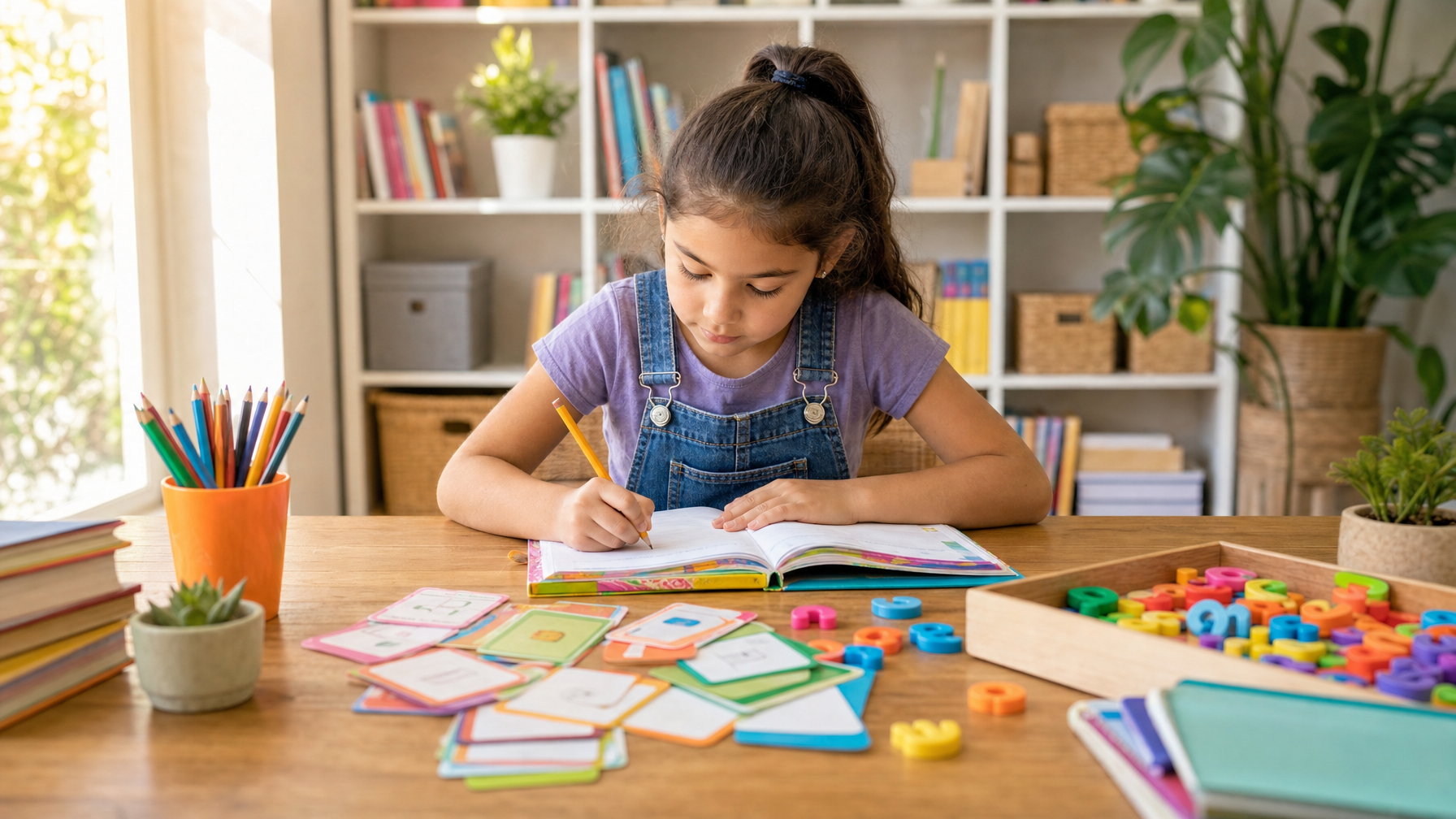
For many homeschooling parents, the search for a 6th grade history curriculum can be frustrating because, unlike math or reading, there’s no single list of information every 6th grader must learn. Instead, students are expected to develop and utilize skills to better understand the world around them. This means that whether your student is studying Ancient Mesopotamia or the American Revolution, the learning goal is about the process of inquiry: learning how to ask big questions, evaluate whether a source is reliable, and build an argument based on evidence.
This year, you may want to teach your student how to "think like a historian," which is a skill that will serve them far longer than memorizing a list of facts. In this guide, we will walk through common curriculum options, how learning at home compares to a classroom, and how to create a routine that builds both historical knowledge and analytical skills.
What is a History Curriculum for Homeschool 6th Graders?
In 6th grade history class, learners usually begin organizing the past into a clear timeline. Most programs follow one of three common pathways: a survey of ancient civilizations, a broad overview of world history, or early US history with connections to geography. The specific content matters less than the skills being developed. Students are learning to place events in order, understand cause and effect, compare cultures, and support ideas with evidence.
The main challenge at this level is organization. In a subject as vast as history, it can be helpful to have a structure for notes, timelines, and discussion. Keeping a simple history notebook with maps, vocabulary, short written responses, and project work provides both a learning tool and documentation.
Learning 6th grade history at home vs. in a school environment
In a traditional classroom, history is often taught through a textbook with limited time for discussion or projects. Sometimes, teachers move students through the eras too quickly for some students. The teacher may move on before students fully grasp how events evolved and affected the world. At home, you can slow down, build a visual timeline, and revisit maps and regions as new topics are introduced. That repetition helps learners see patterns rather than memorize facts.
Another advantage is the ability to integrate geography and civics naturally. When studying a civilization, you can locate it on a map, discuss how geography influenced development, and connect past events to present-day ideas.
Homeschooling allows you to teach these skills in a more connected way. A timeline can grow across the year, maps can be revisited as new regions are studied, and primary sources can be discussed slowly rather than rushed. This approach aligns with the C3 Framework of the National Council for the Social Studies, which emphasizes inquiry, chronology, and evidence-based thinking as core goals of middle school history.
This focus on connection is actually a major advantage for homeschoolers. You can choose the historical topics that spark your child's curiosity. Instead of worrying if your child has memorized every pharaoh of the Middle Kingdom, you can focus on whether they can compare two different accounts of a battle or explain how a river's geography shaped a city’s economy.
Topics Taught in 6th Grade Homeschool History
Sixth grade history usually blends content knowledge with skill-building. Rather than treating each element as a separate subject, many homeschool families combine them into integrated activities. Below are the history topics that are typically taught in 6th grade.
Ancient civilizations and geography
Students study early communities such as Mesopotamia, Egypt, Greece, Rome, India, and China, and locate each region on a map. They examine how access to water, trade routes, and terrain influenced where they decided to settle and develop. At home, this often looks like adding each civilization to a growing wall timeline so learners can see where and when they existed, as well as compare trade routes and track patterns.
Chronological thinking
Learners organize events in order and begin to notice overlap between cultures. A simple, hands-on approach is to add illustrated timeline entries each week with a date, location, and one key contribution. One idea is to color code the different regions to help students visualize what was occurring around the world at the same time.
Essential social studies
According to the National Council for Social Studies (NCSS), beyond specific dates, 6th graders are expected to master skills such as:
- Geography: Using physical and political maps to understand how civilizations were affected by physical geography. Students might compare how the mountains protected Greece, while the rivers supported Mesopotamia.
- Civics and government: Comparing power structures and their impact. Students can role play debates in order to examine different systems and their effects on their communities. For example, democracy in Athens versus the Roman Republic.
- Economics: Understanding basic trade, barter systems and how early currencies developed. A practical activity could be simulating a trade using goods from different regions.
- Historical analysis: Learning to differentiate between primary and secondary sources and asking basic questions, such as who created the document and why. This could include analyzing passages from ancient laws or historical images.
Historical writing
Learners are expected to write evidence-based paragraphs, summaries, and comparisons, and begin simple research. Timeline captions, map explanations, and occasional perspective writing can help build both historical thinking and writing skills while creating a clear record of learning. A student could write diary entries from the perspective of a historical figure, this both strengthens writing and provides a clear record of learning.
Main Types of 6th Grade Homeschool History Curricula
Homeschool history programs vary widely in format and teaching philosophy. The best choice is one that provides structure while still allowing time for discussion and projects.
- World survey programs: These follow a timeline from ancient civilizations to the present and help students see how events connect across regions. In a homeschool setting, this often includes building a year-long timeline and revisiting it each week.
- Thematic or region-based programs: These focus deeply on one culture at a time, such as Egypt or Greece, before moving to the next. This approach can allow for longer projects, map work, and primary source analysis without feeling rushed.
- Literature-based programs: These use historical fiction and nonfiction texts as the core of instruction. Reading about daily life and personal experiences helps students understand historical context and often leads to stronger written responses.
- Online or video-based programs: Online programs can provide live lectures, discussions, and historical recreations. Many families use these for content instruction and for additional small-group learning.
- Inquiry-based programs: These programs organize learning around questions such as how geography shapes civilizations or how governments develop. Students complete research, presentations, and hands-on projects instead of relying mainly on worksheets.
Elements to Look for in a 6th Grade Homeschool History Curriculum
When choosing a history program for sixth grade, it helps to focus on a few features that support both understanding and organization.
Primary source integration
A historical image, letter, or artifact can serve as the center of a lesson in which your learner observes details, asks questions, and draws conclusions. The Stanford History Education Group has shown that analyzing primary sources helps students develop critical thinking and understand that history is constructed from evidence, not just a single narrative.
Geographical context
A quality 6th grade program should constantly tie events back to the "where." Students should understand that the reason civilizations developed the way they did was, in large part, due to their location. For example, use a Smithsonian Learning Lab map to see how the Himalayan Mountains protected Ancient India or how the Nile River's flooding patterns created a unique Egyptian calendar.
Timeline support
A strong sixth grade history program should help learners see how events connect across time, not just in isolation. Building and revisiting a visual timeline allows students to place civilizations, inventions, and major events in relation to one another. This helps answer questions like “What was happening at the same time?” and “Which came first and why does it matter?”
Active inquiry
A strong 6th grade history curriculum should require students to do something with the information. For example, you could have your child pretend they are a detective, solving a case from the past. This can improve retention and make the subject feel more alive and engaged.
How to Plan a 6th Grade Homeschool History Curriculum
Planning 6th grade history at home works best when you have a few simple anchors that can turn the year into an ongoing project.
Step one: Create a history wall
Designate a hallway or a large whiteboard as your living timeline. As your student completes a unit or discovers a fascinating artifact, have them print a picture or write a brief caption to pin to the wall. By the end of 6th grade, they will have a massive, visual representation of how different civilizations existed simultaneously, helping them understand global connection.
Step two: Decide on a weekly rhythm
Consistency is key for middle schoolers. You could start your week with a hook that will pull your child into the exciting world of history. A video, or online class, may be next to spark debate or discussion. The end of the week may be set aside for independent “detective” work, which is simply research, presented in a fun way. Whatever you choose for your weekly rhythm, make sure your child is moving, interacting, and involved in the world of history.
Step three: Layer in primary resources
Once you have your weekly topic, look for a primary resource to include in your learning. Similar to a puzzle piece from that era. If you are studying early American government, don't just read about the Constitution; look at a high-resolution scan of a letter George Washington wrote about it.
This step fulfills national standards by teaching students to distinguish between primary sources (eyewitness accounts) and secondary sources (textbooks), a critical skill for 6th grade literacy.
Step four: Define the “output”
Determine how your student will prove they’ve mastered the material. In 6th grade, you can focus on projects like recording a podcast episode about a historical event or building a scale model of an ancient monument.
You could collect these projects into a digital or physical portfolio. Instead of a test grade, your student will have a collection of work that demonstrates their ability to research and communicate historical ideas with confidence.
Check the homeschool laws in your state for any specific documentation requirements that should be added to your portfolio.
Daily or Weekly Routines for 6th Grade Homeschool History
Most families spend about 30 to 45 minutes three to four days per week, with each day focusing on a different type of activity.
A successful 6th grade schedule can treat each week like a historical investigation. You might begin the week with a short video to set the stage and identify a few questions. Then on Tuesday, your student may attend an Outschool online class, which serves as the week's anchor. Here, they can engage with a teacher and peers, taking notes and participating in debates that strengthen communication skills.
The second half of the week shifts the focus toward critical thinking and creative expression. On Wednesday, your child puts on their "detective hat" to analyze a primary source, for example, a 200-year-old map. They find evidence for a specific claim. Thursday may be dedicated to exploration, where your child can navigate a text or virtual museum at their own pace.
Finally, the end of the week may be a showcase day, where your child creates something instead of taking a test. They may record a "historical news report", build a Roman aqueduct in Minecraft, or debate a point with you over lunch. This shows understanding through active communication and creativity. This variety not only meets national standards for literacy and inquiry but also ensures that history remains a subject they look forward to every day.
Popular Homeschool History Curricula for 6th Graders
Most homeschool families use a mix of structured content and hands-on activities rather than relying on a single textbook.
Outschool’s online curricula and classes
Incorporating Outschool into your 6th grade history program will turn the subject from solitary reading assignments into a social experience. Outschool gives you access to experts in subject areas, from archaeologists to civil rights historians, whose expertise and unique viewpoints are hard to replicate in a textbook.
These interactive classes allow your child to debate, ask questions, and collaborate with peers, which is so important at this age.
You can choose from a full-year curriculum to topic-based 4-week classes, or even one-on-one tutoring. Many Outschool instructors design their lessons to align with inquiry-based standards by incorporating document-based questions and primary-source analysis.
Primary sources and historical resources
The Library of Congress and National Archives provide images, letters, maps, and artifacts that can be used for observation and discussion. Using one primary source each week helps students practice historical thinking without adding long assignments.
The C3 Framework supports question-driven learning and cause-and-effect analysis. In a homeschool setting, this can be as simple as starting each unit with a guiding question and revisiting it as new information is added to the timeline.
Materials from the Stanford History Education Group emphasize sourcing, contextualization, and corroboration. These skills can be practiced through short discussions about who created a document and why.
Frequently Asked Questions: 6th Grade Homeschool History Curricula
History is not a simple subject to teach, and parents often have the following questions when choosing a curriculum.
How writing-intensive should a 6th grade homeschool history curriculum be?
The goal is quality over quantity. You can focus on evidence-based writing, where students write short paragraphs explaining how a primary source supports their idea. Aim for one short research piece or creative writing assignment (like a "traveler’s journal") per unit. Two to three multi-paragraph essays across the entire year are plenty for this level.
Can I combine history and geography into a single 6th grade homeschool social studies program?
Actually, they are stronger together. Using resources like the Smithsonian Learning Lab lets you layer historical events directly onto physical maps. When students see how the mountains of Greece led to independent city-states, or how the Silk Road connected cultures, they aren't just memorizing locations; they are understanding the "why" of history.
How many projects or research papers should students complete in 6th grade history?
Aim for three to five projects per year. Choose one meaningful output for each major era, such as a curated digital gallery or a recorded "History Detective" presentation. This prevents burnout while building a portfolio of work they are actually proud of.
Building Historical Thinking at Home
Teaching 6th grade history at home is less about a race to the end of a timeline and more about fostering a student’s ability to ask, "Why did this happen and how did it affect the world?" By drawing on multiple quality resources, such as online classes and primary sources, you turn your student into a historical detective. This approach ensures they aren't just memorizing facts, but they are active participants in the inquiry process.
Sources
Association for Supervision and Curriculum Development. “How to facilitate discussions in History.” ASCD, https://www.ascd.org/el/articles/how-to-facilitate-discussions-in-history.
Library of Congress. “Analyzing Primary Sources.” Library of Congress, https://www.loc.gov/programs/teachers/getting-started-with-primary-sources/.
National Archives. “DocsTeach: Teaching with Documents.” National Archives, https://www.docsteach.org.
National Assessment of Educational Progress. U.S. History Framework for the 2018 National Assessment of Educational Progress. National Center for Education Statistics, U.S. Department of Education, https://nces.ed.gov/nationsreportcard/history/framework/.
National Council for the Social Studies. College, Career, and Civic Life (C3) Framework for Social Studies State Standards. https://www.socialstudies.org/system/files/2022/c3-framework-for-social-studies-rev0617.2.pdf NCSS, 2013.
Stanford History Education Group. “Reading Like a Historian.” SHEG, https://sheg.stanford.edu.



.svg)
.svg)