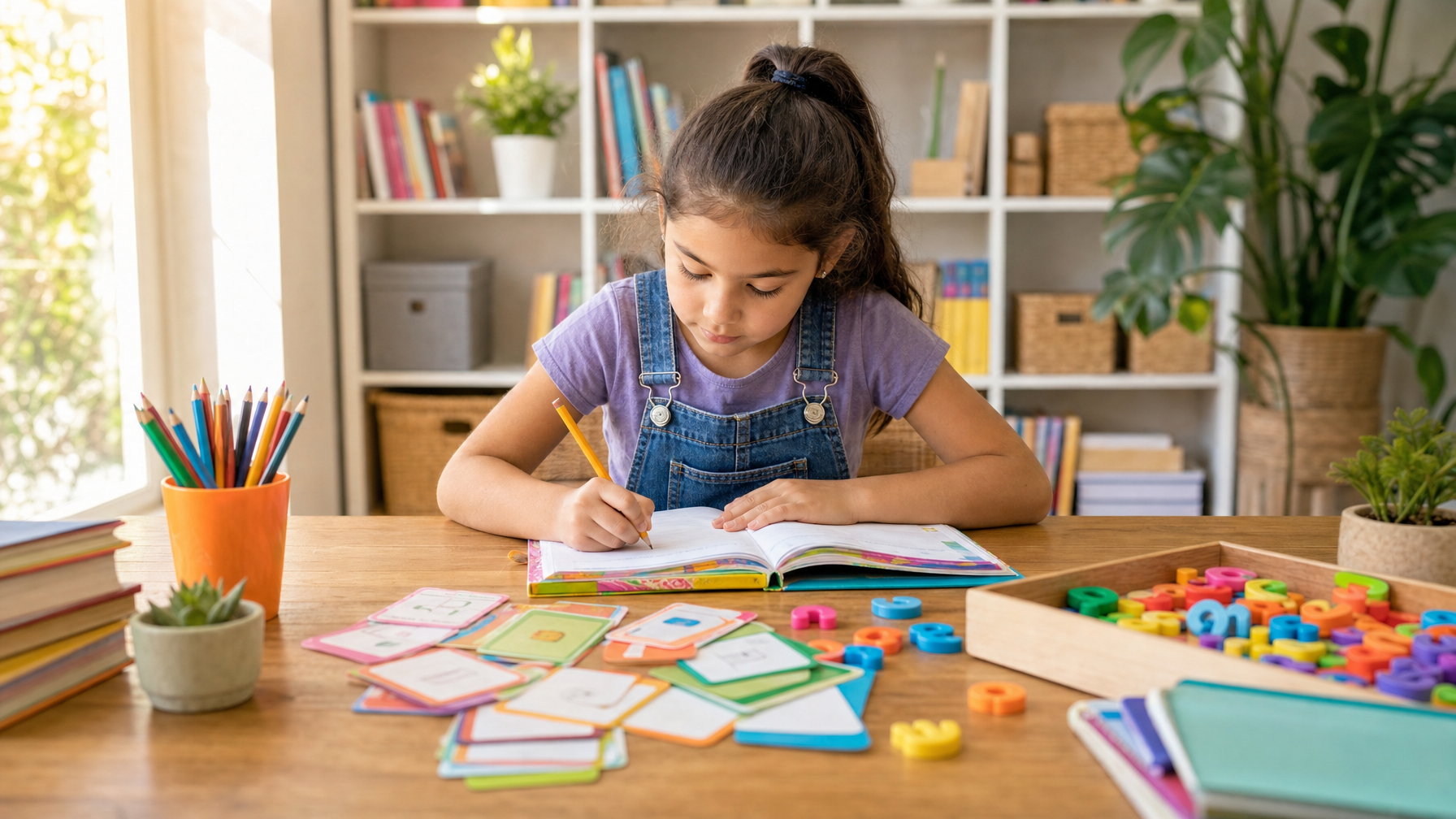
Many homeschool families are looking for a routine that feels manageable. Sixth grade often brings longer assignments and higher expectations, and a consistent routine can help with the transition from elementary to middle school.
A well-designed 6th grade homeschool routine does not need to mirror a traditional school day. Instead, the goal can be to create balance in your day with a mix of structured lessons, independent work, and time to rest and explore.
In this guide, we will walk through what a typical homeschool day can look like, how much time you realistically need, and how to build a routine that fits your family’s schedule while supporting your child’s growing independence.
What a Typical 6th Grade Homeschool Day Looks Like
Many homeschool families build their day around a flexible rhythm that balances focused learning with breaks, movement, and independent work.
In 6th grade, learners are beginning to handle more responsibility, but they still benefit from guidance and routine. A typical balanced day may include some parent-led lessons, independent reading, hands-on activities, and time for creativity or playing. A few hours of meaningful work often lead to deeper learning and higher engagement.
For example, a homeschool morning might begin with a short math lesson together, followed by independent reading while a parent prepares the next activity. Later in the day, a learner might work on a science project, take a break for outdoor time, and then return to complete a writing assignment. In this example, the learning is meaningful, and the flow is flexible.
How middle school homeschool routines differ from elementary
The daily routine naturally shifts as children get older and more able. In earlier grades, learning is typically more directed, with shorter lessons and plenty of adult guidance. By 6th grade, your child is likely ready to take on more responsibility and begin working independently for longer periods.
As a parent, this does not mean you’re stepping back entirely. Instead, you can create a routine that balances guided learning and independence. For example, you might introduce a lesson or explain a concept, and then allow your child to complete practice work, reading, or research on their own.
How much structure does a 6th grader usually need?
Sixth graders can benefit from a predictable routine, but they do not necessarily need a minute-by-minute schedule. Most learners at this age do well with a consistent daily flow, such as starting with core subjects in the morning and leaving more creative work for later in the day.
Too much structure can feel stifling, while too little can make it difficult for learners to stay focused. The goal is to create a routine that provides clear expectations and supports your learner when necessary. The exact timing of your routine may vary from day to day, but the general structure stays the same.
Balancing parent-led lessons and independent work
One of the key parts of a successful 6th grade homeschool routine is finding the right balance between teaching and independence. At this stage, learners can work independently, but they still need guidance to stay on track and learn new skills.
Your guided parent time might include introducing a math concept, discussing a reading passage, or reviewing a writing assignment. Independent work might include completing practice problems, reading a chapter of a book, or researching a topic of interest.
Over time, this balance shifts toward more independence. The goal is to help your child build the habits they will need in later grades while still feeling supported and celebrated.
How Many Hours Should a 6th Grade Homeschool Day Take
One of the most common questions parents ask is how long a homeschool day should be. The answer often surprises families who are new to homeschooling. A full school day is usually not necessary. Many 6th grade homeschool routines are shorter, more focused, and more efficient while still covering all core subjects.
Instead of measuring success by the number of hours spent at a desk, many families focus on the quality of learning and the ability to stay engaged. A day that includes focused lessons, independent work, and meaningful real-world experiences can be just as effective, if not more so, than a longer traditional school day.
Typical instructional time for middle school homeschool
Most 6th grade homeschool days include about 3 to 5 hours of focused academic time. This often includes a mix of parent-led instruction and independent work. This time could be spread throughout the day rather than being completed all at once. Your child might complete math and reading in the morning, take a break for outdoor time or a walk, and then return later for writing or science.
Because homeschool learning is often one-on-one or in small groups, lessons can move quickly when skills are mastered and also allow time for deeper understanding when needed. Be sure to check the homeschool laws in your state to be clear on any requirements and documentation needs.
How independent work changes the daily schedule
As learners grow more independent in sixth grade, the structure of the day often becomes more flexible. Independent work allows parents to step back while learners practice skills, read, or complete assignments on their own.
This shift creates natural breaks in the day. While a learner is working independently, a parent might prepare the next lesson, work with another child, or simply allow for a quieter, more relaxed pace.
This may look like completing a short writing lesson together, then having your child draft a paragraph independently. Later, you may come back together for feedback or discussion.
Independent work also makes it easier to build in activities that are not traditionally part of a classroom schedule, such as creative projects, hobbies, or outdoor exploration.
Why homeschool days are often shorter than traditional school
Traditional school days include elements such as transition time, when students move between classes, wait for the teacher and the group to be ready, and then begin learning. Behavior and group management can take up time as teachers respond to particular students. At home, these transitions and distractions are minimal, which allows learning to happen more efficiently.
This creates space for some of the most valuable parts of homeschooling. Many families use this extra time for:
- Outdoor exploration, such as hiking, gardening, or observing nature
- Hands-on projects, like building, crafting, or cooking
- Community outings, including library visits, museums, or local events
- Interest-based learning, where learners explore topics they are curious about
You might choose to spend the morning reading and writing, and then head out to visit a local nature trail in the afternoon with your art supplies. The next day, you might visit your local library to research the wildlife you observed.
Research on learning and development suggests that students benefit from a balance of focused academic work and active, real-world experiences. Homeschooling naturally supports this balance.
Ultimately, a successful 6th grade homeschool routine isn’t necessarily about filling every hour of the day, but about creating a rhythm that supports learning, encourages curiosity, and leaves room for both structure and exploration.
Example 6th Grade Homeschool Daily Routine
Every homeschool day can look a little different depending on your family’s schedule, your child’s learning style, and the resources you use. Some families prefer a predictable routine that follows the same order each day, while others build more flexibility into their week.
Below are a few examples of how a 6th grade homeschool routine might look and a few different style options.
Sample structured homeschool routine
Some families find that having a consistent daily structure helps learners stay focused and reduces decision fatigue. In this type of routine, subjects are completed in a similar order each day, even if the exact timing varies.
A structured day might look like this:
- Morning learning block: Begin with core subjects such as math and reading, when focus is typically strongest. A parent might introduce a math concept, followed by independent practice, and then move into a reading discussion or quiet reading time.
- Mid-morning break: A short break for a snack, movement, or time outside helps reset attention before continuing.
- Late morning learning block: Continue with writing, grammar, or science. This might include working on a writing assignment, completing a science experiment, or discussing a topic together.
- Afternoon flexibility: Use this time for creative subjects, projects, or outings. This could include art, music, building projects, or visiting a local library or museum.
For example, a learner might complete math and reading in the morning, take a break to play outside, and then return to work on a science experiment before heading out for an afternoon activity.
Sample flexible homeschool routine
Other families prefer a more flexible routine that shifts depending on energy levels, weather, or outside commitments. Instead of following the same order every day, they focus on completing key subjects while allowing the flow of the day to change.
A flexible routine might include:
- Starting the day slowly: Some learners work better after a relaxed morning that includes breakfast, conversation, or light reading.
- Rotating subjects: Instead of doing every subject every day, families may rotate science, social studies, or writing throughout the week.
- Adapting to opportunities: If the weather is nice, the day might include extra outdoor time, with academic work completed later.
For example, a family might spend the morning exploring a local park, observing plants and wildlife, and then return home to write about what they saw or connect the experience to a science lesson.
This type of routine can work well for families who value real-world learning and want to take advantage of opportunities as they arise.
Example block schedule for 6th grade homeschool
A block schedule groups learning into larger chunks of time. This can help some learners stay focused and dive deeper into their work.
A block-style routine might look like this:
- Core subjects block: Focus on math and language arts together, allowing time for both instruction and independent work.
- Project or content block: Dedicate a longer period to science or social studies, where learners can read, research, and complete projects without feeling rushed.
- Exploration block: Reserve time for outdoor learning, creative work, or personal interests.
For example, a learner might spend a longer block working on a science investigation, such as tracking plant growth over several days, rather than splitting it into shorter sessions. Another day, that same block might be used for a history project or a hands-on activity.
Block scheduling can also make it easier to plan outings. A family might dedicate an entire afternoon to visiting a museum, attending a homeschool co-op, or exploring a local trail, using the experience as part of their learning for the day.
How to Build a 6th Grade Homeschool Routine That Works for Your Family
Creating a homeschool routine does not require a perfect schedule. The goal is to build a structure that supports learning while fitting your family’s daily life. Every household looks different, so the most effective routine is one that feels sustainable and flexible over time.
These steps can help you create a 6th grade homeschool routine that works for your learner and your family.
Step 1: Start with your family's natural rhythm
Your family may have a natural flow to its day. Some learners focus best in the morning, while others need a slower start. Instead of forcing a strict schedule, you may begin by noticing when your child has the most energy and attention.
If your learner is most focused in the morning, you might plan math and reading during that time. If your family has commitments in the morning, you may shift academic work into the afternoon. Building your routine around your natural rhythm makes it easier to stay consistent.
Step 2: Identify core subjects
Most homeschool families prioritize a few core subjects each day, such as math, reading, and writing. These subjects often require more focus and benefit from regular practice.
Once these are in place, you can rotate other subjects such as science, social studies, or creative work throughout the week. This prevents the day from feeling too full while still ensuring all subjects are covered.
You might choose to complete math and reading lessons daily, while alternating science and history on different days.
Step 3: Leave room for real-life learning and adjustments
One of the advantages of homeschooling is the ability to learn outside of traditional lessons. Field trips, nature walks, library visits, and hands-on projects can all be meaningful parts of a homeschool routine.
Instead of treating these as extras, many families build them directly into their week. A trip to the grocery store can become a math lesson, while a visit to a museum can support learning in history or science.
Homeschooling also allows you to adjust based on what is working and what is not. If your learner is feeling overwhelmed, you can simplify the schedule. If they are ready for more challenges, you can add new activities or extend learning time.
Tips for Keeping a 6th Grade Homeschool Routine Consistent
Even the best routine can feel difficult to maintain without consistency. The goal is not to follow the schedule perfectly every day, but to create habits that make learning feel predictable and manageable.
Keep expectations simple
A routine is easier to follow when it is not overly complicated. Focus on a few key subjects and a general daily structure rather than trying to plan every minute.
Use visual reminders
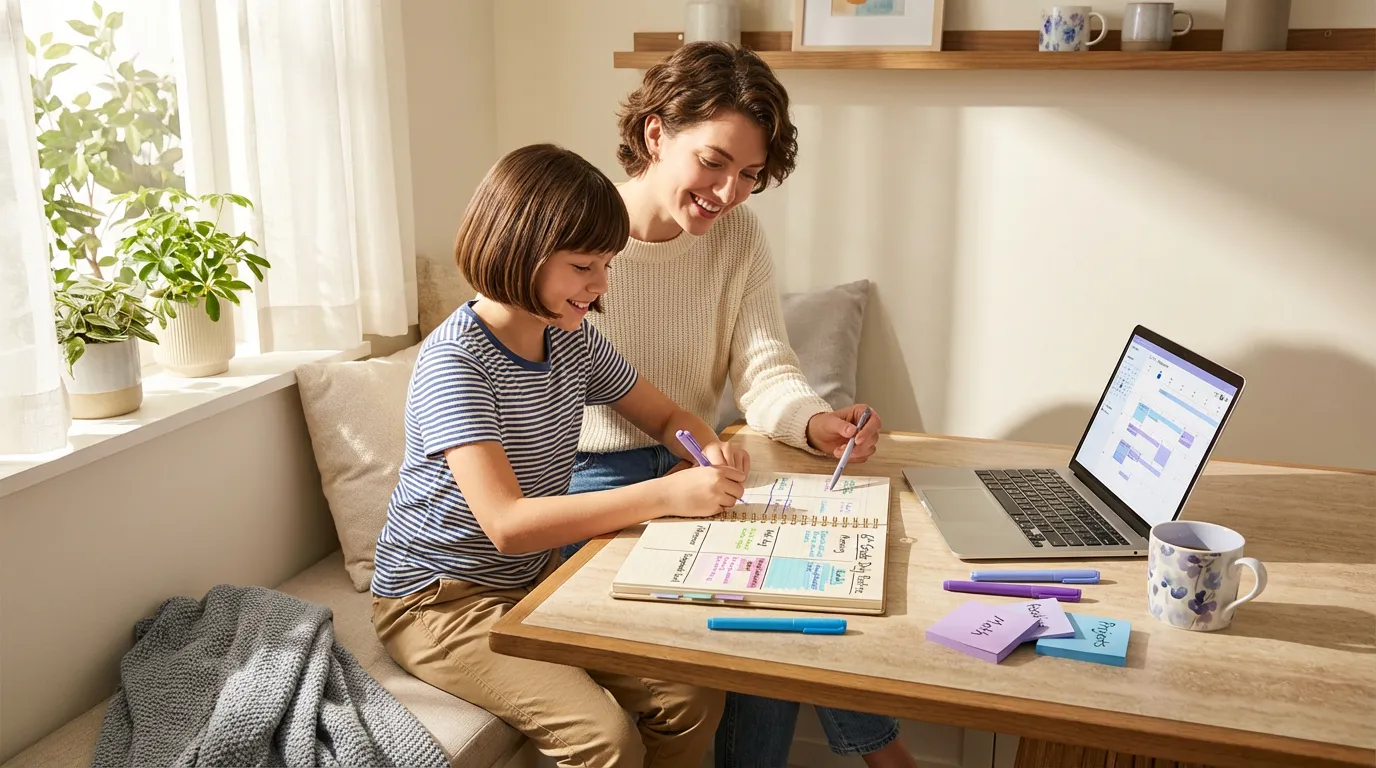
Visual tools can help learners stay on track without constant reminders from a parent. This might include a checklist, a simple schedule posted on the wall, or a daily plan written in a notebook.
Stay flexible when needed
As you know, not all homeschool days will go as planned. Illness, appointments, or other life issues may shift your schedule. Simply adjust your routine and move on.
Build routines around habits, not time
Focusing on habits rather than exact times can make routines easier to maintain. Instead of starting math at a specific time each day, you might begin math after breakfast or after morning chores.
A Routine That Works For You
A strong 6th grade homeschool routine does not need to look like a traditional school day. Your homeschool routine can incorporate your family’s particular needs, your child’s personality, and the goals you have for your homeschool experience.
By focusing on consistency, balancing structure with flexibility, and making space for real-world experiences, you can create a routine that supports both academic growth and curiosity. Over time, this rhythm will help your learner build independence and confidence while keeping learning fun and manageable.
Sources
American Academy of Pediatrics. “School-Age Children Development.” AAP, https://publications.aap.org/aapbooks/book/562/Caring-for-Your-School-Age-Child-Ages-5-to-12
Association for Supervision and Curriculum Development. “The Characteristics of Young Adolescents.”ASCD, https://www.amle.org/developmental-characteristics-of-young-adolescents/.
Center on the Developing Child. “Executive Function & Self-Regulation.” Harvard University, https://developingchild.harvard.edu/science/key-concepts/executive-function/.
Centers for Disease Control and Prevention. “Child Development: Middle Childhood.” CDC, https://www.cdc.gov/ncbddd/childdevelopment.
Library of Congress. “Teaching with Primary Sources.” Library of Congress, https://www.loc.gov/programs/teachers/getting-started-with-primary-sources/.
National Assessment of Educational Progress. “Mathematics Framework for the 2022 Assessment.” National Center for Education Statistics, U.S. Department of Education, https://nces.ed.gov/nationsreportcard/mathematics/.
National Center for Education Statistics. “The Nation’s Report Card.” NCES, U.S. Department of Education, https://www.nationsreportcard.gov.
Stanford Graduate School of Education. How People Learn: Brain, Mind, Experience, and School. National Academies Press,https://cradall.org/sites/default/files/How%20People%20Learn-Brain_Mind_Experience_and%20School%20-%20Expanded%20Edition.pdf


.svg)
.svg)