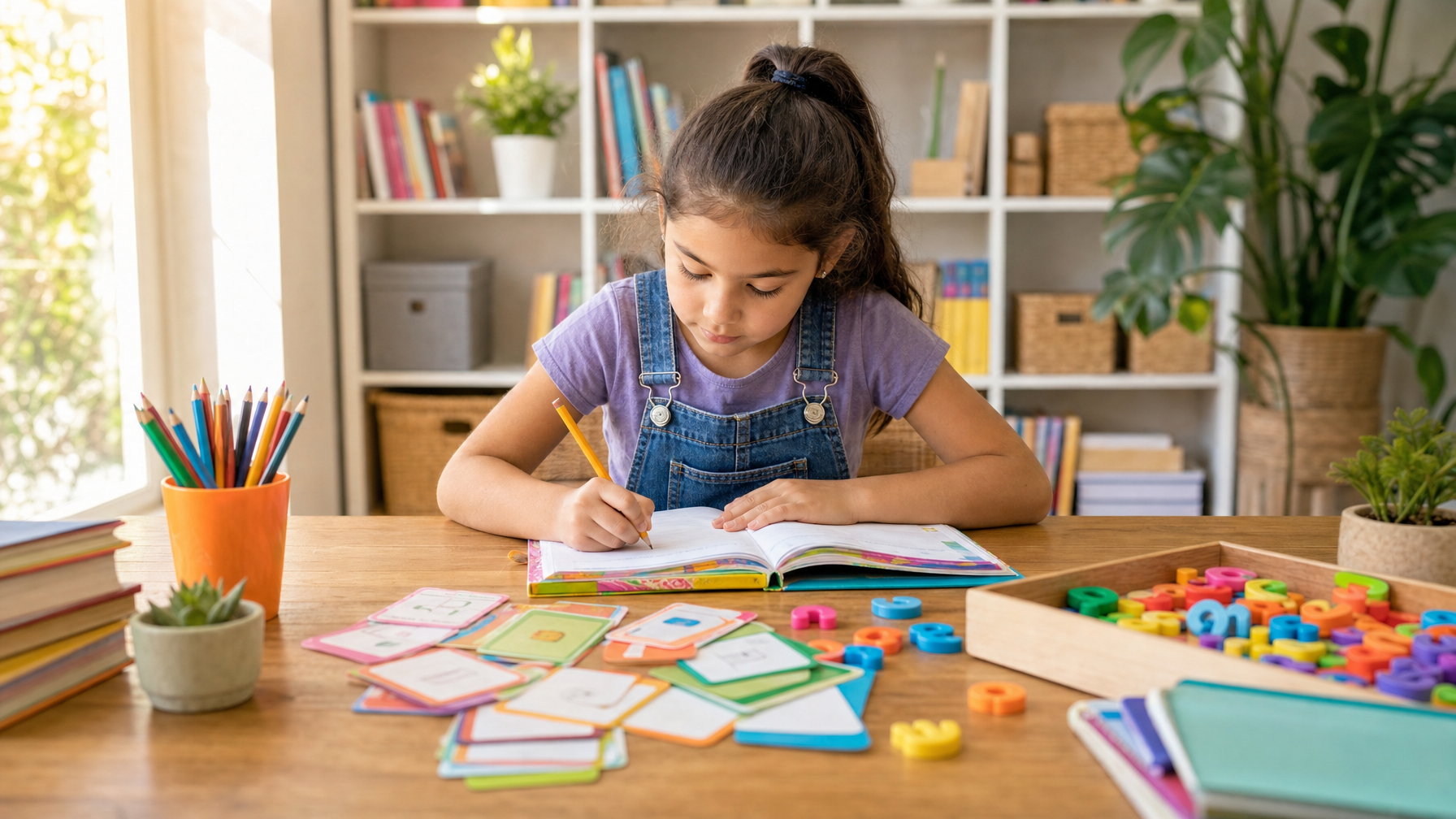
Sixth grade is an excellent time for students to build a foundation of Spanish basics. Spanish is one of the most widely spoken languages in the world and is used by hundreds of millions of people across multiple continents (Meddeas). Early adolescents are often ready to move beyond simple words and start understanding how language works.
Many homeschool families want their children to gain these benefits, but can feel unsure how to begin. Parents may wonder how much Spanish they should teach, what kind of curriculum to use, or whether they need to speak Spanish themselves to help their child learn.
A clear homeschool Spanish curriculum makes the process easier. In this article, you will learn how to choose the right 6th grade program, understand typical expectations for middle school learners, and how to create an engaging plan that works for your homeschool routine.
What is a Spanish Curriculum for 6th Grade Homeschool Learners?
A homeschool Spanish curriculum is a structured plan that helps students learn to understand, speak, read, and eventually write Spanish. A strong curriculum focuses on communication and comprehension.
Spanish is one of the most widely studied languages in American schools (American Councils for International Education). For 6th grade learners, lessons often include conversational practice, short reading passages, and writing simple sentences. Students can begin to understand how Spanish grammar works as they grow their vocabulary.
A high-quality curriculum provides families with guidance. With consistent exposure and practice, your child will become more comfortable reading simple passages, answering questions in Spanish, and participating in short conversations.
Differences between learning Spanish at home and in a school setting
Homeschool families have the advantage of adjusting lessons to match their child’s pace and interests.
In a homeschool setting, a 6th grader might spend extra time practicing conversation skills before moving on to grammar. Families can build lessons around particular personal interests. For example, a student interested in travel might learn vocabulary related to airports, directions, and landmarks.
Homeschool Spanish lessons can also connect naturally to everyday life. Your child might practice greetings during the morning routine or review vocabulary while helping you cook dinner. When learning food vocabulary, families might prepare a meal from a Spanish-speaking country and practice ordering or describing the food in Spanish.
This flexibility allows language learning to feel useful and engaging. Instead of only completing assignments, 6th graders can begin using Spanish in real situations, which helps them retain the language and stay motivated to learn.
Topics Covered in 6th Grade Spanish Curricula for Homeschool Learners
By 6th grade, students are ready to move beyond basic vocabulary and begin understanding how Spanish works. A homeschool Spanish curriculum for 6th grade typically balances conversation, reading, writing, and grammar. The topics below help develop language skills while gaining an understanding of Spanish-speaking cultures around the world.
Vocabulary
Sixth grade learners often begin building stronger vocabulary related to everyday topics. Lessons may focus on areas such as introductions, family members, food, hobbies, school activities, and describing daily routines. Students practice asking and answering simple questions so they can participate in conversations.
Grammar
Grammar instruction usually takes on a more active role at this stage. Students learn present tense verb conjugations, sentence structure, and how nouns and adjectives agree. Rather than studying long grammar explanations, homeschool lessons often introduce these rules through short examples and guided practice.
Reading and writing practice
Reading and writing also become a regular part of instruction. Your child may read short dialogues, simple stories, or informational passages written in Spanish. After reading, they might answer comprehension questions or discuss the meaning of the text. At this age, students are often expected to write a few sentences, or even paragraphs, as they gain confidence.
Cultural exploration
Homeschool families often include cultural exploration alongside language study. Sixth graders might learn about Spanish-speaking countries, traditions, holidays, and daily life in different regions. These lessons can include cooking traditional foods, exploring maps, watching cultural videos, or learning about celebrations.
Common Types of 6th Grade Homeschool Spanish Curricula
Spanish instruction can look different in every homeschool. Some families prefer structured lessons with clear assignments, while others focus more on conversation and activities. Many homeschool families combine several approaches to build a Spanish program that works well for their sixth grader’s learning style.
- Immersion-based programs: Immersion programs encourage students to hear and use Spanish regularly throughout the day. Instead of translating every word into English, students begin to understand the meaning through utilizing and listening to the language. In a sixth-grade homeschool setting, this might include labeling household items, listening to Spanish music during car rides, or practicing simple conversations. This approach helps bring the language to life and make it feel “real”.
- Grammar-focused programs: Grammar-focused curricula place more attention on sentence structure, verb conjugations, and written practice. Sixth grade students are developmentally ready to begin understanding Spanish grammar. A homeschool lesson might include reading a paragraph in Spanish, identifying verbs in the sentence, and then writing a few sentences using the same structure. This approach helps students understand the rules behind the language.
- Online and live class programs: Online classes give homeschool students the opportunity to learn from fluent Spanish speakers and interact with peers. Your child might attend a small-group class once or twice a week, where they practice conversation, pronunciation, and listening skills with a teacher. These classes often include guided activities such as vocabulary challenges, speaking exercises, and cultural lessons. Online programs are the perfect choice if you want an outside, fluent instructor and some additional teaching support.
- Book-based curricula: These are structured lessons that guide students through Spanish step by step. A typical 6th grade lesson might include learning a new set of vocabulary words, reading a short dialogue, and completing a few practice exercises. Families who enjoy a clear daily routine often prefer this approach because the lessons are already organized. Parents simply follow the sequence in the book while adjusting the pace to match their child’s progress.
$20 off your first class WITH promo code: blog
Build the Education your Kid Deserves
Discover thousands of live classes taught by expert teachers, across academics and enrichment.
Browse classesWhat to Consider Before Choosing a 6th Grade Homeschool Spanish Curriculum
Real communication
A strong Spanish curriculum gives regular opportunities to hear and speak the language. Real language skills develop through practice, not just worksheets. The World Readiness Standards for Learning Languages highlight that communication, cultural understanding, and real-world language are the core goals of language education.
At home, your student might practice introducing themselves in Spanish. You might role-play meeting a new person at a birthday party, asking for directions, or talking about what they did that day.
Layered skill building
A good curriculum builds language skills step by step. A lesson might start with learning new vocabulary related to school. The student might then listen to a short dialogue using those words, read a short paragraph, and finish by writing two or three sentences using the same vocabulary. Research also supports gradual skill development, where listening, speaking, reading, and writing skills build upon one another over time.
Cultural connection
A strong curriculum helps students explore the cultures of Spanish-speaking countries. Your child might learn about a holiday such as Día de los Muertos, or explore traditional foods from places like Mexico or Spain.
How to Plan a 6th Grade Homeschool Spanish Curriculum
Step 1: Choose your learning goals
Start by deciding what you want your 6th grader to focus on first. At this age, many students are ready to begin combining conversation with basic grammar and reading. For example, you might start with practical language skills, such as introducing yourself, talking about family members, or describing your daily routine.
Step 2: Build a listening routine
Language learning experts emphasize consistent exposure and meaningful interaction with the language as key components of effective instruction. Regular listening will improve your child's pronunciation and comfort in conversation. Students might listen to Spanish music during car rides, short stories during reading time, or even Spanish podcasts.
Step 3: Practice speaking
Incorporating speaking practice is an important part of your homeschool program. Even simple conversations help students develop confidence and fluency. At home, you might practice describing your child's favorite activities or asking questions such as, "What is your favorite food?"
Step 4: Track progress
Whether you are teaching your child Spanish for school credit or for enrichment, it is always a good idea to check your state's homeschool laws. Even if specific documentation is not required, keeping track of your child's learning will help you see how skills improve over time.
Popular Homeschool Spanish Curricula for 6th Graders
Outschool's online curricula and classes
Outschool offers small group Spanish classes that work well for middle school learners. Classes are taught by experienced instructors and usually focus on conversation, listening skills, and practical vocabulary. A 6th grader might join a weekly class to practice their conversation skills and pronunciation. Outschool also offers small-group sessions with discussion and one-on-one tutoring for additional support.
Museum and public resources
Museums and cultural organizations often offer free online resources that can enrich Spanish learning at home. These tools allow 6th grade homeschoolers to explore art, culture, and history while practicing language skills.
- Google Arts & Culture provides virtual tours of museums around the world. Your child could explore exhibits from Spain or Latin America and learn about artists such as Frida Kahlo while practicing Spanish vocabulary related to art and culture.
- Smithsonian Learning Lab offers curated collections of images, historical artifacts, and lessons connected to Latin American history and culture.
- Public libraries also offer Spanish children's books, bilingual chapter books, audiobooks, and language-learning apps.
Frequently Asked Questions: 6th Grade Homeschool Spanish Curricula
How do I know if a 6th grade Spanish curriculum is too easy or too advanced?
A curriculum may be too easy if your child quickly finishes lessons without needing to practice or think through the material. It may be too advanced if they struggle with vocabulary, grammar explanations, or reading passages. A good fit allows your child to learn new concepts while still feeling challenged and able to complete lessons with some guidance.
What's a reasonable pace for completing a 6th grade homeschool Spanish curriculum?
Many homeschool families schedule Spanish practice three to four days per week for about fifteen to thirty minutes per lesson. This pace gives learners enough repetition to remember vocabulary and grammar without feeling overwhelmed. Consistent short lessons often work better than once-a-week long sessions.
Do I need to test my child formally in 6th grade Spanish?
As a parent, you can assess progress through simple activities such as conversations, reading comprehension questions, or written reflections. These informal checks can confirm that your child is learning while keeping the learning process relaxed and encouraging.
As your child completes 6th grade Spanish, see what comes next in our 7th grade homeschool Spanish curriculum guide.
A World of Possibilities
Learning Spanish in 6th grade can help connect your child with the world around them. As their fluency increases, so does their understanding of different places and people. Along the way, they also strengthen important skills like memory, problem solving, and flexible thinking. When Spanish becomes part of your homeschool routine, your child is not just learning vocabulary. They are building confidence, curiosity, and a tool that can benefit them in a multitude of ways.


.svg)
.svg)