One of the most common questions families ask when they start homeschooling — right after "what curriculum should I use" — is: how do my kids make friends?
It's a real concern, and it has real answers. Texas has one of the largest and most active homeschool communities in the country. Whether you're brand new to homeschooling (perhaps through TEFA) or you've been at it for years, there are more ways to connect than most families realize at the start.
Here's how to find your people.
Types of homeschool groups in Texas
Not all homeschool groups work the same way. Understanding the types helps you find the right fit faster.
Co-ops
A homeschool co-op is a group of families who share the teaching load. Parents take turns leading classes in their areas of strength — one parent might teach science, another history, another art. Kids get instruction from multiple teachers, peer interaction, and a consistent weekly schedule.
Co-ops vary widely in size, structure, and philosophy. Some meet once a week, others twice. Some are drop-off, others require parent participation. Some are purely academic, others include field trips, sports, and social events.
Support groups and social groups
These groups exist for community rather than academics. Playdates, park days, field trips, holiday events. If your kids need more peer time and your family is handling academics independently, a support group is often the most flexible way to stay connected.
Hybrid programs and microschools
Hybrid models have expanded significantly in Texas over the past few years. Kids attend a school or learning center two or three days a week, then work at home the other days. These programs handle some of the curriculum while leaving families flexibility for the rest.
Faith-based groups
Many Texas co-ops and groups are organized around religious communities. These can be a strong fit for families who want shared values alongside academics and social time.
Online communities
Don't overlook digital connection. Facebook groups for Texas homeschoolers are active and region-specific — search for your city or county. Many families find their first co-op lead or field trip invite through a local Facebook group before they've left the house.
How to find homeschool groups in Texas
Texas Home School Coalition (THSC): THSC is the state's largest homeschool advocacy organization. Their website at thsc.org includes a group finder and legislative updates relevant to Texas homeschoolers. A solid first stop for any Texas family.
Local Facebook groups: Search for "[your city] homeschool," "[your county] homeschool," or "Texas secular homeschool" if that's your preference. Many groups are private and require a short approval process, but activity levels are high and families are generally welcoming to newcomers.
Your neighborhood library: Texas public libraries host homeschool hours and sometimes maintain referral lists for local groups. Ask your librarian — it's an underused resource.
TEFA community connections: With TEFA bringing tens of thousands of new homeschool families into the Texas community this year, new groups are forming. Watch for TEFA-specific community threads and local meetup announcements in Texas homeschool Facebook groups.
$20 off your first class WITH promo code: blog
Build the Education your Kid Deserves
Discover thousands of live classes taught by expert teachers, across academics and enrichment.
Browse classesWhat to look for in a co-op or group
Before you commit to a group — especially a co-op that may require a teaching commitment from you — it's worth asking a few questions:
What's the structure? Is parent participation required? How often does it meet? What subjects or activities does it cover?
What's the philosophy? Secular or faith-based? Classical, Charlotte Mason, eclectic? Make sure the approach aligns with how your family learns at home.
What's the age range? A group with kids in one tight age band works differently than one spanning toddlers to teens.
What's the commitment? Some co-ops ask for a semester or year commitment. Others are drop-in. Know what you're signing up for before joining.
Is it welcoming to kids with different learning needs? If your child is neurodivergent or needs accommodations, ask directly. The best groups will have an honest answer.
Balancing group time and independent learning
Most homeschool families don't rely on one source for everything. The most common pattern is a combination: a co-op or group for peer time and shared learning, plus independent study at home, plus online classes for subjects that are hard to cover locally.
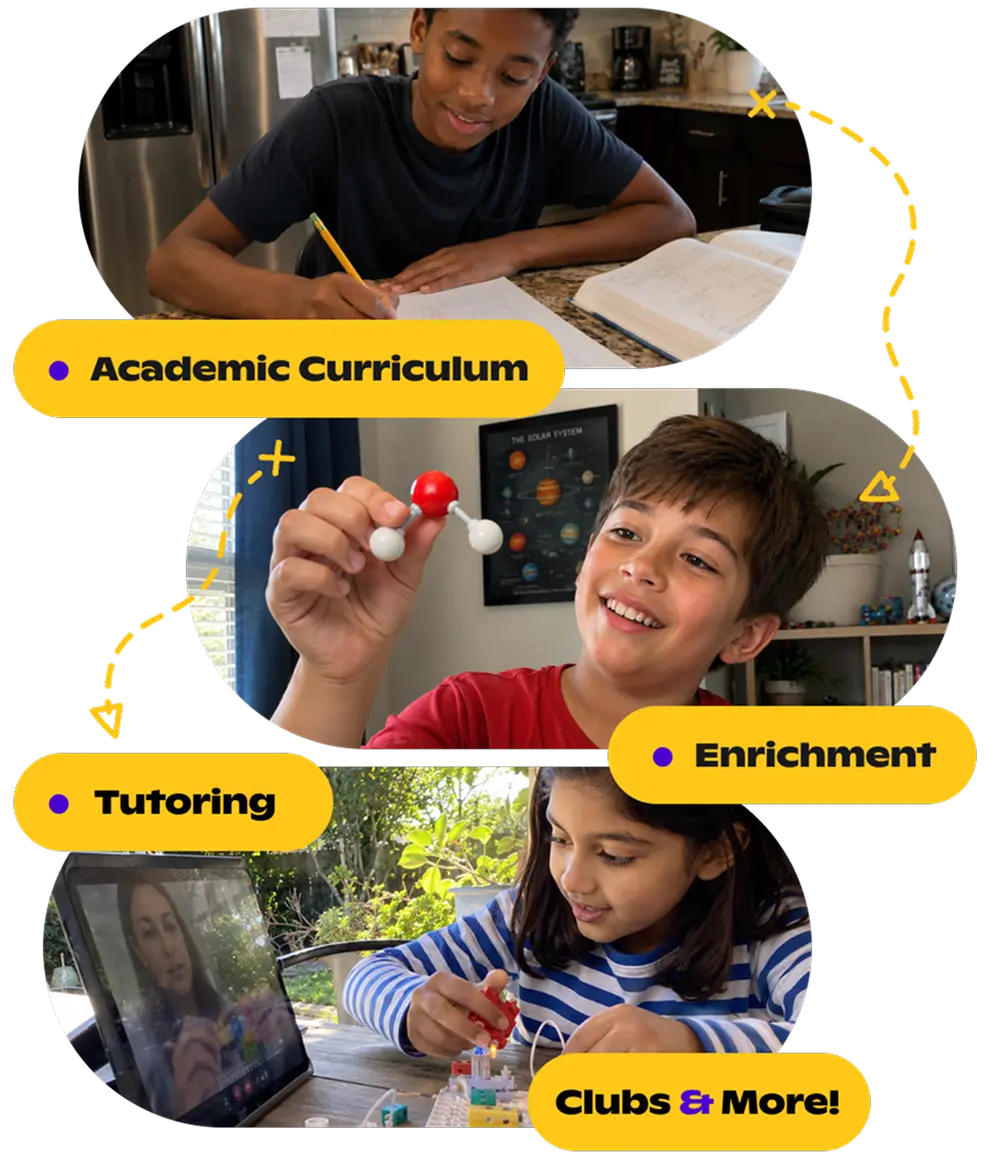
Online classes fill a specific gap well. A co-op might not have a teacher for high school biology or conversational Spanish. A local group might not meet on the day that works for your family. Live online classes — with a real teacher and other kids in the room — give homeschool kids academic structure and social interaction without requiring anyone to drive anywhere.
Outschool's small-group classes run with a handful of kids per session, which means your child gets to know their classmates over time. Many families use Outschool to handle one or two subjects that are hard to cover locally, while using their co-op for everything else. Browse classes by subject and age to see what's available in your areas of need.
New to homeschooling in Texas? Start here
If TEFA is what brought your family to homeschooling, you're joining a large, experienced community that's genuinely happy to welcome new families. A few first steps:
- Join one Texas homeschool Facebook group for your area. Introduce yourself, ask questions. The response is usually warm and fast.
- Attend one local park day or meetup. Low commitment, high value for getting a feel for different groups.
- Try one online class with your child. A single class — not a commitment to a semester — is the lowest-stakes way to see how your kid responds to live online learning.
- Give yourself a grace period. Most families take time to deschool before settling into a rhythm. It takes a few months to figure out what combination of resources works best for your specific kids.
For more on navigating your first year, our guide on switching from traditional school to homeschooling covers what the first 90 days actually look like.
Frequently asked questions
Do I need to join a co-op to homeschool legally in Texas?
No. Texas homeschool law is among the most permissive in the country — families are not required to join any group, register with the state, or follow any specific curriculum. A co-op is a community choice, not a legal requirement.
Are there secular homeschool groups in Texas?
Yes. Secular groups exist in most major metros and many smaller cities. Search “secular homeschool [city]” or “inclusive homeschool [city]” on Facebook to find active groups.
What if there aren't many groups in my area?
Rural Texas families often build more of their community through online groups and national networks than local meetups. Online classes are particularly valuable here — they connect your child with peers regardless of geography.
My child has ADHD or a learning difference. How do I find a welcoming group?
Many Texas co-ops specifically welcome neurodivergent kids and have experience adapting their approach. Search for groups that mention “inclusive,” “neurodivergent-friendly,” or “all learners welcome” in their descriptions. Asking directly before joining is always fair.
Can we try a co-op before committing?
Most groups allow families to visit or attend a session before committing. Ask the organizer — it's a standard request and rarely refused.



.svg)
.svg)