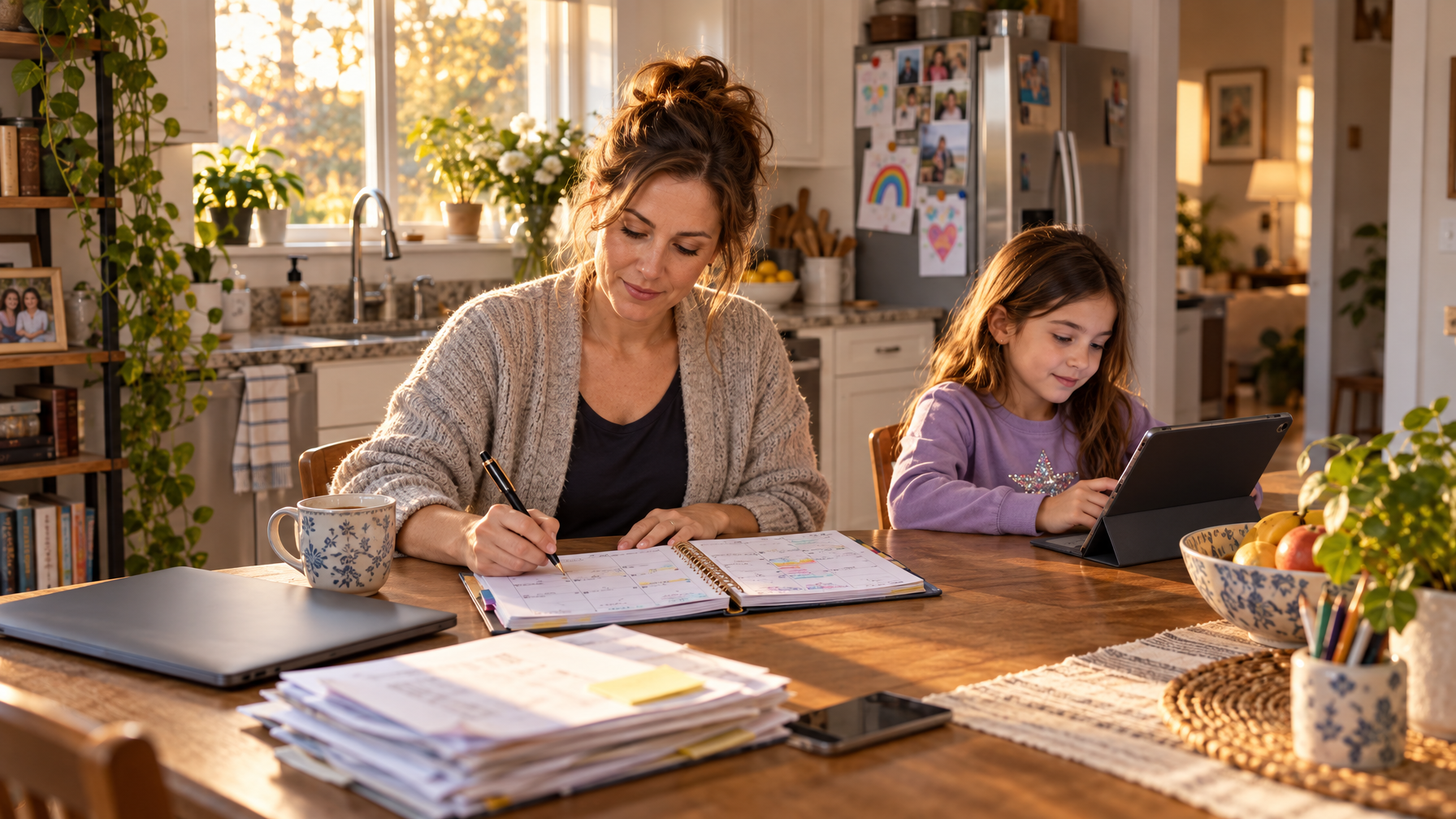
At a glance: A learning pod is a small group of 3 to 10 kids from different families who learn together on a regular schedule, either in person, online, or both. Parents share the teaching load, and kids get the social energy of a group with the flexibility of homeschooling.
What a learning pod is (and what it's not)
A learning pod is a small, intentional group of families who come together to share the work of educating their kids. Think of it as a middle ground between solo homeschooling and a formal co-op: less structured than a co-op, more social than learning alone.
Most pods include 3 to 10 kids. They meet on a regular schedule, usually one to three days per week, at a home, library, park, or community center. Some meet entirely online.
Pods are not microschools (which typically have a paid, professional teacher and operate more like a tiny private school). They're not tutoring groups. The difference from a homeschool co-op is flexibility: pods tend to be smaller, less bureaucratic, and easier to start and dissolve.
How learning pods work day to day
Parent-taught rotation
Each parent takes a subject or a day. One parent leads math on Tuesdays, another handles science on Thursdays, a third runs art on Fridays. Kids benefit from seeing different teaching styles, and no single parent carries the full load.
Shared curriculum with independent study
The pod agrees on a curriculum and families work through it at home independently. Pod meetings focus on discussion, group projects, and hands-on activities that are hard to do alone.
Hybrid with online classes
The pod meets in person for social activities, field trips, and collaborative work, but uses online classes for subjects that benefit from a specialist teacher. This model is common for upper-level math, foreign languages, and science labs.
Virtual pod
All meetings happen online. Families might live in different cities or even different states. Kids connect via video call for discussions, group projects, and shared classes.
Learning pod vs. homeschool co-op
- Size: Pods are typically 3 to 10 kids; co-ops can have 20, 50, or more.
- Formality: Co-ops often have bylaws, committees, and semester schedules. Pods usually run on a handshake agreement.
- Commitment: Co-ops expect set hours per week. Pods are more flexible.
- Cost: Co-ops sometimes charge membership fees. Pods usually split costs informally.
- Entry and exit: Joining a co-op can involve an application or waitlist. Leaving a pod is a conversation.
Who learning pods work best for
- Families who want social connection without full co-op commitment.
- Kids who thrive in small groups but shut down in large classroom settings.
- Parents who need to share the teaching load.
- Families new to homeschooling who want a safety net.
- Neurodiverse kids who need a calm, predictable environment that adapts to executive function challenges.
Pod vs. co-op vs. hybrid
Pick the smallest structure that solves the problem you have this year.
- Learning pod: 3 to 10 kids, handshake agreement, parents share days. Typical shared-cost range for a home-based pod in 2026-27 is still often about $50 to $100 per family per semester if you meet in homes; hired-teacher pods can run a few hundred dollars per family. Ask your homeowners or renters insurer whether regular group meetings in the house need a rider.
- Homeschool co-op: larger, more calendar and bylaws. See what is a homeschool co-op.
- Hybrid: a set school-style schedule plus home days. Distinct from a parent-run pod. If you are comparing models, start with homeschool options.
ESA funds, where your state offers them, can sometimes cover the online classes a pod uses together. Confirm on your state page, not as a nationwide default.
$20 off your first class WITH promo code: blog
Build the Education your Kid Deserves
Discover thousands of live classes taught by expert teachers, across academics and enrichment.
Browse classesHow to start a learning pod
Step 1: find your families
Start with people you already know: homeschool friends, neighbors, families from a local park day group. Post in local homeschool Facebook groups or ask at your library's homeschool meetup. You're looking for families whose kids are within a few years of each other in age and whose educational values roughly align.
Step 2: have the logistics conversation first
Before the first meeting, agree on: how often you'll meet, where, how you'll handle curriculum, who leads what, how you'll split costs, and your communication channel.
Step 3: start with a trial period
Run the pod for four to six weeks before committing to a full semester. If something isn't working, it's easier to adjust during a trial than after you've committed to a year.
Step 4: build in flexibility
The best pods are loose enough to bend. If one family is traveling, the pod still meets. If a subject isn't working, you swap it out. Rigidity is what kills most pods.
Using online classes to fill gaps in your pod
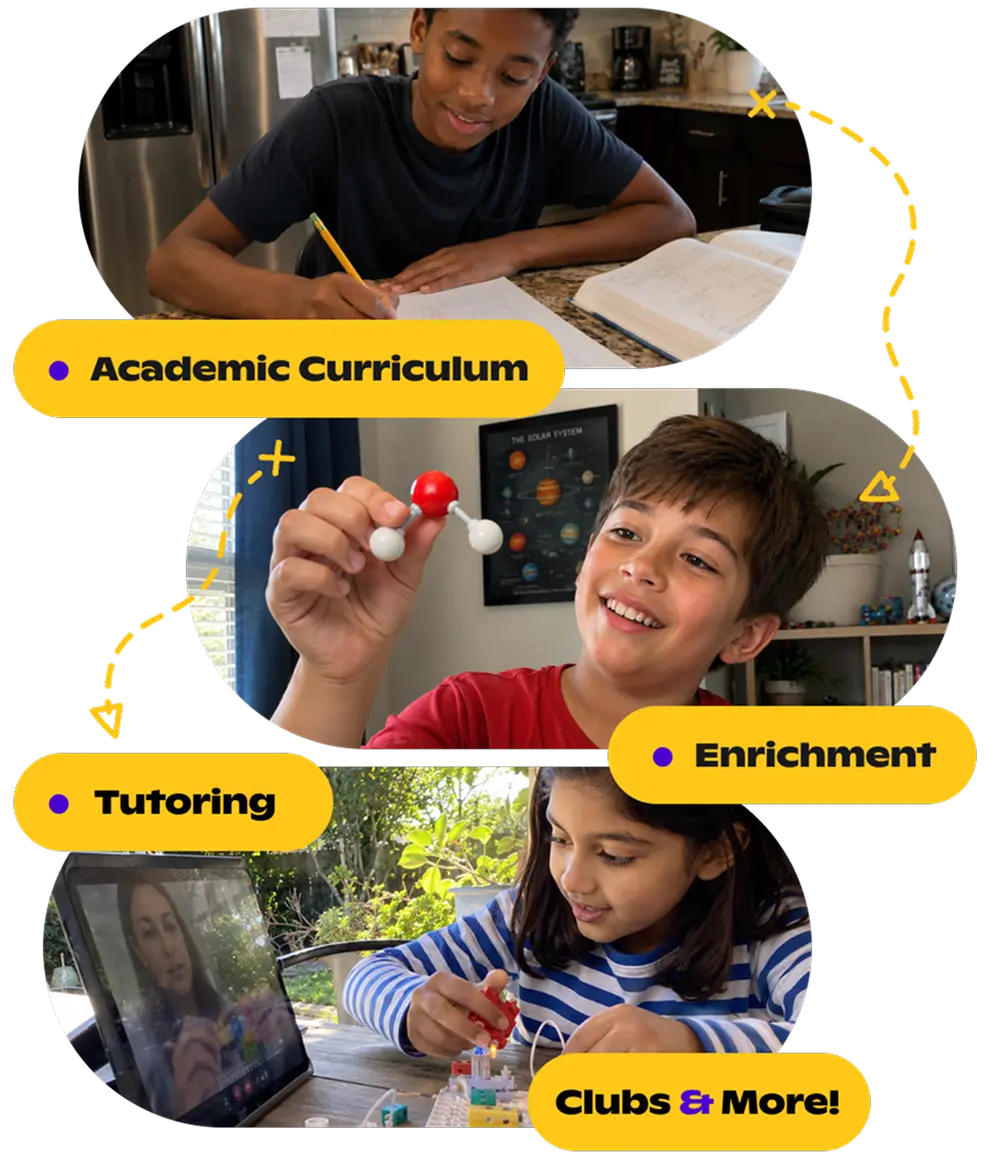
One of the most practical pod strategies is using outside teachers for subjects where none of the parents feel confident. Science classes, math, foreign languages, and writing are the most common areas where pods bring in help.
If your family is in a state with an education savings account (ESA) program, ESA funds can often cover the cost of online classes you use within your pod.
Frequently asked questions
What ages work best for learning pods?
Pods work for any age, but they're most common for elementary and middle school kids. Mixed-age pods (spanning 3 to 4 years) work well because older kids naturally mentor younger ones.
Are learning pods legal?
Pods are legal wherever homeschooling is legal, since they're a form of cooperative homeschooling. Check your state's homeschool laws for specifics.
How much does a learning pod cost?
A pod using free or low-cost curriculum and meeting in homes might cost each family $50 to $100 per semester. Pods that hire professional teachers can run $200 to $500 per family per semester.
Can learning pods meet virtually?
Yes. Virtual pods meet via video call for discussion, group projects, and sometimes shared online classes. Many pods use a hybrid approach.
What if the pod isn't working for my kid?
Leave. That's the advantage of a pod over a co-op or a school: there's no bureaucracy. Most pod families understand that fit matters more than commitment.
How is a learning pod different from a microschool?
A microschool typically has a paid, professional teacher and operates more like a tiny private school with set hours, a defined curriculum, and tuition. A pod is parent-organized, parent-led, and usually free (aside from shared material costs).
Building a pod that fits your family
The best learning pods don't try to replicate school. They take the parts of homeschooling that work (flexibility, personalization, interest-led learning) and add the parts that are hard to do alone: peer collaboration, shared expertise, and social connection.
If you're looking for teachers to bring into your pod or classes your pod can take together, browse Outschool's live homeschool classes by subject, age, and format.



.svg)
.svg)