Every child begins life as a fearless artist, whether it’s a toddler joyfully scribbling across a page or a school-age child sketching their favorite characters. As a parent, you can nurture your child's natural love for creating art without feeling like they need to become a trained artist. The key is creating a supportive space where your child feels free to experiment, make mistakes, and explore their ideas. Confidence is just as important as technique, and when kids feel encouraged, they are more likely to keep creating and developing their skills.
Teaching drawing goes far beyond perfect lines or realistic proportions. It's about fostering self-expression, building problem-solving skills, and celebrating the unique perspective each child brings to the world. With the right approach, your kitchen table can become an art studio where curiosity leads the way. From simple shape games for preschoolers to observation challenges for teens, age-appropriate activities help children grow at their own pace. Paired with structured learning such as live online art classes through Outschool, drawing can build both artistic skill and self-confidence in ways that last well beyond the page.
How to build confidence when teaching drawing
Many parents wonder how they can teach a child to draw if they are not artists themselves. The truth is, you do not need advanced skills yourself to nurture creativity. Your role is not to demonstrate perfect technique but to create a supportive environment where your child feels free to explore and express themselves. Focusing on encouragement rather than perfection provides the strongest foundation for artistic growth.
Real learning happens when drawing becomes a shared adventure of discovery. Instead of worrying about “correct” techniques, ask open-ended questions such as “what would happen if we drew this tree upside down?” or “how might your favorite character look if they lived underwater?” These prompts invite exploration without pressure. A kinesthetic learner might enjoy drawing at an easel with full-arm movements, while a child who needs more time might prefer observing before starting. This curiosity-driven approach values each child’s unique way of seeing and creating. There is no wrong way to make art!
Your willingness to learn alongside your child sends a powerful message that creativity is about the journey, not the destination. Picking up a pencil and saying, “I wonder what will happen if I try this,” models the mindset that encourages curiosity and builds confidence in one's ideas. Celebrate different approaches, honor each child’s strengths, and remember that your support matters far more than your ability to draw a perfect circle.
Creative drawing activities for kids at home
Whether you're looking to fill a rainy afternoon or add more creativity to your homeschool routine, these fun drawing activities for kids at home work with whatever supplies you have on hand and adapt to your child's interests.
- Collect inspiration during community walks by gathering leaves, flowers, or interesting rocks that catch your child's eye, turning everyday outings into treasure hunts for future art projects.
- Create nature-based drawings using your collected items as subjects to sketch or make rubbings with paper and crayons; this hands-on approach helps develop tactile discrimination skills while connecting art to real-world experiences.
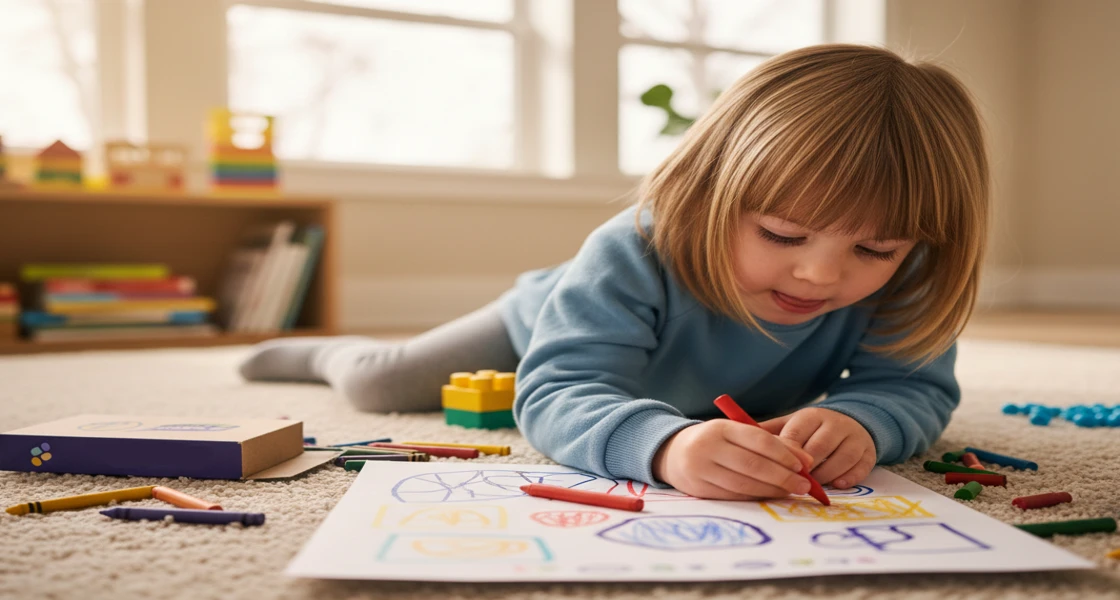
- Start collaborative family drawing sessions where everyone contributes to one large piece of paper on the floor, taking turns adding elements to create a shared story or scene that builds connection and reduces pressure on individual performance.
- Try doodle challenges using everyday prompts, such as "draw your breakfast" or "draw what your favorite sound looks like," encouraging kids to think creatively about ordinary moments while building confidence through self-expression.
- Bring art along on field trips with small sketchbooks to museums, parks, or even grocery stores, letting kids capture what interests them most in simple sketches or quick observations.
- Use everyday materials creatively by turning cardboard boxes into drawing canvases, trying watercolor flower doodles on coffee filters, or making sidewalk chalk art that washes away with the next rain.
- Provide gentle structure with directed drawing activities that offer step-by-step guidance while leaving room for personal interpretation, helping kids build skills while maintaining their unique artistic voice.
- Start a family art project: Create collaborative murals on large paper where each family member contributes their skill level, from toddler scribbles to teen detailed work, celebrating how different abilities come together to create something beautiful.
- Personal expression projects - Invite them to explore character design with detailed backstories, create digital illustrations using free apps, or participate in peer feedback sessions where they can share their work and learn from others' perspectives.
- Observation and storytelling - Practice contour drawing by sketching a favorite toy or household object from three different angles, or design a four-panel comic strip about their daily adventures to combine drawing with narrative skills using resources like Outschool for step-by-step guidance.
Encourage creativity and confidence in every child
Lasting confidence grows when the focus shifts from the final drawing to the joy of creating. Celebrating effort over perfection helps children feel capable and proud of their abilities. Research shows that self-confidence in drawing stems more from enjoying the process than from technical skill, and this enjoyment often serves as the foundation for lifelong creativity. Instead of saying, “that’s a beautiful tree,” try, “I love how you experimented with those curved lines,” or “tell me about the colors you chose.” This approach values each child’s perspective and reinforces their style as a strength.
A judgment-free environment turns mistakes into learning opportunities. This is especially important for neurodiverse learners who may process information differently. Some children need more time to develop fine motor skills, while others may prefer bold, abstract marks over realistic ones.
- Celebrate effort, not perfection
- Ask open-ended questions to spark curiosity
- Turn mistakes into opportunities for exploration
- Give choices in materials and tools
- Use real-world experiences as inspiration
If frustration sets in, respond with curiosity: “What happened there? Should we try a different approach?” Real-world inspiration, like sketching flowers from a garden walk or illustrating a favorite story, can also help children connect their art to meaningful experiences.
Confidence grows when children feel ownership over their creative choices. Let them decide whether to use markers, colored pencils, or finger paints. Ask questions such as “What story does your drawing tell?” or “What would you like to add next?” When kids lead their projects, whether creating a comic book character or sketching their pet, they strengthen problem-solving skills and develop a sense of independence that carries far beyond the art table.
$20 off your first class WITH promo code: blog
Build the Education your Kid Deserves
Discover thousands of live classes taught by expert teachers, across academics and enrichment.
Browse classesFrequently asked questions (FAQs) about teaching drawing to kids
From handling challenges to choosing the right approach and finding additional support, these answers can help you navigate your child's artistic journey with confidence and joy.
How do I handle a child who gets frustrated or says they “can't draw”?
Start by acknowledging your child's feelings rather than dismissing their frustration. This validation helps them work through challenging emotions and builds emotional resilience. Art can significantly aid emotional development by providing kids a way to express feelings, so remind them that every artist feels stuck sometimes. Try shifting focus from the final result to the fun of experimenting: "Let's see what happens if we try this color," or "I love how you're thinking about this problem."
What if my child is more interested in digital art than traditional drawing?
Digital art is a genuine and significant form of artistic expression that can cultivate the same creative skills as traditional drawing. Many professional artists work digitally, and kids often find digital tools more forgiving since they can easily undo mistakes and experiment with effects. Support their interest by exploring age-appropriate drawing apps or tablets, while occasionally suggesting hybrid projects that combine digital and traditional elements.
How much structure should I give versus letting kids draw freely?
The sweet spot combines gentle guidance with ample creative freedom, allowing children to lead their projects while offering techniques when they request help. Start with open-ended prompts like "draw your dream house" or "create a character who lives underwater," then provide specific tips only when they encounter challenges or express interest in learning something new. Drawing helps children develop motor skills, problem-solving abilities, and imaginative thinking, so balance is key to nurturing both talent and creativity.
Are there online resources or classes that can support our drawing journey?
Yes, there are wonderful online platforms designed specifically for young artists. Platforms like Outschool offer drawing classes that provide live instruction with passionate teachers who offer personalized feedback and encouragement in small group settings or one-on-one private tutoring.
What are some creative ways to display or celebrate my child's artwork at home?
Create a rotating gallery wall where you regularly swap out new pieces, showing your child that their art deserves prominent display space in your home. Consider creating photo books of their artwork over time, which will become a treasured keepsake and showcase their artistic growth, or let them choose pieces to give as gifts to grandparents and friends. You can also photograph their 3D creations or large pieces before storing them, creating a digital portfolio that's easy to share and preserve.
Supporting your child’s artistic journey at home
Teaching drawing does not require you to be the next Picasso. It takes patience, encouragement, and an approach that matches your child’s age and learning style. Whether you are guiding a preschooler through their first scribbles or helping a teen refine detailed character designs, the most important factor is celebrating their unique creative voice. Art classes can boost self-confidence as children see their skills improve, while also building fine motor skills and supporting emotional expression through structured learning.
Home activities lay the groundwork, but live online drawing classes offer the interaction and sense of community that solo practice cannot match. Small-group sessions provide real-time guidance from passionate teachers and meaningful feedback from peers. This supportive environment helps children feel valued, inspired, and motivated to keep creating. Explore Outschool’s live online drawing classes to find the right fit for your child’s interests and schedule, and watch their confidence grow both on and off the page.


.svg)
.svg)