Find classes that click for neurodivergent learners

Help your kid thrive with small-group classes tailored to their needs. Outschool offers 100,000+ live, flexible online classes, clubs, & coaching sessions designed for how they learn best.

Join the Membership

Every child has unique needs

Neurodivergence

Neurodivergence describes natural differences in how kids’ brains develop and process information. It includes ADHD, autism, dyslexia, and more. Neurodivergent kids may learn, communicate, or regulate emotions differently—and those differences are strengths, not deficits, when supported.

Learn More

Autism

Autism is a neurodevelopmental difference that affects how children communicate, interact, learn, and experience the world. It can include differences in social skills, sensory processing, and behavior, and is lifelong, showing up uniquely in every child with strengths, interests, and support needs that deserve understanding and care.

Learn More

ADHD

ADHD is a neurodevelopmental condition that affects attention, impulse control, and activity level. Children may struggle with focus, organization, or sitting still, but also show creativity, curiosity, and strong energy. With understanding and support, kids with ADHD can thrive.

Learn More

Dyscalculia

Dyscalculia is a learning difference that affects understanding numbers, math concepts, and calculations. Children may struggle with counting, time, or math facts despite effort and instruction. With the right support, they can build confidence and practical math skills daily.

Learn More

Dysgraphia

Dysgraphia is a learning difference that affects writing skills, including handwriting, spelling, and organizing ideas on paper. Children may struggle to write clearly or quickly despite strong thinking skills. With supportive tools and instruction, kids can communicate ideas and build confidence.

Learn More

Dyslexia

Dyslexia is a learning difference that affects reading, spelling, and word recognition. Children may struggle to decode words or read fluently despite effort and instruction. With early support and structured literacy approaches, kids can build strong reading skills, confidence, and a love of learning.

Learn More

Special Needs

A child with special needs is a child who requires additional support to learn, communicate, or navigate daily life due to developmental, physical, emotional, or learning differences. With individualized accommodations and understanding, these children can grow, participate, and thrive in their own ways.

Learn More

Giftedness

A child with giftedness shows advanced abilities, talents, or potential beyond typical age peers in areas like academics, creativity, leadership, or the arts. They often learn quickly, think deeply, and may need enrichment or tailored challenges to thrive and stay engaged.

Learn More

Neurodivergent
educator spotlight

Coach Joe Teaches
Special Education/Admin
4.8
(
698
)

Helping Students Reach Their Goals and Becoming Their Best Selves

View Profile
Jess Coulter
Orton-Gillingham, Dyslexia
5
(
781
)

Helping Learners Become Confident Readers.

View Profile
Mandy Post, M.S.
Small Group Social Skills Coaching
4.9
(
2061
)

Helping to unlock each child’s innate potential!

View Profile
CLUBS

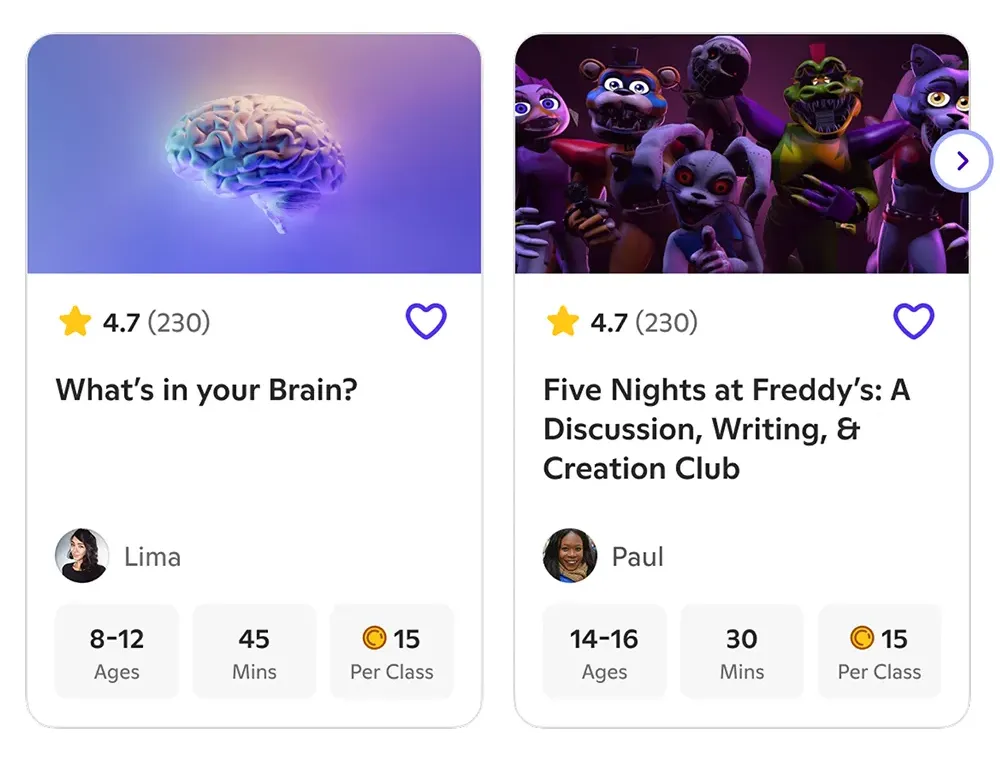
A safe space to find their people

For many neurodivergent kids, traditional social settings can feel overwhelming. Outschool’s live clubs offer something well-suited to fit their needs: structured, interest-based spaces where learners can connect with others who just *get* them. No matter their interests, there’s a place for your child to bond, be seen, & feel safe.

Highlights:
Clubs that support confidence and self-expression
Built-in social coaching–through fun, not force
Led by teachers who know how to guide connection gently

Trusted by 1M+ Families (and counting)

When students need extra academic and social support, parents turn to Outschool for something different. Every educator is background-checked and reviewed for quality and fit. Every class and club is built with safety and student joy in mind. And our Concierge team is always just a click away.

Regular Teacher-parent communication
Secure, kid-friendly platform
Every educator is vetted with a background check
Amy
Verified Buyer
ā€œMy daughter was completely engaged! She has ADHD and sensory processing disorder and to be able to hold her attention for 50 minutes is a feat in itself! Ā The instructor was very capable and kind, not to mention very talented.ā€
Dawn
Verified Buyer
ā€œThese classes are lifesavers for my daughter with ASD, ADHD and SPI. She looks forward to every single class. They are focused and fun no matter the topic. These also keep her busy during times I am working.ā€
Jennifer
Verified Buyer
ā€œMy 9 year old son really enjoys the class. It has helped him feel more accepted to meet other kids with ADHD or other neurodiverse kids. It's also helping him learn new strategies for getting through tough situationsā€

Learn how our platform works

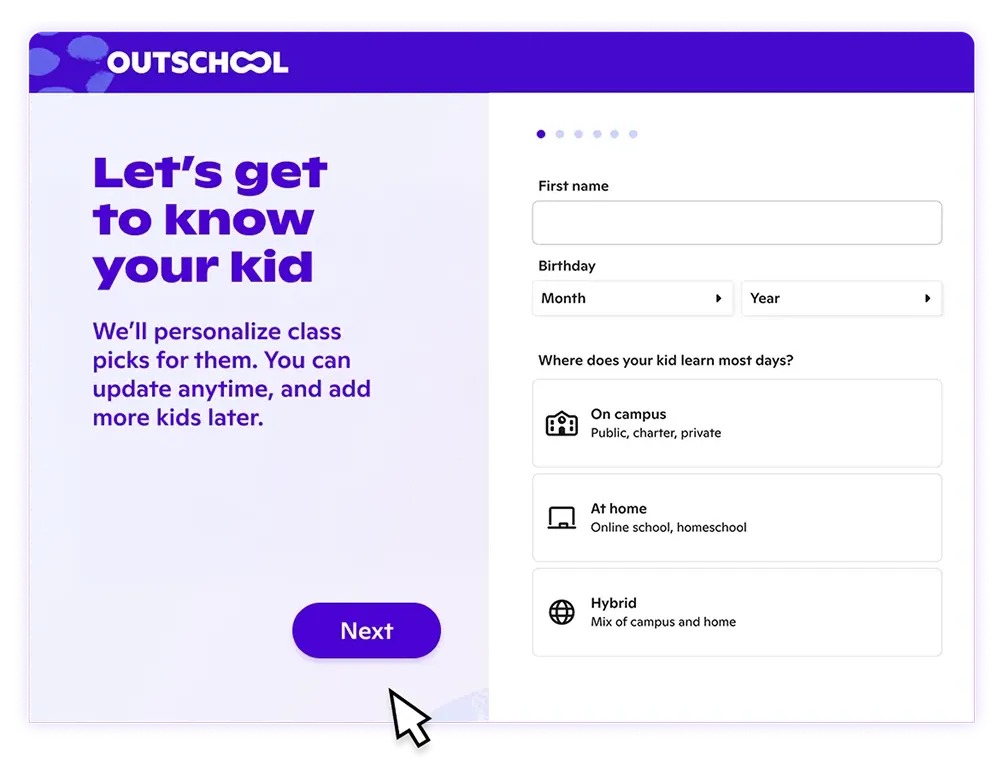
STEP 1

Get advice

Take our personalized quiz for your learner. Which subjects and class styles suit your kid? How does your kid learn best? Does your kid have any learning needs?
ā€

Take the Quiz
STEP 2

Select a plan

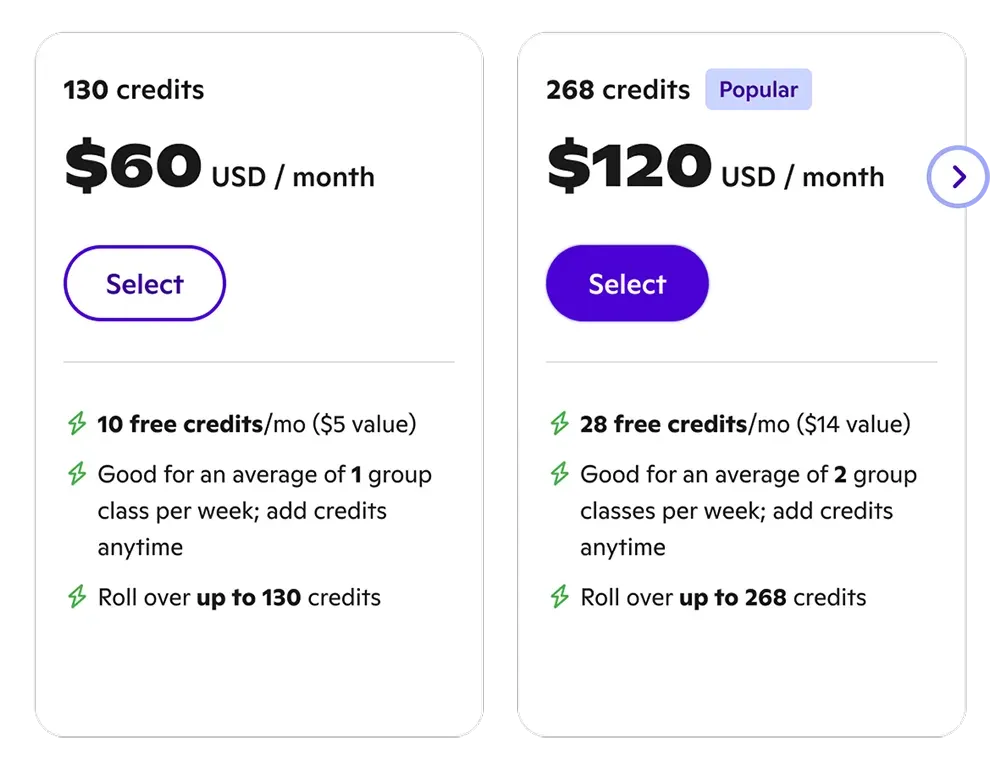
Outschool offers a membership-based pricing model for families. Each membership plan provides a set number of credits per month, which can be used to enroll in classes.

Pick a Plan
STEP 3

Find a passion

Outschool helps kids discover their passions by offering a wide variety of engaging, interest-based classes across subjects like art, science, coding, music, and more.

Find a Class
Get Started

No Pressure. All Potential.

With Outschool, there’s no long-term subscription required, and you can change your membership level at any time. Each plan gives you credits to use for any classes or clubs that spark your learner’s interest.

Credits roll over monthly
Cancel or pause anytime
ESA-friendly for eligible families, no membership required!

Frequently asked questions

See Outschool Membership Terms for more details and requirements.

How do you accomodate different neurodivergent learning needs?

Many teachers on Outschool have experience supporting neurodivergent learners and often share their background in their class listings or teacher profiles. You can add notes about your child’s needs to their learner profile, so teachers have helpful context before class. You can also message a teacher directly to share what supports your learner and ask about the accommodations they can provide.

What if my child has a meltdown or needs to leave class early?

We understand that learners sometimes need a moment away. After your child joins class and checks in with the teacher, they can step away or go off-camera if needed. You’re welcome to let the teacher know ahead of time if your learner benefits from breaks so they can help them rejoin smoothly. If your child feels uncomfortable on camera, a brief verification with our safety team allows them to bypass the camera check-in.

Are classes really live, or are they recorded?

Live class formats meet in real time and are interactive, giving learners the chance to engage directly with their teacher and classmates. While live classes are recorded for safety and quality purposes, the focus is on present-moment learning and social connection.

How small are the class sizes?

Most live classes on Outschool are offered in small groups, often not exceeding 6 to 8 learners, which helps support individualized attention. This setting allows teachers to adapt their approach to each child’s needs while still supporting the benefits of peer interaction.

What technical requirements do we need?

You’ll need a computer or mobile device such as a tablet or phone, along with a camera, microphone, stable internet connection, and the ability to run Zoom for live classes. A quiet space and headphones can also help your learner stay focused. Zoom also offers built-in accessibility features, including live captions.