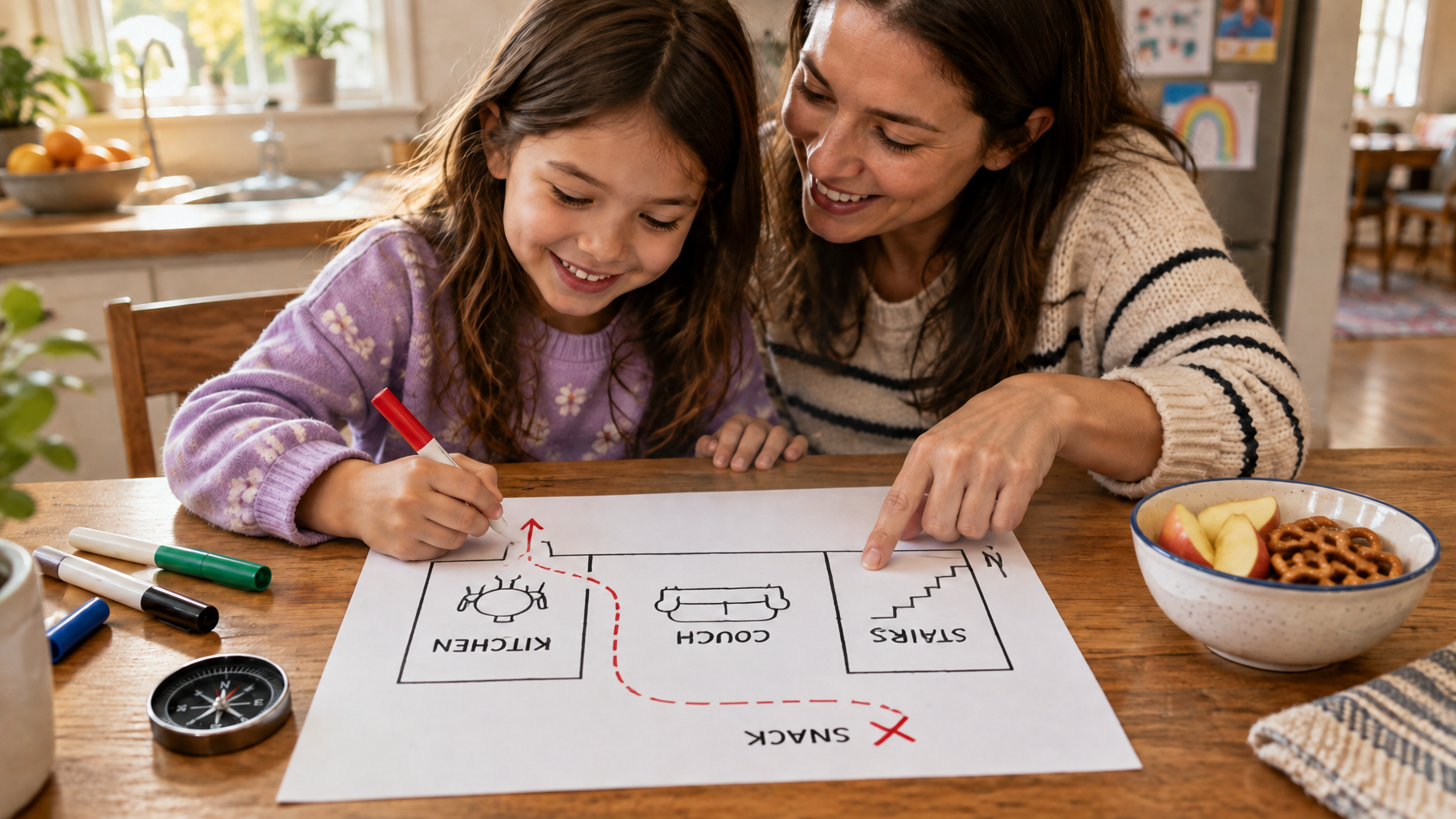
Worksheet-heavy curriculum has its place. But many homeschool families reach a point where they can see, clearly, that their child learns better by making something than by completing something. That's the core insight behind project-based learning — and it's why PBL has become one of the most widely discussed approaches in both homeschool and progressive school circles.
If you've been curious about project-based learning but aren't sure how to implement it at home, this guide gives you a concrete starting point: what PBL means, what it looks like in a home setting, how to design a basic project arc, and how live online classes can serve as a ready-made delivery format.
What Project-Based Learning Actually Is
Project-based learning is an instructional approach where learners acquire knowledge and skills by working on a real, meaningful project over an extended period. The project drives the learning, rather than serving as an end-of-unit activity.
This is a key distinction. In a traditional model, a teacher delivers instruction on ecosystems and students then make a poster about ecosystems. In a PBL model, the project — "design a plan to help the local wetland" — generates the learning. The learner has to understand ecosystems because understanding them is necessary to do the project well.
The Buck Institute for Education, which has done the most systematic research on PBL, identifies seven key design elements: a challenging problem or question, sustained inquiry, authenticity, learner voice and choice, reflection, critique and revision, and a public product. You don't need all seven to do good project-based learning at home. But the more of them you incorporate, the richer the experience tends to be.
What PBL Looks Like in a Home Setting
At home, project-based learning looks different than it does in a classroom. There's no group of thirty peers to collaborate with. The parent is often the only adult in the room. This can actually be an advantage — the project can be genuinely personalized to what your child cares about, which is the single most powerful driver of engagement.
A home PBL unit might look like this:
A 10-year-old who's obsessed with weather decides to become the family meteorologist. Over six weeks, she learns about atmospheric pressure and weather fronts (reading, videos, live online science classes), builds a simple weather station, tracks local weather for three weeks, compares her predictions to actual outcomes, and presents her findings in a weather report video for grandparents.
That single project covers science content, data collection, reading for information, and presentation skills — driven entirely by the child's own interest.
How to Design a Project Arc for Your Homeschooler
A project arc is the sequence of phases a project moves through. For home PBL, a basic arc includes:
- Launch: Introduce a driving question or challenge. The best driving questions are open-ended and personally meaningful: "How does our city manage its water supply?" or "What would it take to build a robot that could sort our recycling?"
- Inquiry: Research, exploration, and learning. This is where content instruction happens — reading, watching, attending live classes, conducting experiments, talking to experts.
- Build: Creating the product. This might be a physical object, a piece of writing, a presentation, a video, a model, or a performance.
- Reflect and revise: Looking at what worked, what didn't, and what would make it better. This is the step most often skipped at home, and one of the most valuable.
- Present or share: Making the work visible to an audience beyond just the parent. This can be as simple as sharing with another family, posting to a blog, or presenting at a local homeschool co-op.
$20 off your first class WITH promo code: blog
Build the Education your Kid Deserves
Discover thousands of live classes taught by expert teachers, across academics and enrichment.
Browse classes5 Subject Areas That Work Especially Well as PBL Units
Some subjects lend themselves more naturally to project-based learning at home than others.
Science: Designing and running an experiment is one of the most authentic forms of PBL available. Even simple experiments — growing plants under different light conditions, testing water quality, building a simple electrical circuit — generate real inquiry and real data.
History and Social Studies: Research projects that ask why did this happen or what would you have done put learners in the position of historians rather than consumers of information. A deep-dive on the Underground Railroad, the space race, or a local history topic can generate months of engaged learning.
Creative Writing: Writing a short story, chapter book, or script is fundamentally a project. It requires planning, drafting, revision, and a final product. Online creative writing classes often use a workshop model that mirrors PBL naturally — learners plan, draft, receive feedback, and revise across multiple sessions.
Coding: Every coding project — a game, an app, a website, an animation — follows a PBL arc naturally. Online coding classes that are project-based rather than exercise-based are particularly well-suited to home PBL approaches.
Environmental and Earth Science: Real-world environmental challenges — waste reduction, local habitat restoration, water use — provide naturally meaningful driving questions that connect science content to genuine stakes.
How Outschool Live Classes Serve as Ready-Made PBL Units
One of the practical challenges of home PBL is that parents aren't subject-matter experts in everything. A project on marine biology is harder to execute well if you're not confident explaining food webs. A coding project stalls without someone who can troubleshoot.
Outschool's project-based classes are designed around this format. Learners work with a vetted educator across multiple sessions to complete a real project — a game, a piece of writing, a scientific investigation, a presentation — rather than just consuming instruction.
These classes work well as the inquiry phase of a home PBL unit (providing expert-guided content and skills), or as self-contained mini-projects that build skills toward a larger project you're running at home.
A family running a year-long invention and engineering PBL focus, for example, might enroll their child in a robotics class, a coding class, and a design thinking course across the year — using each as a contained project unit within the larger arc.
Frequently Asked Questions About Project-Based Learning at Home
What is project-based learning in simple terms?
Project-based learning is an approach where the learner acquires knowledge and skills through working on a real, meaningful project, rather than receiving direct instruction and then demonstrating understanding on a test. The project is the learning vehicle, not the endpoint.
How is PBL different from just doing projects?
In traditional schooling, projects are summative — something learners do after they've learned the content. In PBL, the project generates the learning. The learner seeks out knowledge because they need it to complete a meaningful challenge, not because they've been told to memorize it.
Can you do project-based learning as a solo homeschooler?
Yes. While PBL in schools often involves collaborative group work, the underlying principles — meaningful inquiry, real product, sustained engagement — work equally well for individual learners. In a home setting, the parent often plays the role of thinking partner and audience, both of which are genuinely valuable.
How long should a PBL unit take?
A well-designed PBL unit typically runs 2–6 weeks for younger learners and 4–12 weeks for older ones. Shorter than that and there's rarely enough time for genuine inquiry. Longer, and engagement tends to drift without strong pacing structures in place.
What materials do you need for project-based learning at home?
PBL doesn't require special materials. The key ingredients are a good driving question, resources for inquiry (books, online classes, websites, people to interview), time, and a willing audience for the final product. Many excellent PBL units cost nothing beyond what a family already has.
Starting Small Is the Best Strategy
If PBL feels like a big shift from how you're currently homeschooling, start with one subject and one six-week unit. Pick something your child already cares about. Identify a driving question. Find one resource that supports the inquiry phase. See where it goes.
Most families who try PBL don't go back — not because it's easier (it often isn't), but because of how differently their child shows up for learning when the work feels real and the outcome matters.
Explore project-based classes on Outschool to find ready-made units that can slot directly into your home PBL approach.


.svg)
.svg)