Summer runs on its own clock. Bedtimes drift, mornings go soft, and "screen time" quietly becomes "most of the afternoon." Then a start date shows up on the calendar and the whole house is supposed to snap back into gear overnight. It rarely works that way.
The fix is not a stricter first day. It's a slower runway. Kids' bodies and attention systems adjust to routine gradually, and the research on sleep and self-regulation backs that up: shifting a child's sleep schedule works best in small increments over one to two weeks, not in a single jarring jump [1]. So the plan below spreads the reset across two weeks, rebuilding sleep first, then mornings, then the work rhythm that school actually demands.
Why the overnight reset backfires
When you move bedtime up by two hours the night before school starts, you're fighting biology. A child's internal clock doesn't reset because the calendar says so. Melatonin still releases on the summer schedule, so they lie awake, then wake up exhausted, then the first week of school runs on a sleep deficit.
There's an executive-function cost too. Getting out the door on time, remembering a backpack, and switching between tasks all lean on the same self-regulation skills that fade over a loose summer [2]. Those skills come back with practice, not with a lecture on day one.
Week one: rebuild the foundation
The first week is about sleep and light. Everything else waits.
- Move bedtime earlier by 15 minutes every two or three nights. A child sleeping until 9am who needs to wake at 7am doesn't need a two-hour correction on Sunday. They need a gradual walk-back their body can follow.
- Anchor the morning with light. Open the blinds, get outside, eat breakfast at roughly the same time each day. Morning light is one of the strongest signals for resetting a sleep cycle.
- Reintroduce a wind-down. Screens off 45 minutes before bed, then something calm: a book, a shower, a short talk about the day. The point is a predictable sequence the brain learns to read as "sleep is coming."
You are not adding academics this week. You're rebuilding the container everything else sits in.
Week two: rebuild the rhythm of the day
Once sleep is trending in the right direction, layer in the structure of a school day.
- Practice the morning routine in real time. Wake, dress, eat, pack, out the door, on the actual schedule, at least a few times before day one. The first real morning should feel like a rerun, not a premiere.
- Add short focused-work blocks. Twenty to thirty minutes of something that requires sustained attention: summer reading, a workbook page, a puzzle, an instrument. You're waking up the focus muscle before it's graded.
- Bring back transitions. Summer lets kids marinate in one activity for hours. School asks them to stop math and start reading on someone else's cue. Practice clean stops and starts with a visual timer so the switch feels familiar.
If you homeschool or use online classes, this is a good week to trial the actual class times your fall schedule will use, so the first live session isn't also the first early morning.
$20 off your first class WITH promo code: blog
Build the Education your Kid Deserves
Discover thousands of live classes taught by expert teachers, across academics and enrichment.
Browse classesMake it stick past week three
Most routines collapse in the second full week of school, once the novelty wears off. A few things protect against that.
Keep a visible anchor. A simple morning checklist by the door, or an evening "set up for tomorrow" ritual, carries more weight than willpower. Kids follow a system they can see far better than instructions they have to remember.
Protect the wind-down even when evenings get busy. The bedtime routine is the load-bearing wall of the whole structure. When it goes, mornings go with it.
And expect a wobble. The first hard morning is not proof the plan failed. It's the normal cost of any transition, and it passes faster when the runway was gradual instead of abrupt. If mornings stay genuinely rough for weeks, that can be worth a closer look, and our guide on building a study routine that sticks goes deeper on the daily-rhythm piece.
A calmer on-ramp
None of this requires a color-coded binder or a 5am wake-up. It requires starting the reset before the calendar forces it, and moving in steps small enough that a kid's body and attention can keep up. Two weeks of gentle adjustment beats one brutal Sunday night every time.
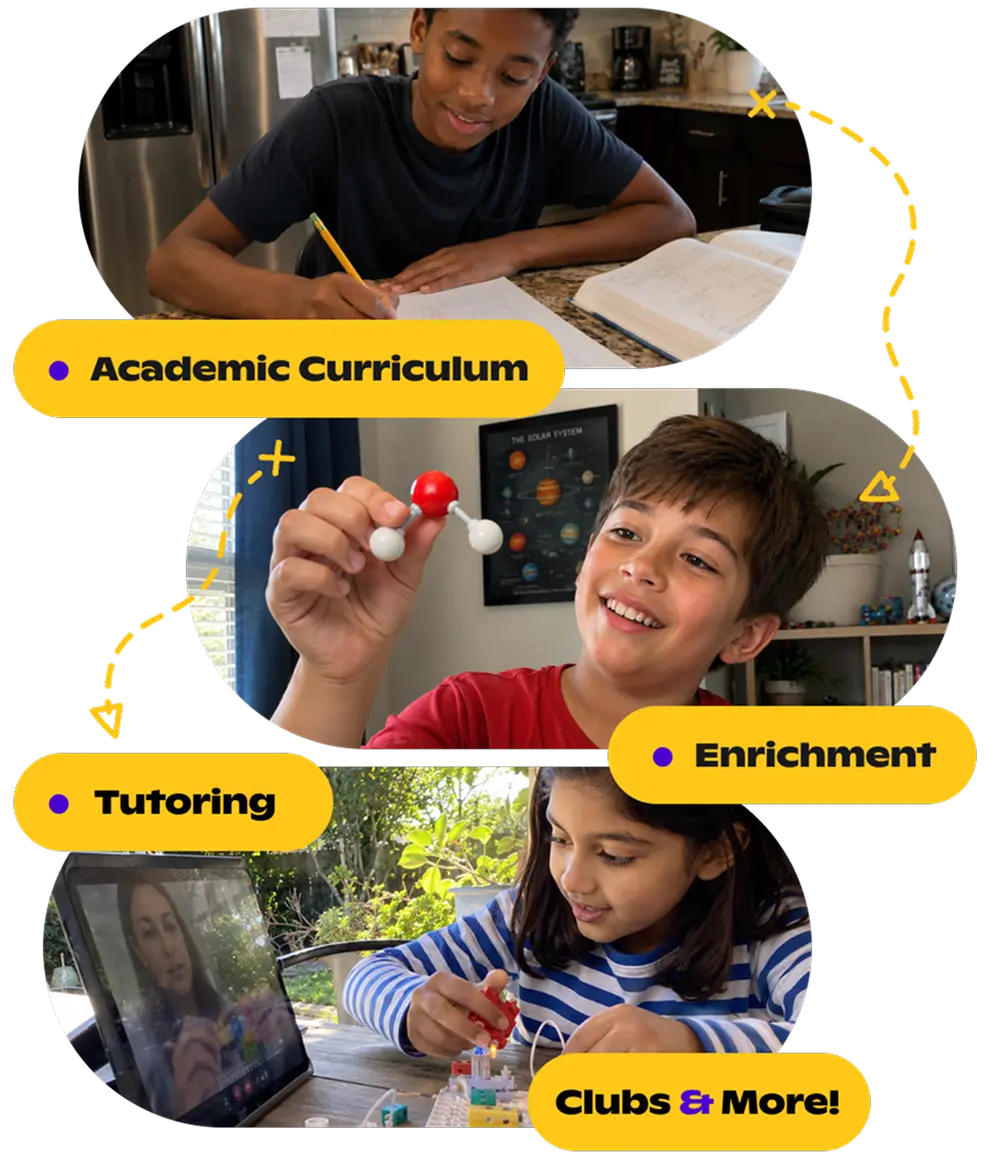
If part of your fall plan includes online classes, small live formats can make the first weeks easier because kids get a predictable schedule and a real teacher rather than a screen full of strangers. You can browse tutoring and small-group options to build a rhythm that fits your family, and our after-school homework routine guide pairs well once school is underway.
Sources
[1] Crowley, S.J., et al. "An update on adolescent sleep: New evidence informing the perfect storm model." Journal of Adolescence, 2018. https://pubmed.ncbi.nlm.nih.gov/29680183/
[2] Diamond, A. "Executive Functions." Annual Review of Psychology, 2013. https://pmc.ncbi.nlm.nih.gov/articles/PMC4084861/



.svg)
.svg)