First grade is when a lot of homeschooling parents start feeling the pressure. Kindergarten felt exploratory and flexible; first grade is supposed to be "real school." The reading has to click. The math has to progress. There's suddenly a sense that something is at stake.
That pressure is worth setting down. A first grade homeschool curriculum doesn't need to replicate a six-hour school day, and it doesn't need to look the same as what's happening in a classroom down the street. What it does need to do is meet your child where they are and move them forward in the skills that matter most at this age — primarily reading and math, with science, social studies, and enrichment filling in around them.
What to teach in first grade homeschool
Language arts and reading
This is the primary job of first grade. Kids who come in with a solid phonemic awareness foundation from kindergarten are ready to move from simple CVC words to more complex text — consonant blends, digraphs, long vowel patterns, and the silent-e rule. A common goal for first grade is developing the skills needed to read simple chapter books with increasing confidence and comprehension.
Language arts at first grade typically includes phonics and decoding, sight word expansion, reading fluency practice, basic writing (complete sentences, capitalization, ending punctuation), and handwriting. Browse first grade reading and writing classes on Outschool for live instruction that reinforces whatever phonics sequence you're using at home.
Math
First grade math builds place value understanding, addition and subtraction fluency within 20, measurement basics (length, time to the hour and half-hour), and beginning geometry. See our elementary homeschool math curriculum guide for a full breakdown of program options and how to choose between mastery-based and spiral approaches.
Science
First grade science is observational and exploratory. Topics typically include plants and animals, weather patterns, earth materials, and basics of light and sound. Two to three days per week is plenty.
Social studies
First grade social studies focuses on community, families, maps and basic geography, and how people meet their needs. This subject is well-suited to project-based learning and living books — most formal curricula are optional at this age.
Enrichment: art, music, and physical education
Art, music, and movement matter at first grade — not as extras, but as part of the full picture. These are often where six and seven year olds build the confidence that carries over into academic subjects. Elementary art and music classes on Outschool run live with real teachers and small groups.
First grade homeschool curriculum approaches
Structured and textbook-based
Structured curriculum options provide complete, daily-lesson frameworks across all subjects. They work best for families who want a clear daily plan and kids who thrive with predictable routine. Watch for: some of the most widely marketed structured programs have religious content throughout — look for explicitly secular options if that matters to your family. Skip confidently what your child has already mastered.
Classical
Classical programs structure first grade around the grammar stage: building factual knowledge, reading widely, and laying the groundwork for later analysis. Narration replaces worksheets for comprehension. Best for families drawn to a historically grounded, literature-rich education.
Literature and nature-based approaches
Literature and nature-based approaches center on living books, nature journaling, short focused lessons (15–20 minutes each), narration, and copywork. Best for families who want a gentle, literature-forward approach. Watch for: these approaches don't always include a rigorous, systematic phonics sequence — if your first grader hasn't fully decoded independently, add an explicit phonics program like All About Reading or Logic of English alongside it. For first grade writing specifically, see our elementary homeschool writing curriculum guide.
Eclectic
Most homeschooling families land here: using a dedicated math spine — Singapore Math, Math-U-See, and Saxon are popular secular options — a phonics program they trust, and a project-based, unit-study, or exploratory-based approach for everything else. Best for families who've tried one approach and found it only works partially.
How much time does first grade homeschool take?
The amount of time spent homeschooling in first grade varies widely from family to family. Some families prefer a structured academic routine, while others weave learning into hands-on activities, play, read-alouds, nature exploration, games, art projects, and everyday experiences.
Rather than focusing on a specific number of instructional hours, many homeschooling families prioritize nurturing curiosity, building foundational skills, and meeting their child's individual developmental needs. Because homeschooling is often more personalized and efficient than a traditional classroom setting, formal academics may range from a few short lessons each day to longer learning periods spread throughout the day.
$20 off your first class WITH promo code: blog
Build the Education your Kid Deserves
Discover thousands of live classes taught by expert teachers, across academics and enrichment.
Browse classesBuilding your first grade schedule
First graders vary widely in how they work best. Some are focused morning learners; others hit their stride after lunch. Some families prefer a structured routine; others find that learning woven through the whole day — through projects, outdoor time, and conversation — fits their child better. There's no single right schedule for first grade homeschool, and one of the advantages of homeschooling is the flexibility to find what works for your child specifically.
How Outschool fits into your first grade curriculum
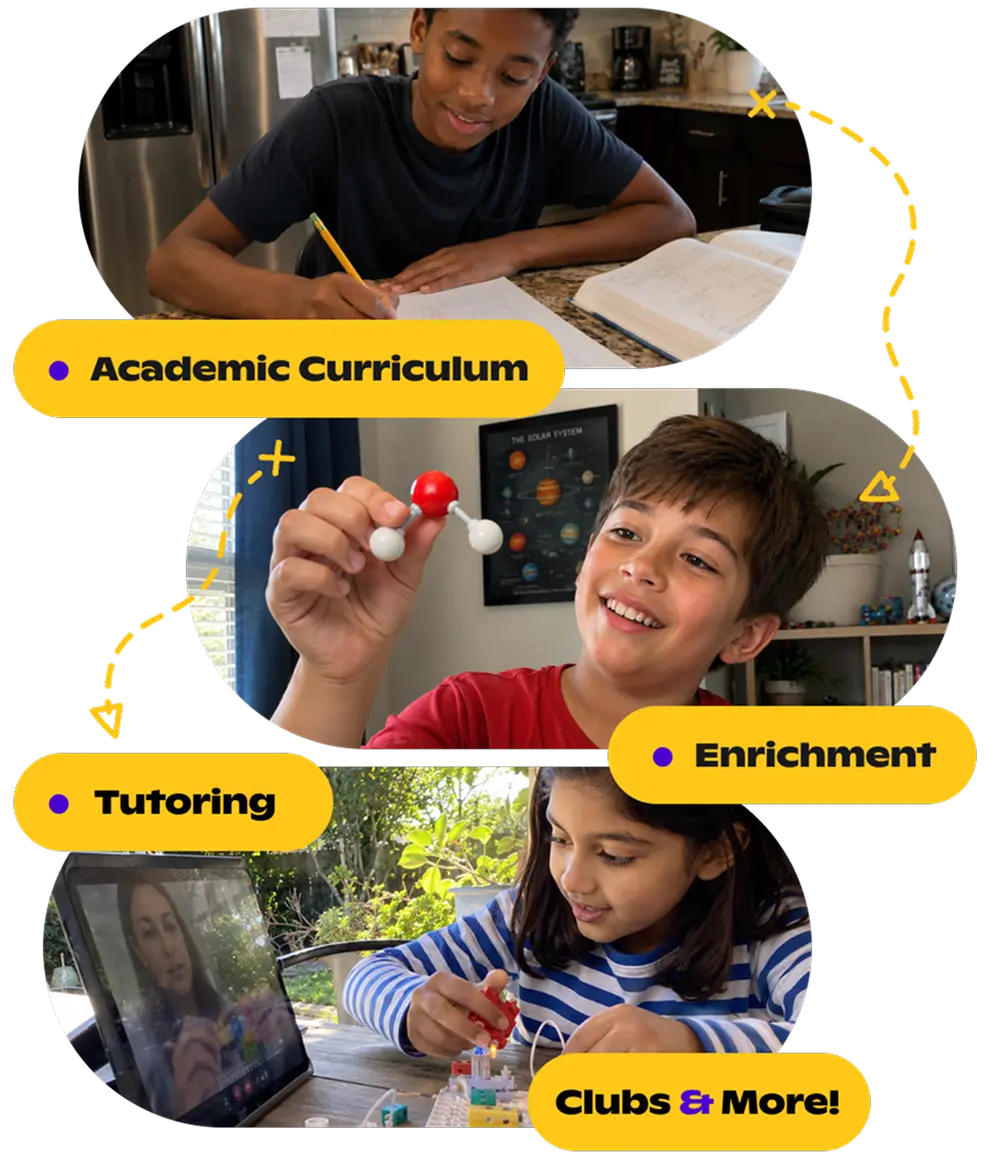
Outschool works alongside your core first grade curriculum, not instead of it. The live format gives first graders what most at-home programs can't replicate: a teacher who responds to them in real time and peers who make learning feel collaborative rather than solitary.
At first grade specifically, Outschool classes work well for math enrichment or targeted support, reading fluency practice, science and social studies unit studies, and art, music, and movement. Browse elementary school math classes and first grade reading and writing classes to find options across the full first grade range.
Putting it all together
A first grade homeschool curriculum doesn't have to be complicated. Choose a phonics program you trust, a math spine that moves your child forward, and add read-alouds, nature study, and enrichment to fill out the day. One to two focused hours of core work leaves plenty of time for the kind of interest-led exploration that makes homeschooling worth it.
Browse first grade math classes and first grade reading and writing classes on Outschool to find live instruction that fits your schedule and supports whatever you're building at home.



.svg)
.svg)