Second grade is the consolidation year. The foundations your child built in kindergarten and first grade — phonics, number sense, writing sentences — get deeper and more automatic. Throughout second grade, learners continue strengthening their reading, writing, and math skills by working with longer texts, more complex mathematical thinking, and increasingly detailed written communication. It is typically a year of strengthening foundational skills and increasing independence across reading, writing, and mathematics.
It's also the year when differences in learning pace become more visible. A homeschool curriculum gives you the flexibility to meet both realities without the pressure of a class moving at one speed.
What to teach in second grade homeschool
Language arts and reading
Second grade language arts moves from foundational phonics to advanced word study and fluency. Kids work through diphthongs, vowel teams, r-controlled vowels, and multi-syllable words — and shift from sounding out every word to reading chapter books at a functional pace. Reading comprehension continues to grow as learners work with increasingly complex texts and begin exploring skills such as identifying important ideas, making connections between texts, and considering an author's purpose.
Writing at second grade expands from simple sentences to multi-sentence paragraphs with a topic sentence and supporting details. See our second grade reading and writing curriculum guide and elementary homeschool writing curriculum guide for a full breakdown of what language arts instruction looks like at this level.
Math
Second grade math extends place value to hundreds and thousands, builds fluency with addition and subtraction within 100, introduces measurement with standard units, and lays early groundwork for multiplication through arrays and equal groups. Second graders also begin to think critically about numbers through more challenging word problems. See our elementary homeschool math curriculum guide for program comparisons and how to choose between mastery-based and spiral approaches at this level.
Science
Second grade science builds on first grade observation with slightly more structured inquiry. Topics typically include life cycles, habitats and ecosystems, forces and motion, and weather patterns over time.
Social studies
Second grade social studies expands from the immediate community to the wider world: neighborhoods, cities, maps and geography, basic economics (wants vs. needs, goods and services), and community helpers.
Enrichment: art, music, physical education, and coding
Second grade is a great time to add coding as an enrichment subject — kids this age have the attention span for it, and it builds logical thinking that transfers to math. Art and music are equally important, supporting creativity, fine motor development, and the kind of confidence that carries over into academic work. Physical education also deserves a regular place in the week: movement at this age supports focus and overall wellbeing. Elementary coding, art, and music classes on Outschool offer live instruction with real teachers in formats designed for 6–9 year olds.
Second grade homeschool curriculum approaches
Structured and textbook-based
Structured curriculum options offer organized instruction across core subjects with planned lessons and built-in guidance. They often appeal to families who appreciate having a clear framework while still allowing flexibility to meet their learner's individual needs. Watch for: some widely marketed structured programs have religious content throughout — look for secular options if that matters to your family.
Classical
Second grade classical homeschooling deepens the grammar stage: more memory work, richer literature, narration as the primary comprehension tool. Best for families fully committed to the classical model and kids who are strong oral communicators.
Literature and nature-based approaches
Literature and nature-based approaches at second grade expand the living books library, add more formal copywork and picture study, and introduce nature journaling with more structure. Watch for: these approaches need to be supplemented with systematic phonics for second graders who haven't fully transitioned to fluent reading.
Eclectic
Most families use a dedicated math spine alongside a reading or language arts program, then build everything else from unit studies, library books, and enrichment classes. Secular math spine options popular in the homeschool community include Singapore Math, Math-U-See, and Saxon — each takes a different approach (mastery-based vs. spiral) so it's worth reading comparisons before choosing. Best for families who've been homeschooling for a year or more and have a clear picture of how their child learns.
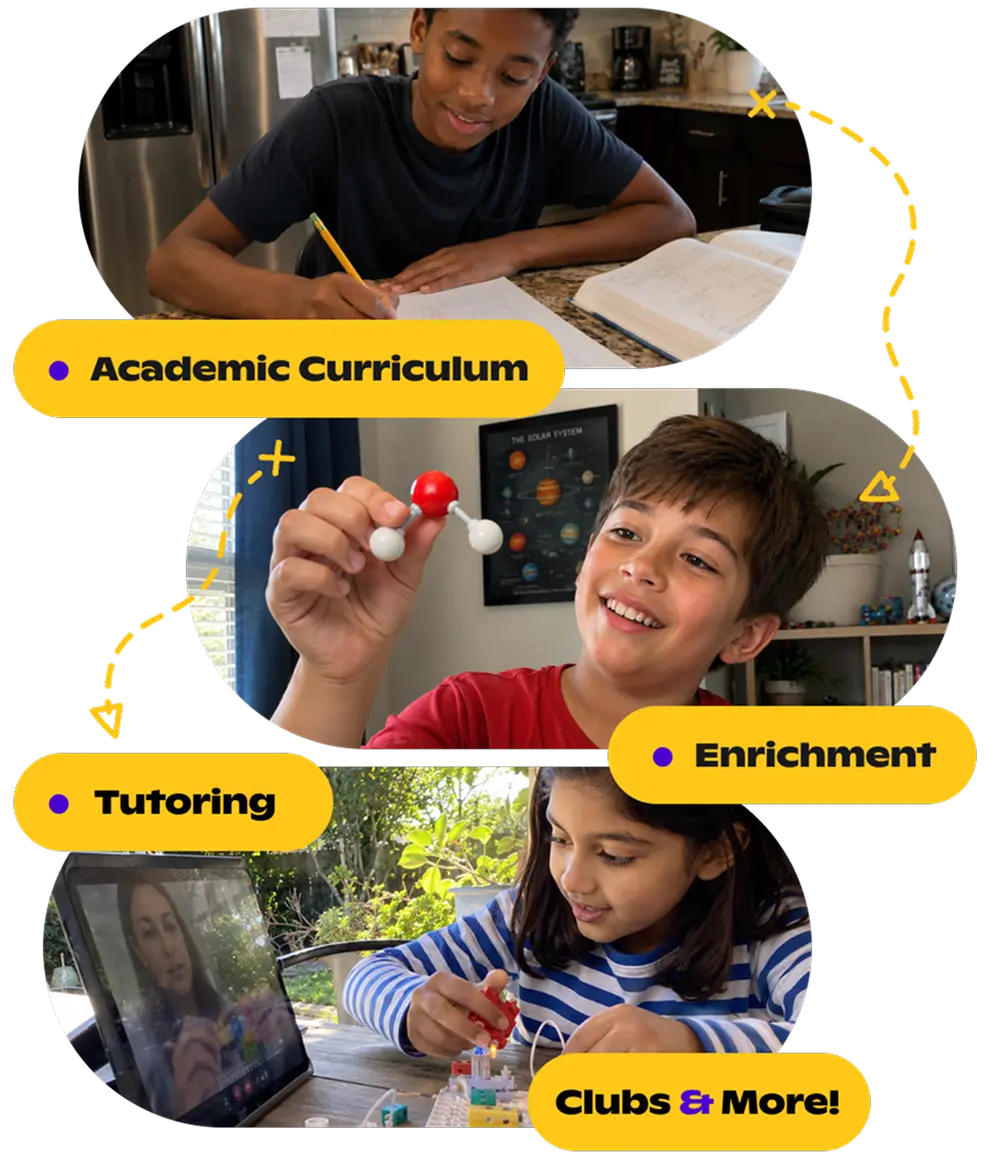
$20 off your first class WITH promo code: blog
Build the Education your Kid Deserves
Discover thousands of live classes taught by expert teachers, across academics and enrichment.
Browse classesHow much time does second grade homeschool take?
The amount of time spent homeschooling in second grade varies widely from family to family. Some families prefer a structured academic schedule, while others incorporate learning through projects, read-alouds, outdoor exploration, games, and everyday experiences.
Rather than focusing on a specific number of hours, many homeschooling families focus on consistent progress, engagement, and meeting their child's individual learning needs. Because homeschooling is often more individualized and efficient than a traditional classroom setting, academic learning may take anywhere from a short focused block of time to several hours spread throughout the day.
Building your second grade schedule
Second graders vary widely in how they work best. Some families anchor their day with a morning block of core subjects and save enrichment for later. Others weave subjects throughout the day or learn in longer project-based stretches. The amount of structure that helps or hurts depends entirely on your child. Adjust your approach over the first several weeks until you find what works, and don't hesitate to change it when it stops.
How Outschool fits into your second grade curriculum
By second grade, most kids are ready to engage with a live online class more independently. They can listen, respond, and stay on task for 30 to 45 minutes, which opens up more Outschool class options than were practical at age six. Browse second grade math classes and second grade reading classes on Outschool for enrichment that reinforces core work.
Putting it all together
Second grade is a genuinely satisfying year to homeschool. Kids are capable of more complex, independent learning and still young enough that learning feels like discovery. The key is keeping the pace honest: moving forward when your child is ready, slowing down when they need more time, and never mistaking finished the workbook for understood the concept.
As you build out your second grade plan, the first grade homeschool curriculum guide is the right reference if you're coming off a first grade year. Browse second grade math classes and second grade reading classes on Outschool to find live instruction that fits your schedule and extends whatever you're building at home.



.svg)
.svg)