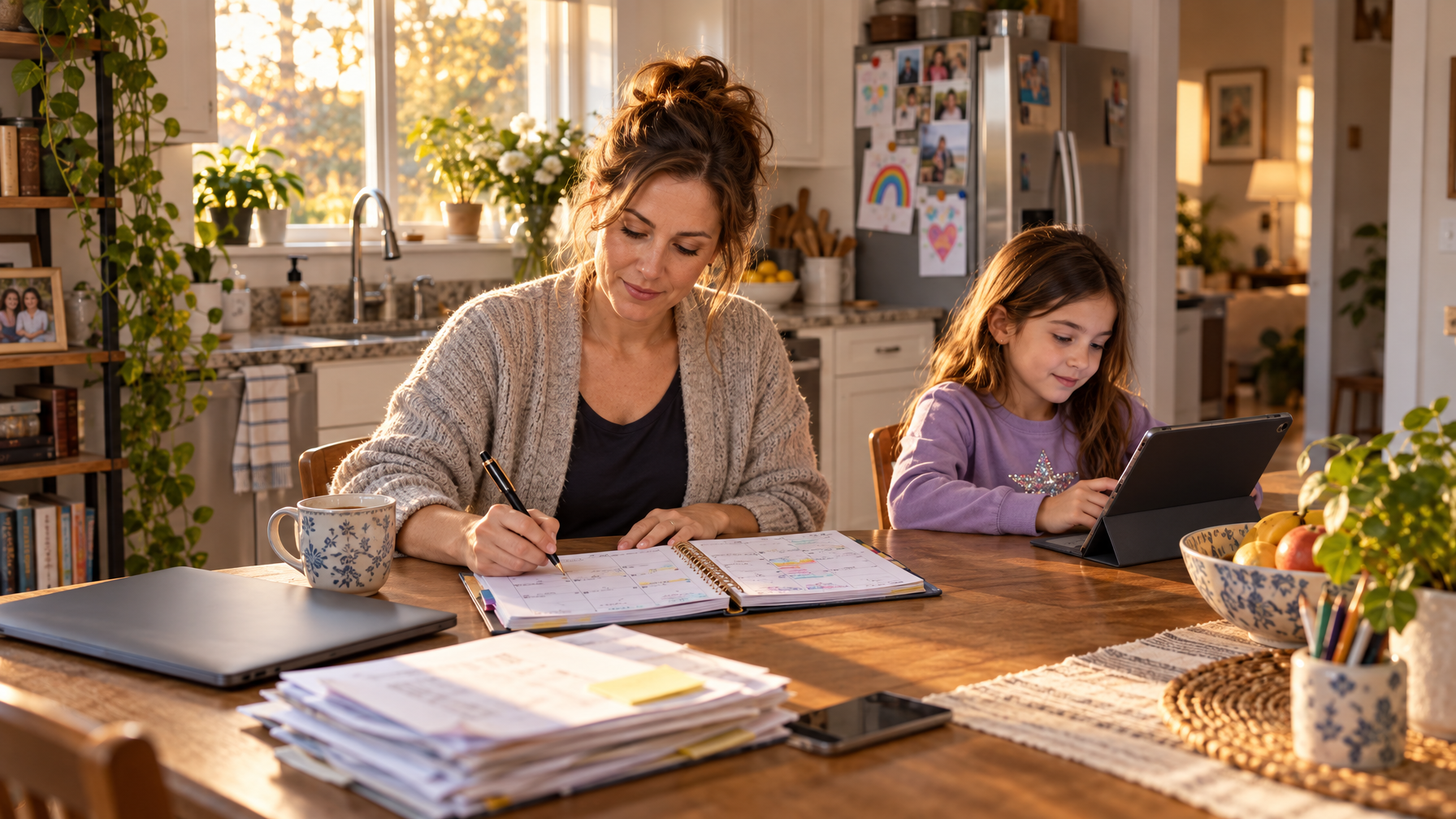
You pulled your kid out of school. Now what?
You filed the paperwork, bought the curriculum, set up a corner of the dining room table. You're ready.
Your kid is not.
They sit down on day one and ask, "Where's the worksheet?" or "What grade am I getting on this?" or they slump and say, "I don't want to do school anymore." And you think: we just left school. This is supposed to be different.
It is different. But your kid's brain doesn't know that yet. After years of bells, grades, permission slips, and being told when to eat, when to talk, and when to use the bathroom, they haven't switched off the mental model of what learning looks like. Neither have you, probably.
That's what deschooling is for.
What deschooling means
Deschooling is the adjustment period between leaving traditional school and starting homeschool in earnest. The term comes from Ivan Illich's 1971 book Deschooling Society, but in the homeschool community, it has a more practical meaning: it's the time you give your family to decompress, rediscover curiosity, and let go of school-shaped habits before you try to replace them with something new.
Deschooling is not the same as unschooling. Unschooling is a long-term educational philosophy built around child-led, interest-driven learning. Deschooling is a transitional phase. Some families deschool and then move into a structured curriculum. Others deschool and drift toward unschooling. Most land somewhere in between.
During deschooling, you're not teaching anything in particular. You're letting your kid (and yourself) release the assumptions you carried out of school: that learning only counts if it's measured, that sitting at a desk is required, that a "good" day means finishing the to-do list.
Why deschooling matters
Parents who skip deschooling often run into the same wall. They set up the homeschool room, open the curriculum, and within two weeks, they're battling tears, resistance, and the sinking feeling that this was a mistake.
What's happening isn't a homeschool problem. It's a timing problem. The kid hasn't had a chance to reset, and the parent is unconsciously recreating the environment they just left.
Deschooling matters because:
- It prevents burnout. Kids who go straight from traditional school into school-at-home often hit a wall within weeks. They associate desks, worksheets, and schedules with the environment they just left. Deschooling breaks that association.
- It rebuilds intrinsic motivation. Years of grades and gold stars can erode a kid's internal drive to learn. Deschooling gives that drive space to come back on its own.
- It helps you see your kid clearly. When the report cards and teacher feedback are gone, you start noticing how your kid actually learns, what they gravitate toward, and where they struggle, without the filter of someone else's assessment.
- It resets your own expectations. You probably left school with strong opinions about what a productive day looks like. Deschooling helps you question those opinions before they sabotage your homeschool.
How long deschooling takes
The most widely cited guideline in the homeschool community: one month of deschooling for every year your kid spent in traditional school. A kid who attended school through fifth grade (six years including kindergarten) would get roughly six months. A teenager who leaves after eighth grade might need nine months or more.
This isn't based on a clinical study. It's a rule of thumb passed down through decades of homeschool community experience, and it holds up well as a starting point. But the real answer is more nuanced.
Deschooling tends to take longer when:
- The kid had a negative school experience (bullying, learning difficulties that went unsupported, anxiety)
- The kid was in school for many years
- The parent jumps straight into a rigid curriculum that mirrors school
- The family is under pressure from relatives or the community to prove homeschooling is working
Deschooling tends to resolve faster when:
- The kid had some positive school experiences and left on neutral terms
- The parent gives genuine, unstructured free time without hovering
- The family has access to a homeschool community for social connection
- The kid has a strong interest or hobby to dive into
There's no test you can give to determine when deschooling is "done." You'll know when your kid starts asking questions again, pursuing something without being told to, and when the word "learning" doesn't make them flinch.
What deschooling looks like in practice
This is the part that's hardest for parents: deschooling often looks like nothing is happening. That's the point.
For your kid
During deschooling, your kid might:
- Sleep in, stay up late, and let their schedule drift
- Watch a lot of screens (more than feels comfortable to you)
- Seem bored, restless, or aimless
- Cycle through old toys, hobbies, and interests they dropped during school
- Start a project, abandon it, start another one
- Say "I'm bored" repeatedly (this is actually a good sign; boredom is the precursor to self-directed activity)
- Eventually, without prompting, pick up something and go deep on it
For you
During deschooling, you might:
- Feel anxious that your kid is "falling behind"
- Fight the urge to hand them a worksheet just to feel productive
- Compare your homeschool day to what their old classmates are doing
- Start questioning whether you made the right call
- Notice that your kid is calmer, sleeping better, and more talkative at dinner
- Gradually stop measuring days by what got "done" and start measuring them by what got noticed
One parent put it this way on a homeschool forum: "Deschooling felt like doing nothing for two months while panicking internally. Then my daughter started writing a novel about horses and I realized she hadn't written a thing voluntarily in three years of school."
The parent deschooling is just as important as the kid's
This is the part nobody warns you about. Your kid might adjust faster than you do.
Parent deschooling means confronting your own deeply held beliefs about what education should look like. Most of us carry a mental checklist: by third grade they should be reading chapter books, by sixth grade they should know long division, by ninth grade they need to be on track for college transcripts.
Those benchmarks came from a system designed to move 25 kids through the same material at the same pace. They don't map neatly onto one kid learning at home.
Signs you're still in your own deschooling phase:
- You feel guilty when your kid isn't doing something that looks educational
- You compare your kid's progress to grade-level standards daily
- You've bought three different curricula in six weeks
- You worry about what your parents, neighbors, or former teachers would say if they saw your kid playing at 10am on a Tuesday
- You keep saying "we need to get serious" about homeschool
These reactions are normal. They're also the exact instincts deschooling is designed to help you move past.
Deschooling by age: what to expect
Every kid deschools differently, but age gives you a rough idea of what to expect and how long it takes. Younger kids tend to bounce back quickly because they haven't internalized as many school-shaped habits. Older kids carry more conditioning and often need more time.
Kindergarten through second grade (ages 5 to 8)
Young kids deschool fastest. They haven't been in the system long enough to develop deep associations between learning and compliance. Most kids this age will naturally return to play-based exploration within a few weeks. Let them build, draw, dig in the yard, and listen to audiobooks. Formal academics can wait.
- Timeline: two to four weeks for most kids
- What you'll see: lots of pretend play, questions about everything, drawing, building, physical activity
- What helps: keep books and art supplies accessible, say yes to messy projects, resist turning their play into a lesson
- Watch for: kids who ask permission to play or who say "I'm bored" as a request for structure. Both are signs they're still in school mode.
Third through fifth grade (ages 8 to 11)
These kids have had enough school to internalize some of its patterns. They may ask for worksheets, or they may feel guilty about free time. They often need two to four months to decompress. Watch for the moment they start a self-directed project: that's your signal that curiosity is coming back online.
- Timeline: one to four months
- What you'll see: boredom (don't panic), screen time spikes, revisiting old toys or hobbies, resistance to anything that feels like school
- What helps: regular outdoor time, library trips with no requirements, a weekly social activity with other homeschool kids
- Watch for: kids who compare themselves to school friends ("They're already doing fractions") or who express guilt about not "doing school." Validate their feelings without rushing back to academics.
Sixth through eighth grade (ages 11 to 14)
Middle schoolers carry the heaviest social conditioning around grades, popularity, and fitting in. Switching from traditional school at this age often means processing social dynamics alongside academic decompression. Expect three to six months. Social connection outside school (co-ops, online classes, sports leagues) helps during this phase.
- Timeline: three to six months
- What you'll see: mood swings, identity questions, withdrawal from activities they used to enjoy, testing boundaries with you
- What helps: peer connection (this is non-negotiable at this age), physical activity, journaling or creative outlets, one-on-one conversations where you listen more than advise
- Watch for: signs of depression or anxiety that go beyond typical adjustment. If your kid's mood doesn't improve over several weeks, consider talking to a counselor.
Ninth grade and beyond (ages 14 to 18)
Teens who leave school may carry the most stress but also the most self-awareness. They can often articulate what wasn't working and what they want instead. Deschooling for teens tends to be emotionally intense but can resolve more quickly if the teen feels agency over the decision. The biggest parental trap here is pushing transcript and college anxiety onto the timeline.
- Timeline: four to nine months, though teens with strong self-awareness sometimes resolve faster
- What you'll see: sleeping in, emotional processing, deep dives into personal interests (music, gaming, art), questioning everything about school and authority, possibly anger or grief about time lost
- What helps: giving them real choices about their schedule, honest conversations about what comes next, access to mentors or older homeschooled teens, a creative or physical outlet that has nothing to do with academics
- Watch for: college and transcript panic (yours or theirs) cutting the deschooling period short. Teens who don't fully decompress often burn out again within months of starting a new program. Also watch for isolation that goes beyond healthy introversion.
What if you can't afford to take months off from academics?
The one-month-per-year guideline assumes full deschooling, where you set aside formal academics entirely. That's the ideal, but it isn't realistic for every family.
If you need to keep some structure going (because of state reporting requirements, because you're also working, or because your kid actually wants some routine), you can deschool partially:
- Keep it light. One or two subjects per day, max. Math practice and read-aloud time are enough to maintain skills without triggering burnout.
- Let your kid choose. If they want to do science experiments but not spelling worksheets, follow their lead. The autonomy is part of the deschooling process.
- Shorten the day. Two hours of focused learning is more effective than six hours of school-at-home resistance. Most homeschool families spend far less time on academics than a traditional school day.
- Build in exploration time. Block off afternoons with no agenda. Library visits, nature walks, and tinkering in the garage are deschooling in action.
The goal isn't perfection. It's making enough space for your kid to start associating learning with something other than compliance.
How to know when deschooling is over
There's no final exam. But most families recognize the shift when they see it:
- Your kid starts asking questions about things they're genuinely curious about
- They pick up a project or topic without being prompted
- The resistance to "learning time" has softened or disappeared
- You feel less panicky about the schedule and more observant of what your kid needs
- Your family has developed its own rhythm that doesn't look like school
At that point, you're ready to start building your homeschool plan around what you've learned about your kid during the deschooling period. Some families move into a structured online curriculum. Others build a flexible schedule around live classes, co-ops, and independent study. The path forward should reflect the kid you observed during deschooling, not the student profile from their last report card.
How Outschool fits into the deschooling process
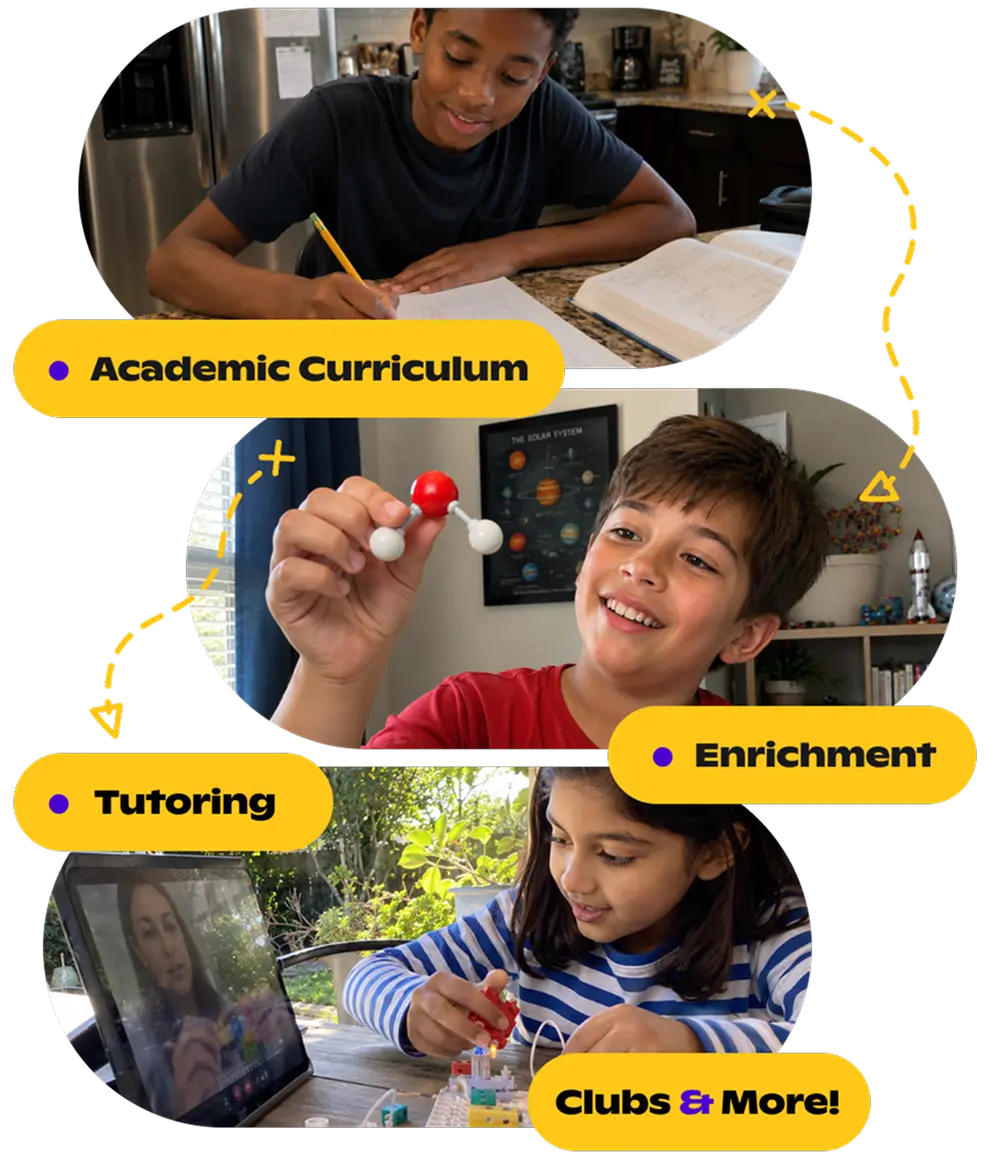
Outschool can be a useful bridge during and after deschooling. Because classes are interest-led, short-format, and chosen by the kid (not assigned by a school), they can reignite engagement without recreating the pressure of traditional school.
During deschooling, a single weekly class in something your kid loves (Minecraft world-building, manga drawing, debate club) can maintain social connection and a light sense of routine without academic weight.
After deschooling, Outschool classes can fill subject gaps, provide accountability through live teacher interaction, and give your kid peers to learn alongside. Browse classes by subject and age to find options that match your kid's interests at outschool.com/online-classes.
FAQ
Is deschooling the same as unschooling?
No. Deschooling is a temporary transition period. Unschooling is a long-term educational approach where learning is child-led and interest-driven without a set curriculum. Some families deschool and then adopt unschooling as their method. Others deschool and then move into a structured curriculum. Read more about the differences here.
Will my kid fall behind during deschooling?
Kids who deschool for a few months do not typically fall behind in any lasting way. The decompression period often leads to faster, more engaged learning once formal instruction resumes. A kid who's burned out and resistant will learn less in six months of forced academics than a kid who takes two months off and then dives into material with genuine interest.
My kid is asking for schoolwork during deschooling. Should I give it to them?
Yes, if they're asking out of genuine interest. No, if they're asking because they feel anxious or guilty about not "doing school." The difference matters. A kid who says "I want to learn about volcanoes" is following curiosity. A kid who says "Shouldn't I be doing math right now?" is still operating from a compliance framework. Gently redirect the second kid toward choice: "You can do math if you want to. What sounds interesting to you right now?"
How do I explain deschooling to family members who think we're just being lazy?
Frame it as what it is: a transition period recommended by experienced homeschool families and educators. You might say, "We're taking time to figure out how [kid's name] learns best before we invest in a curriculum. The homeschool community calls this deschooling, and most families who skip it end up redoing it later." Having a clear timeline ("We're taking the rest of the semester to deschool") also helps skeptical relatives feel less alarmed.
Do state homeschool laws allow time for deschooling?
State laws vary. Some states require a notice of intent to homeschool and have no instructional hour minimums, giving you full freedom to deschool. Others require a set number of instructional days or hours. Check your state's homeschool requirements to understand what flexibility you have. In most states, "instruction" is defined broadly enough that library visits, museum trips, and interest-led exploration count.
Sources
[1] Illich, I. Deschooling Society. Harper & Row, 1971.
[2] Gray, P. Free to Learn: Why Unleashing the Instinct to Play Will Make Our Children Happier, More Self-Reliant, and Better Students for Life. Basic Books, 2013. https://www.amazon.com/Free-Learn-Unleashing-Instinct-Self-Reliant/dp/0465025994


.svg)
.svg)