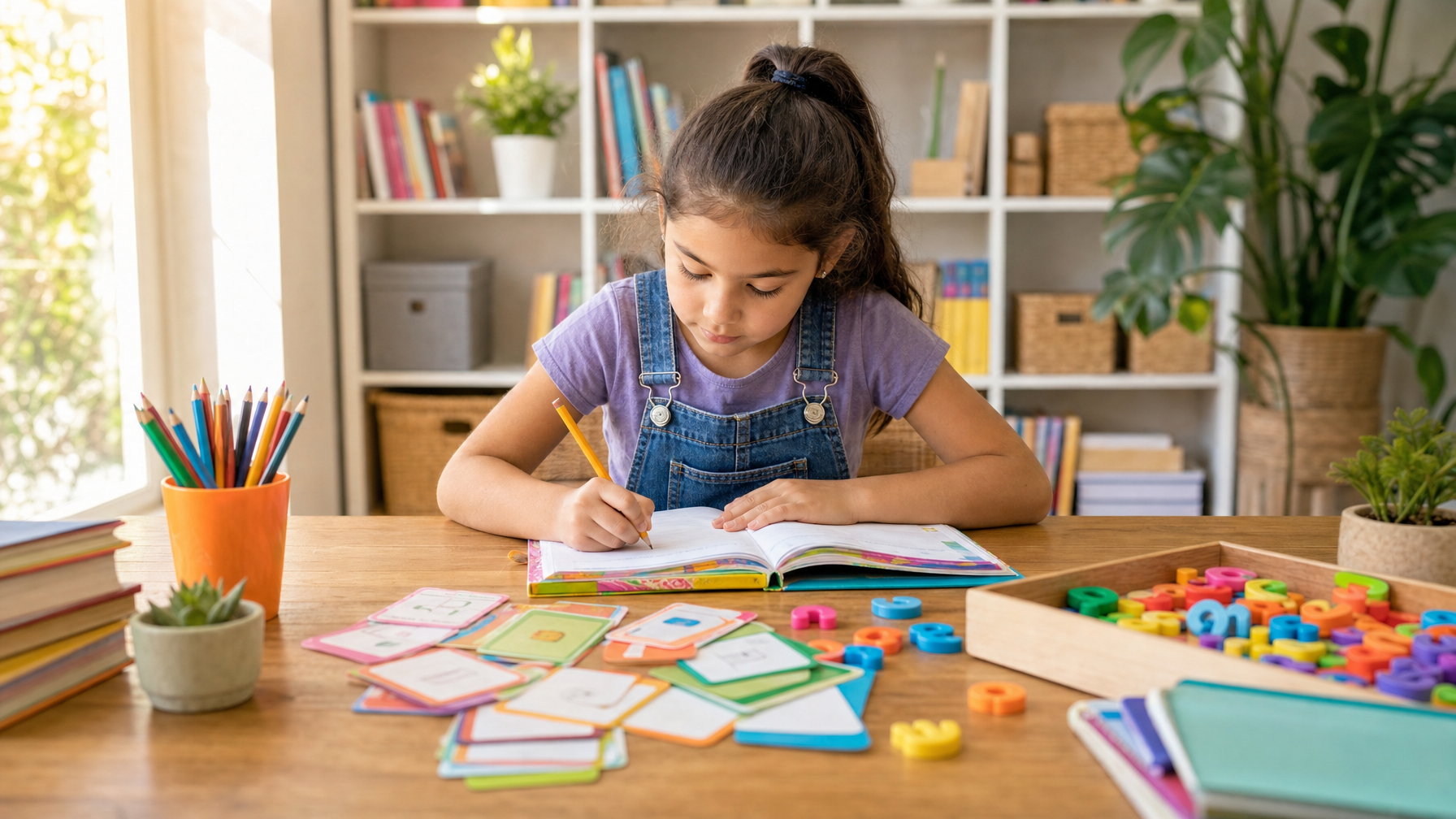
For some families, art is one of the main reasons they are drawn to homeschooling. It offers space for creativity, hands-on learning, and deeper exploration without being limited by strict schedules, testing, or narrow definitions of achievement. They may also find that creativity can be calming, promote brain development, and can be an engaging part of your homeschool day.
Many parents are unsure of what an art curriculum should look like at home. Should lessons be structured or open-ended? Do skills matter more than expression? This article will answer those questions as well as explore what a homeschool art curriculum might really include, how it can grow with your child, and how to build an art program that supports creativity, skill development, and artistic confidence.
What Is a Homeschool Art Curriculum?
In many homes, art projects happen naturally, like a clay creation on the kitchen table, or a handmade bracelet kit on the living room rug. Incorporating your child's love of creating can help nurture that creativity and help it grow over time.
Homeschool art lessons can include the steps of making, observing, and reflecting, allowing your child to grow as an artist and critical thinker. A quality homeschool art program builds visual literacy as children learn to recognize patterns, color, texture, and space.
What art education typically includes
Art education at home usually looks like a mix of creating, noticing, and thoughtful exploration. One day, your child may be comparing the shape and color of leaves they found on a walk. Another day may be mixing paint to match a sunset, or building a sculpture out of cardboard. Along the way, they begin learning simple skills, such as blending colors, adding detail, and using space on a page.
Over time, children naturally begin to describe how art makes them feel and to explore how art can be influential, playful, or calming. Art becomes both an activity and something to be understood, which fits in well with the homeschool philosophy.
Skill development vs. creative expression
Strong art programs give children skills and techniques that, in turn, increase confidence and creativity. Creating an environment of growth and exploration will likely result in meaningful work that isn’t perfect, but reflects learning and imagination.
Studies show that children involved in regular art projects show improvements in executive functions, such as planning and self-control. (Goldstein et al.)
How homeschool art can differ from classroom art instruction
Homeschool art typically unfolds slowly, as there’s no particular deadline or time constraint, so one project could go on for days or even weeks. For example, a child with an interest in portraits could spend a month diving into the world of faces, then another month experimenting with paint or digital design.
Homeschool allows for deeper learning rather than rushing to the next project to meet yearly goals.
Do Homeschoolers Need an Art Curriculum?
First, it is essential to check your state's requirements for art instruction. Read the requirements carefully, and reach out to the state’s education board, local homeschool groups, or local public school if you have questions.
Outside of state requirements, many parents feel art is an essential part of their child’s education and development. Research indicates that participation in art is associated with improved empathy, cooperation, and emotional regulation (Deasey). Art can also give children a place and time to slow down and express themselves. Rather than think of art as an afterthought, many homeschool families choose to make it a regular part of their weekly schedule.
What to Look for in a Homeschool Art Curriculum
Choosing an art curriculum can feel surprisingly overwhelming. Not only are you choosing projects and materials, but you are choosing a program that shapes your child’s creativity and teaches them to best utilize their self-expression.
The right program should fit your child's developmental stage and your family's lifestyle. Here’s what to consider when choosing a curriculum.
Age appropriateness
You’ll need to find developmentally-appropriate supplies. For example, younger children need to explore and experiment, while older children may be ready for technical projects and more structure.
If you’re looking for inspiration, the National Core Arts Standards provide a research-based structure that homeschoolers can use to create age-appropriate curriculum goals.
Supplies, cost, and prep
Some programs rely on a long list of materials and tools, while others use household items. Before choosing, consider how much prep time you have available and how much you are willing to spend on materials.
The best program will be simple to maintain week after week and won't overwhelm you.
Flexibility
Your art curriculum should allow you to stretch or pause projects when needed. Take a break when life gets busy, or dive in deeper when a passion arises. Look for programs that allow for adjustments and give you room to expand.
Art history and cultural exposure
Art comes to life when children learn about the cultures and styles of artists around the world. A thoughtful curriculum will introduce traditions, storytelling, and background in a way that transports the child to that time and place.
Documentation and portfolio
Older children will often incorporate a portfolio of work as a record of their growth and learning. You can use the portfolio to reflect on projects and track skill development.
Different learning styles
Most importantly, a quality art curriculum will allow for creative differences. Some children love step-by-step instruction, and some love open-ended space to explore. Your program should respect these differences and offer multiple ways to learn so that your child enjoys the process.
Types of Homeschool Art Curricula
When you are a busy homeschooling family, art can be a welcome part of your day, not an added stress. Below are options for current resources so you can begin to decide which works best for your family and schedule:
- Structured, lesson-based programs: These will provide step-by-step lessons and directions, gradually building skills. They work well for parents who appreciate a clear, laid-out plan and for children who like to know what to expect next.
- Project-based programs: These programs will focus on longer, unfolding creative assignments. This style works well in a homeschool because projects can pause when needed.
- Art history programs: These programs explore art through the lens of history, focusing on eras, artists' lives, and literature. This works well for the family who would like to incorporate art into their literacy or history classes. One example is The Smithsonian Learning Lab, which allows parents and students to create custom lessons using authentic museum objects and is complete with contextual information and artist backgrounds. Another option is live art classes on platforms such as Outschool.
- Interest-led: Take what your child loves already and create a meaningful art project, for example, a child who loves comics could research and create their own comic strip. Connecting learning to your child's passions will lead to deeper engagement and learning.
- Museum resources: Museums often offer high-quality art lessons, virtual tours, and downloadable materials for free that families can use as a complete curriculum.
Topics Typically Covered in Homeschool Art Education Curricula
Your child’s age will determine what art topics to include in your curriculum. In the early years, art will begin with playful exploration and gradually evolve into more intentional skill-building and personal expression. In a homeschool setting, learning can develop at your natural pace, following your child's interests and family's rhythm.
For preschoolers
Art instruction for preschoolers is rooted in sensory play and exploration. The goal at this stage is not polished projects with adult assistance, but rather exploration of materials and learning to use tools like brushes, markers, and clay. The process should be joyful and promote fine motor development and creativity.
For elementary school students
Elementary learners can begin building foundational art skills while expressing their creativity. This is the age to introduce specific techniques, more advanced materials, and famous artists and styles. Children are now able to discuss their process and reflect on what they see in their own artwork and in others'.
For middle school students
Middle school art becomes more reflective and skill-focused. Children begin to explore advanced techniques like shading, perspective, mixed media, and digital tools. Middle school students begin to study art history and traditions.
For high school students
High school students hone in on practicing and experimenting with their skills. Topics include design principles, photography, and art history analysis. Students participate in longer projects and portfolio-based learning, with more profound reflection.
How to Create a Day-to-Day or Weekly Routine for Homeschool Art
The great thing about art instruction at home is that it doesn't need the perfect block of time to thrive.
Many families find success by choosing one or two days a week as creative anchor days and building from there. On a creative anchor day, you might begin with a moment of inspiration that aligns with your theme, the current season, or an interest. You may read a story or watch a video to get the creative juices flowing. This gentle start gives your child direction, without feeling the pressure of direct instruction.
Then you may spend some time making. Consider allowing your project to evolve on its own, without a specific timeframe, and watch how some projects wrap up quickly, while others linger and grow over time as your child adds detail, does more research, or takes time to think.
Keeping supplies simple in the beginning will help, with a small cart or bin containing easy-to-access basic materials. For older children, a sketchbook or portfolio will become their home base and place to go when creativity sparks.
Instead of feeling like an extra subject, art becomes a calming part of your weekly rhythm.
How to Create Your Own Homeschool Art Curriculum
Start with a simple structure, a few high-quality resources, and an open mind. Once those things are in place, art becomes something that your family grows into, rather than one more thing you need to manage.
Start with gentle goals
Before choosing your lessons, take a moment to consider what you would like art instruction to look like in your home. For younger children, your goal may be to become comfortable with the materials and increase fine motor skills. For middle schoolers, you may want to boost confidence and art appreciation. For high schoolers, you may want them to build knowledge of a wide range of artists, art styles, and cultures, while developing more independent creative work. Let these goals guide your planning.
Choose a few anchor resources
Choose two or three trusted sources to build your beginning program. Build your week around a single creative anchor and choose one day. This keeps art present in your homeschool.
Plan in project cycles
Once you feel you have a basic structure, you can begin working in short project cycles lasting 2 to 4 weeks. For example, one cycle may focus on nature journaling, giving your child time to explore the outdoors and document their observations through art. Concentrating on one project for an extended period of time gives children time to try new things, practice skills, and breathe.
Save work and reflect
Keep a simple binder or box for all of your finished work, along with a few sentences about what your child learned and how the process went. For older students, this naturally becomes a portfolio, and for younger children, it is a beautiful story of growth.
Popular Homeschool Art Curricula
Many families will choose outside support for fresh ideas, extra guidance, or deeper learning. Below are some strong, flexible options that fit naturally into a homeschool routine.
Outschool’s online classical curricula and classes
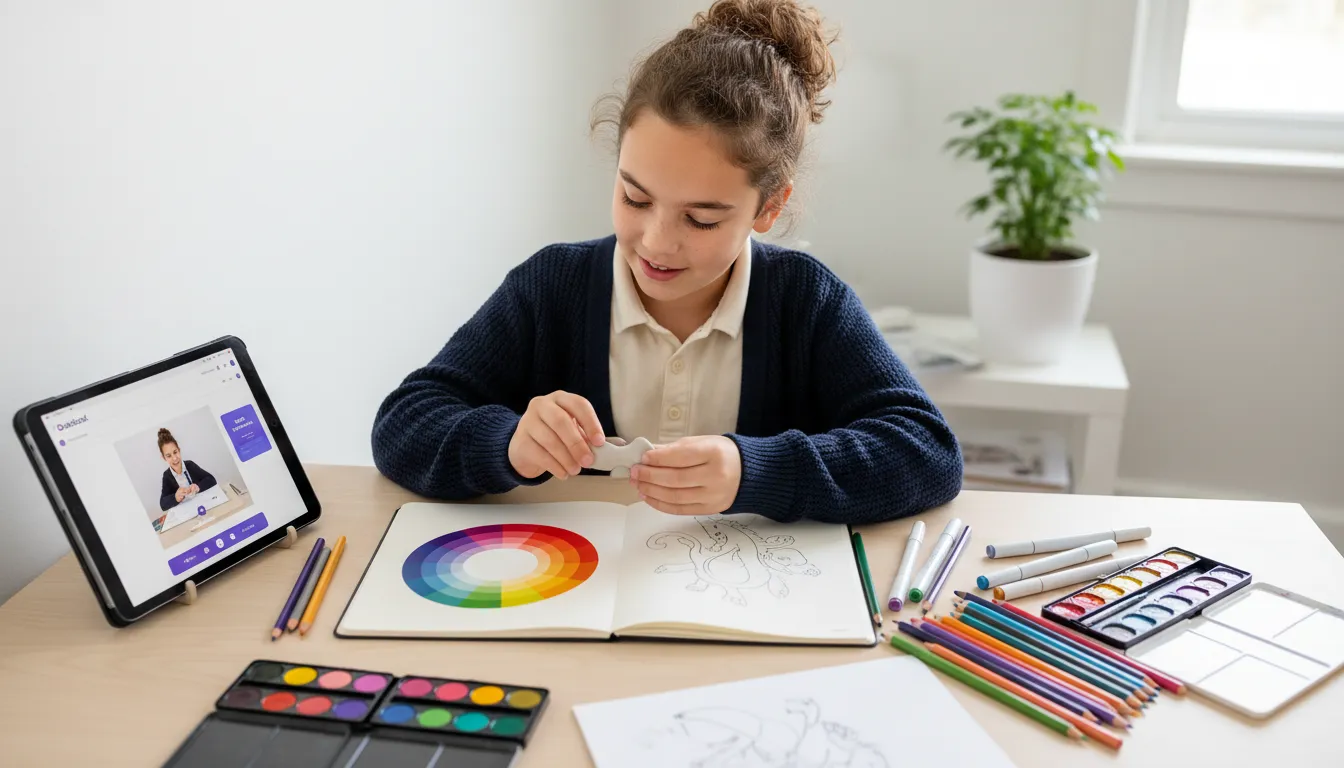
Outschool offers a wide range of live and flexible art classes that work well as both a core program and a supplement. Families can find technique-focused courses on drawing, painting, and color theory as well as creative studio classes that encourage self-expression. Outschool is the place to find interest-based enrichment for children who want to dive into fashion design or fantasy illustration.
It also offers classes on art history and culture that explore particular artists, movements, and traditions. In this small group setting, students can build confidence discussing art and hear others' points of view. Older learners can participate in portfolio-building classes, guided through the process of creating, reflecting, and documenting to support future goals.
Museum-based learning programs
Many national museums offer free art education resources. Their programs blend technique, art theory, and project starters in a way that feels approachable. Museum resources give homeschoolers access to places they may not be able to visit in person and see art from around the world.
For example, the National Gallery of Art offers free and downloadable lessons that span ages and topics, making them excellent building blocks for homeschool art study.
Family-built custom programs
Some families prefer to pick and choose resources and create their own program. It may work best for you to build a program based on interest-led projects, museum resources, and some online technique classes. Custom programs can grow over time, shifting from playful exploration to more intentional practice as your child develops.
Frequently Asked Questions: Homeschool Art Curricula
If you are new to planning art lessons at home, you probably have a few practical questions. These are some common questions families ask as they build a creative routine to fit their homeschool.
How many hours should you spend on art instruction per week?
Many families aim for one to two sessions per week, but there is no “right” amount of time. What matters is consistency. Giving your child time every week to learn and then openly create, explore, and reflect is more critical than specific timing.
Do museum visits count as art education?
Yes! Museum visits, virtual tours, and guided art studies all count as art education. Looking closely at artwork, learning about the artists, and discussing what you see are all aspects of visual literacy and creative thinking.
If you cannot visit a museum in person, using a website like Google Arts and Culture can offer a virtual experience.
Does homeschool art need to be graded?
Most families choose not to use traditional grades for art, especially in the younger years. Instead, they focus on participation, effort, and personal growth. For older students, project reflections, portfolios, and skills checklists can be helpful ways to measure learning.
Art That Grows With Your Child
Art has a way of becoming something children carry with them. When you give space to art, you allow your child to build confidence, curiosity, and a creative voice that will grow alongside them. Longitudinal research shows that sustained engagement in the arts is linked with higher well-being and life satisfaction in adolescence and beyond. (Conner et al.) With a simple rhythm, thoughtful resources, and room for imagination, art can become a meaningful and rewarding part of your homeschool journey and your child’s life.
Sources
Deasy, Richard J., editor. Critical Links: Learning in the Arts and Student Academic and Social Development. Arts Education Partnership, 2002.
Goldstein, Tina R., et al. “Artistic Activities and Executive Functioning in Children.” Journal of Applied Developmental Psychology, vol. 41, 2015, pp. 79–89, https://doi.org/10.1016/j.appdev.2015.05.003.
Hetland, Lois, et al. Studio Thinking 2: The Real Benefits of Visual Arts Education. Teachers College Press, 2013.
Smithsonian Institution. Smithsonian Learning Lab. Smithsonian Institution, 2024, https://learninglab.si.edu.
National Coalition for Core Arts Standards. National Core Arts Standards: A Conceptual Framework for Arts Learning. NCCAS, 2024, https://www.nationalartsstandards.org/


.svg)
.svg)