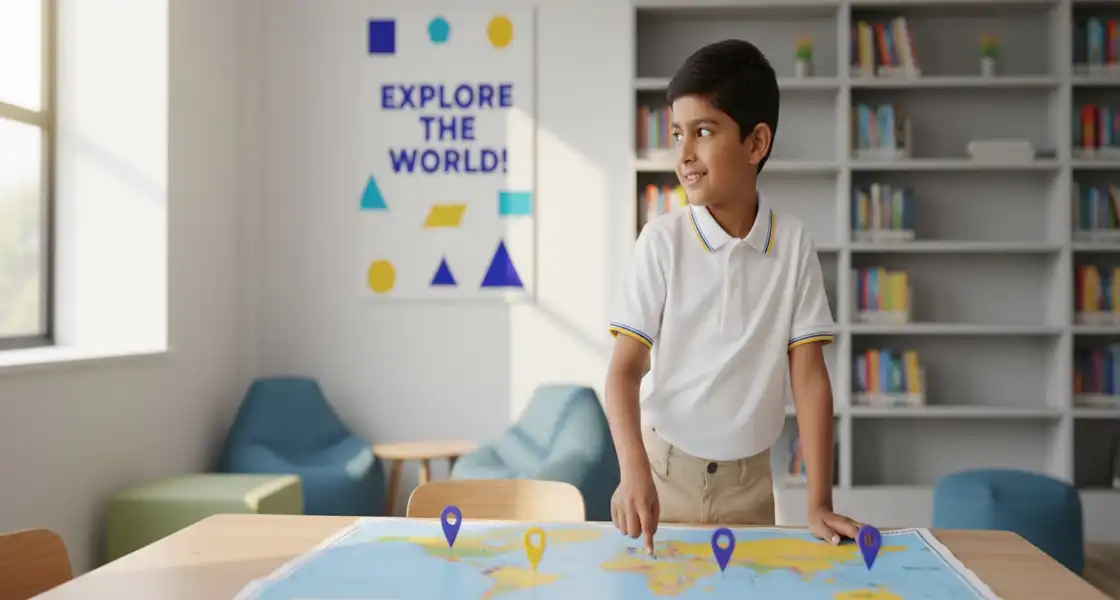
Your eight-year-old traces the route to Grandma’s house on a map while you plan weekend errands. On the way to the grocery store, she notices how different neighborhoods look and asks why. In those small, curious moments, she’s already building social studies skills, learning about geography, community, and culture.
A strong third grade social studies curriculum helps children explore them through real experiences, hands-on projects, and authentic problem-solving. If you're creating your own lessons or exploring third grade and social studies classes, Outschool provides supportive options to help you turn that natural curiosity into meaningful, hands-on learning experiences that fit your family's rhythm.
Core topics in a third grade social studies curriculum
Imagine your child pointing out landmarks on a map during a road trip or wondering how your neighborhood came to be. In third grade social studies, curiosity like this becomes the foundation for learning.
Your curriculum may focus on four key areas: geography, civics, economics, and history, which help children understand how people, places, and events connect. At this age, kids are eager to explore their place in the world, making it an ideal time to nurture real-world awareness through discovery and conversation.
1. Geography and map skills
Your third grader may begin to see how geography connects people and places. They explore maps, globes, and landforms, learning how directions, symbols, and regions tell the story of our world. This helps them understand their place in relation to others and how geography influences communities.
Skills they may learn:
- Reading map keys and the compass rose, using a simple scale to estimate distance.
- Naming landforms and bodies of water; locating their community, state, country, and continent.
- Comparing regions and observing how climate and physical features impact the way people live.
2. Communities, civics, and culture
At this age, your child will become more aware of how families, schools, and towns work together. Focus on roles, rules, and responsibilities, helping them understand fairness, cooperation, and what it means to be an active participant in a community. They also learn to appreciate different cultures and traditions that make each community unique.
Skills they may learn:
- Comparing communities (rural, suburban, urban) and cultures (traditions, holidays, languages, foods) with curiosity and respect.
- Distinguishing rules from laws and recognizing the roles of community helpers and local leaders.
- Noticing how decisions are made in groups and how people can contribute in age‑appropriate ways (class or family “councils,” service ideas).
3. Economics and history basics
Your child will begin to grasp how the past influences the present and how people make choices about goods, services, and resources. They will learn about needs and wants, trade, and how communities develop over time, understanding economics and history as part of everyday life.
Skills they may learn:
- Understanding the difference between needs and wants; identifying goods and services, as well as producers and consumers.
- Building early financial literacy: saving, spending, sharing/donating; comparing simple prices; planning a very simple budget for a project.
- Reading and creating timelines; asking questions about sources; describing cause and effect between past events and life today.
How to make third grade social studies engaging at home
You don’t need elaborate lesson plans or expensive materials to make social studies meaningful. Small, consistent routines, paired with open-ended projects, transform everyday life into a rich practice in geography, civics, economics, and history.
Here are ways to weave social studies into your week:
- Create daily map moments: Spend 5–10 minutes locating new places, tracing errand routes, or comparing weather across regions. These short habits set up the map‑making and neighborhood treasure hunt project you’ll see below.
- Give real community roles: Invite your child to interview a neighbor, plan a small service idea, or role‑play a town meeting. These experiences make civics concrete and feed into reflective pieces.
- Offer choice in project formats: Let your learner decide how to share understanding: poster, skit, slideshow, or a mini‑podcast. Choice keeps motivation high and fits naturally with the economics “pretend marketplace” and other projects.
- Connect current events to local life: Talk about how national or world news affects your community (jobs, weather, celebrations). Tie those conversations to map work or your marketplace prices to show how events are connected.
- Try a family marketplace: Use tokens or play money to buy and sell snacks or chores. Talk about needs vs. wants, label goods and services, notice producers and consumers, and keep a tiny budget.
- Use family stories as primary sources: Record a quick interview with a grandparent or caregiver and place photos on a timeline. This supports history and helps your child see change over time.
These strategies honor how children learn best, through exploration, choice, and connection to their world.
$20 off your first class WITH promo code: blog
Build the Education your Kid Deserves
Discover thousands of live classes taught by expert teachers, across academics and enrichment.
Browse classesThird grade social studies helpful resources
Finding the right materials and tools can bring social studies to life at home. Here are a few trusted resources to explore as you plan lessons or projects:
- Live social studies classes: Live, flexible classes that explore geography, history, civics, and culture are ideal for supplementing your homeschool plan with interactive learning.
- Smithsonian Learning Lab: Free digital collections, activities, and primary sources perfect for projects like timelines or community studies.
- National Geographic Kids: Engaging articles, videos, and games that bring world cultures and geography to life.
- Public library resources: Access to books, map kits, and local history materials. Many libraries also offer educator cards and printable materials.
These resources offer flexible ways to balance structure with exploration, making social studies a subject that’s enjoyable for the entire family.
Third grade social studies curriculum: Frequently asked questions (FAQs)
Learning how to build a third grade social studies curriculum for your homeschooler brings up numerous questions. These FAQs help you create a plan that meets your child's needs while giving you confidence in your approach.
How do you align a homeschool plan with standards without losing flexibility?
Start by reviewing your state’s requirements so you know the must‑dos, then set a few community‑focused goals that match your child’s interests and pace. Turn those goals into short, flexible lessons and document progress with simple notes and work samples—enough to show growth without locking you into a rigid schedule.
How much time should third graders spend on social studies each week?
There’s no one‑size‑fits‑all schedule in homeschooling. Many families find short, frequent touchpoints work well. Follow your child’s energy, attention, and your state’s requirements. Count real life, too: map chats on errands, read‑alouds, quick interviews, and mini projects all add up and keep motivation high.
How do you know if your child is making appropriate progress?
Look for steady growth in the specific skills you’re practicing. Progress looks different for every homeschool, so watch for patterns over weeks, not single days, and collect quick evidence in a light portfolio.
Do I need a formal textbook to teach third grade social studies at home?
Not necessarily. Many homeschool families incorporate public library books, museum visits, kid-friendly websites, and simple projects into their curriculum. If you like structure, choose a “spine” text and build around it with the hands‑on ideas in this article (daily map moments, a family marketplace, a family timeline). Keep a concise scope and sequence for the year, check your state’s requirements, and maintain a lightweight portfolio of maps, timelines, photos, and reflections.
How can we integrate social studies with reading and writing?
Use read‑alouds, picture books, and short articles as springboards for maps, quick writes, and mini‑research. Try travel‑style journal entries that pair with a map you drew together, friendly letters to a community helper or historical figure, captioned timelines, and simple reports that include needs vs. wants or a tiny budget.
Turning everyday moments into social studies
Building a meaningful third grade social studies homeschool curriculum begins with your child’s curiosity. Start with what naturally interests them: maps, family stories, or the community around you, and use that spark to guide learning. Everyday experiences, such as visiting a museum, exploring local landmarks, or talking with community helpers, make lessons authentic and memorable.
As your child’s understanding grows, keep a balance between structure and exploration. When you need extra support, social studies classes on Outschool offer guidance, connection, and flexible options to help keep your curiosity and confidence thriving throughout your homeschool journey.


.svg)
.svg)