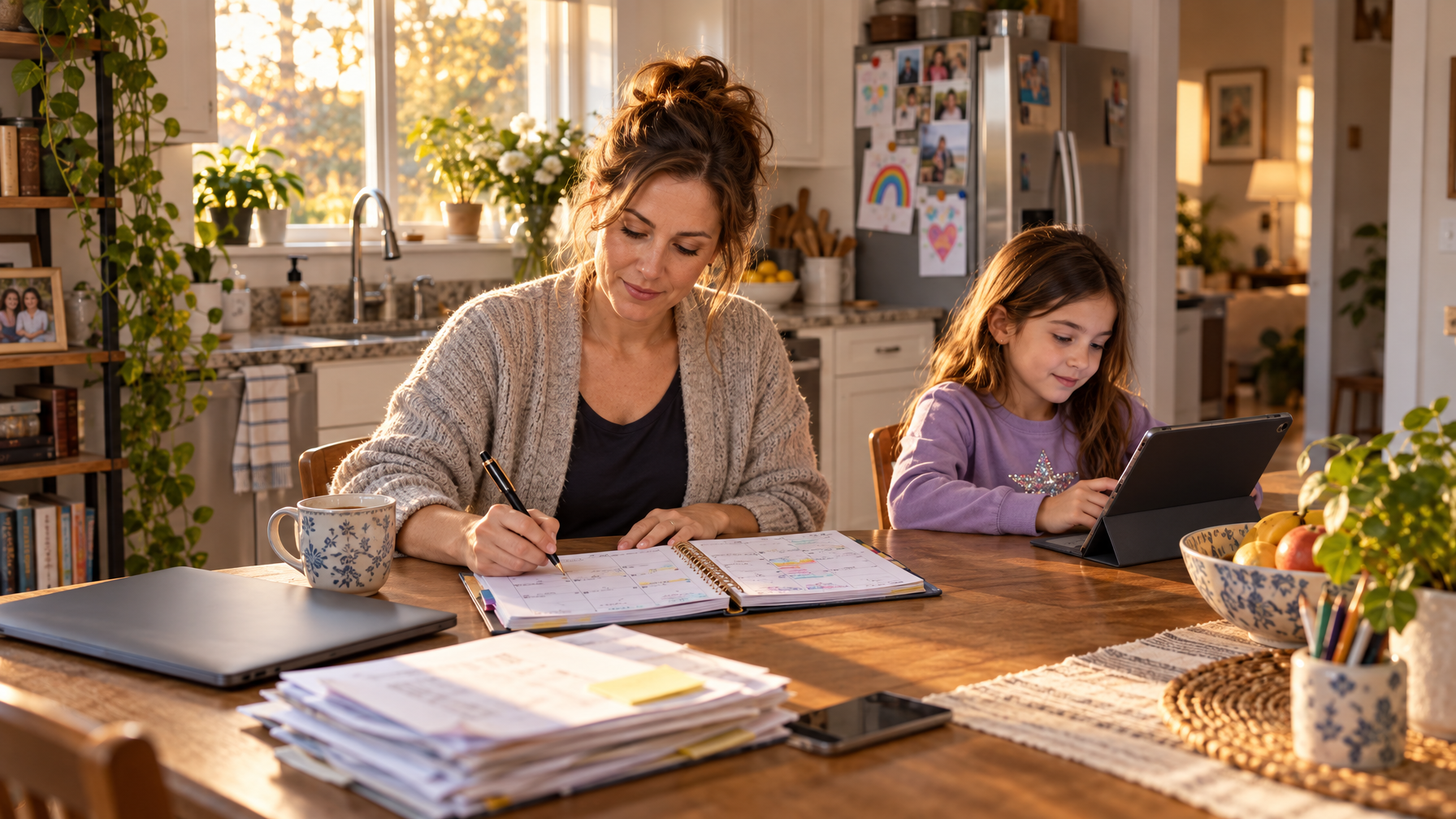
Every day, families face a big decision: how and where their child will learn best. With over 3 million kids now homeschooled in the U.S., the homeschool vs public school conversation is more relevant than ever. Whether you’re exploring options or reassessing your current choice, it all comes down to helping your child thrive in an environment that suits them.
Today’s education landscape offers more flexibility than ever. Some kids do well in traditional public schools, while others flourish with the personalized pace of homeschooling. Many families blend both, using platforms like Outschool to supplement learning with live, interest-based classes. Let’s explore the real pros, cons, and practical considerations to help you find what fits your family best.
The main differences between homeschooling and public schooling
Homeschooling and public schooling offer distinct approaches to learning, each with its advantages. Homeschooling allows flexible pacing and personalized content tailored to a child's interests and needs. Public schools, meanwhile, offer structured learning environments, consistent peer interaction, and built-in support services.
Here’s how they compare:
- Curriculum: Homeschooling offers a flexible and customizable curriculum shaped around your child’s pace, interests, and your family’s values. Public schools follow standardized curricula aligned with grade-level and state requirements.
- Socialization: Homeschooling families plan social opportunities through co-ops, community groups, mixed-age activities, and, in many states, access to public school classes, clubs, or sports. Public schools naturally provide daily interaction with same-age peers through classes, clubs, and extracurricular activities.
- Specialized support: Homeschooling allows personalized approaches for neurodiverse learners, with special services sometimes accessible through public schools or dedicated programs. Public schools provide access to IEPs, speech therapy, and trained special education staff.
- Learning environment: In homeschooling, the world becomes the classroom; every aspect of learning can be customized to meet your child’s needs. Public schools offer a consistent classroom structure but with less room for individual customization.
Is homeschooling more effective than public school?
Both homeschooling and public school can produce excellent academic outcomes when aligned with your family's strengths and your child's learning style. When parents consider whether homeschooling delivers stronger academic results than public school, the research reveals encouraging insights that can help guide their decision.
- Homeschoolers consistently outperform public school peers on standardized tests, scoring 12.2 percentile points higher.
- Public schools provide certified teachers and specialized support services that can be invaluable for learners with disabilities, language barriers, or those who thrive with professional educational guidance.
- Individualized pacing becomes possible in homeschooling, allowing advanced learners to accelerate through subjects while giving others time to master concepts without pressure to keep up with a class.
- Homeschooling offers unmatched flexibility. As the parent, you can guide instruction based on your deep understanding of your child’s unique learning style and needs.
- Access to specialized facilities differs significantly. Public schools often offer science labs, music rooms, art studios, and sports facilities, while homeschool families create learning spaces at home and seek community resources like museums, co-ops, and local programs.
- Learning differences receive tailored support. Public schools offer formal IEPs and specialized staff, while homeschooling allows complete customization of teaching methods and schedules for neurodiverse learners.
Socialization and life skills: How do homeschool and public schools compare?
One of the most common questions parents ask is how homeschooling affects a child's social skills compared to public school. Research shows that children in both settings can develop strong social abilities, though the paths look quite different.
- Homeschoolers build diverse social networks through co-ops, community activities, and mixed-age interactions that mirror real-world relationships. Research shows they often score above average in social skills assessments.
- Public school students practice daily peer interaction in structured environments where they learn to navigate group dynamics, resolve conflicts, and work collaboratively on team projects.
- Homeschooling families create intentional social experiences by joining sports teams, theater groups, volunteer organizations, and faith communities that align with their values and interests.
- Public schools provide built-in social structure with regular exposure to diverse perspectives, backgrounds, and personalities within age-grouped settings.
- Children with diverse learning needs benefit differently from each approach: homeschooling allows for highly personalized social skill development, while public schools offer structured special education services and peer support groups.
- Homeschool parents must actively seek social opportunities to ensure their children develop strong interpersonal skills, requiring more planning but offering greater control over social influences.
- Both paths can produce socially confident children when families prioritize meaningful connections and provide opportunities for learners to practice communication, empathy, and leadership skills.
Pros and cons of homeschooling vs public school for families
Choosing between homeschooling and public school depends on your work schedule, your child’s needs, and your family’s values. Both paths offer meaningful benefits, along with a few trade-offs.
Homeschooling stands out for its flexibility and personalization. Families can travel during off-peak seasons, adjust learning to suit their schedule, and explore topics that deeply interest their child. This approach is constructive for neurodiverse learners, as it allows for customized environments, frequent breaks, and therapeutic integration.
Public school, in contrast, offers a structured setting with certified teachers, access to formal resources, and daily peer interaction. Children benefit from group learning, extracurricular activities, and exposure to different teaching styles.
Public schools also provide services like IEPs and trained specialists for those with special education needs. That said, limitations include larger class sizes, less individual attention, and less flexibility in schedule and curriculum.
$20 off your first class WITH promo code: blog
Build the Education your Kid Deserves
Discover thousands of live classes taught by expert teachers, across academics and enrichment.
Browse classesThe socialization question
Research on homeschooled children's social development consistently shows that homeschooled kids score at or above average on social skills assessments [1]. The mechanism matters: homeschool families who are intentional about social opportunities tend to produce well-socialized kids. Families who homeschool in isolation tend not to.
The trade-off in homeschooling is not that it produces worse social skills. It's that it requires active planning to produce good ones. Co-ops, community activities, online classes with peers, sports teams, faith communities, and neighborhood relationships are all part of that. None of those are automatic the way hallway interaction is in a traditional school.
The cost question
Public school is tuition-free. Homeschooling is not, though the range is enormous. Some families spend under $500 a year on library books, free online resources, and co-op fees. Others invest several thousand in curriculum, tutoring, and enrichment classes.
The growing availability of Education Savings Accounts (ESAs) and state scholarship programs is changing the cost equation. More than 30 states now offer some form of education funding that homeschool families can access, with awards ranging from around $1,000 to more than $10,000 per student per year. In Florida, the Personalized Education Program provides approximately $8,000 per student. In Texas, the Education Freedom Account provides $2,000 for homeschool families. These funds can cover curriculum, online classes, tutoring, and other approved educational expenses.
Public school families also have costs that are easy to overlook: school supplies, activity fees, fundraiser contributions, before- and after-care, and the opportunity cost of a schedule that's built around the school day, not your family's needs.
Hybrid approaches: it doesn't have to be all or nothing
Many families land somewhere between full homeschool and full public school. Common hybrid arrangements include:
- Part-time public school enrollment: some districts allow homeschoolers to take specific classes (lab sciences, band, AP courses) or participate in extracurriculars.
- Homeschool plus online classes: families handle core subjects at home and use live online classes for subjects that benefit from a teacher or peer group. Outschool's homeschool classes cover math, writing, science, languages, and enrichment with small-group formats and real-time interaction.
- Co-op plus home instruction: homeschool co-ops provide weekly group instruction in a few subjects while families cover the rest at home.
- Seasonal switching: some families homeschool for part of the year and enroll in public school for the rest, depending on family schedules, travel, or a child's social needs.
The question isn't really "homeschool or public school." It's "what combination of learning environments gives this particular kid what they need right now?" The answer might change year to year, or even semester to semester.
How to decide
- Why are we considering this now? If something specific happened in your child's current school, is that problem solvable without changing the whole structure?
- What does our child need that they're not getting? Be as specific as possible.
- What is our capacity? Time, flexibility, budget. What can we realistically provide consistently? If both parents work full-time, see our guide to homeschooling while working full-time.
- What does our child want? Older kids' preferences carry real weight.
- What's our plan for the parts we can't cover? No parent can teach every subject at every level equally well. Online classes and tutoring are the most common answers.
Frequently asked questions
Can I start homeschooling mid-year?
Yes. In most states, you can withdraw your child from public school at any point in the year and begin homeschooling. For a detailed walkthrough, see our guide on switching from traditional school to homeschooling.
Does homeschooling hurt college admissions?
No, when done with a documented transcript, standardized test scores, and a strong application. Many colleges actively seek non-traditional applicants.
Can homeschooled kids access public school sports or extracurriculars?
This depends entirely on state law and individual district policy. Contact your local district directly.
Does my state have ESA or voucher funding?
More than 30 states now offer some form of program. Award amounts range from around $1,000 to more than $10,000 per student per year. See our ESA guide for current program details by state.
What if we try it and it doesn't work?
Kids can return to public school. The re-enrollment process varies by state but is generally straightforward.
How do I know if my child is on track academically?
Standardized tests, portfolio reviews, and periodic assessments all work. Many states require one of these annually. For more options, see our guide to assessing homeschool progress.
Sources
[1] Ray, B. D. "A Systematic Review of the Empirical Research on Selected Aspects of Homeschooling as a School Choice." Journal of School Choice 11, no. 4 (2017): 604-621. doi.org/10.1080/15582159.2017.1395638


.svg)
.svg)