Thank you! Your submission has been received!
Oops! Something went wrong while submitting the form.
Take a moment to think back on your own learning experiences.
We all learn better when we’re interested in a topic. And learning comes more easily to most of us when we can control and make choices about our own learning. That’s the meaning of the word “agency,” the first pillar in Outschool’s ACE Teaching Framework.
Outschool describes support for learner agency as: “…encouraging learners to take a leading role in class and set individual goals for their progress.” This works in tandem with the values highlighted in the other pillars of the ACE framework: community and expertise.
If you’ve been an educator for a while, you’ve probably seen different approaches to education come and go. If you’re new to teaching, adding learner agency to your list of to-do’s — preparing curriculum, creating class descriptions, and the list goes on — may seem like an overwhelming task.
But the idea of agency is important to your success as an educator, so it’s worth your time and investment. Students who actively direct their learning are more engaged and motivated to learn. They tap into their passions, problem-solve, use critical thinking skills, create, communicate, and develop a growth mindset where they can take on challenges and learn from them.
To empower learners to take charge of their learning, start by nurturing a fundamental value in your classroom: respect for the diversity of individuals and belief in each person’s ability to direct their own learning and to make decisions for themselves.
We’ll start with this concept as we explore each of the core attributes in the ACE Framework’s agency pillar.
As you and other educators on Outschool likely do already, it’s important to be aware of and value the unique characteristics and perspectives of each learner. Individual learners will all have different ways that they learn best.
For example, some learners may prefer to follow verbal instructions, while others like written or visual ones. Still others may enjoy learning from watching you do each step, then trying it themselves. With a little practice, you can provide multiple ways for learners to take in information as well as to monitor and show learning progress.
Since learners have different interests, preferences, and access to learning tools, giving learners choices means that everyone can participate in a way that works for them.
What are examples of offering choices in the classroom?
Make time in your class for learners to set personal learning goals and then, in a later meeting, to reflect on their progress in reaching them. This gives each person an opportunity to think about their learning path and to see what was successful and what they might need to adjust.
For example, imagine you’re teaching a multi-week class on watercolor painting and introducing various techniques. At the start of the first class, you could invite each learner to think about what they really want to be able to do by the end of the class.
Someone may want to learn a particular brush stroke or how to mix colors to get the exact ones they want. Another learner might choose to use the techniques they’re learning to paint a mountain landscape or an image of their dog. Once learners have identified a goal, ask them to think about what steps they should take to reach them.
We’re all familiar with the traditional educational model where you share information one way, often a lecture format, and students are expected to absorb it. A learner-centered instructional style encourages learners to engage with and explore the class material themselves. With this approach, students uncover information and make connections themselves, and you act as a guide.
Some learner-centered instructional strategies include:
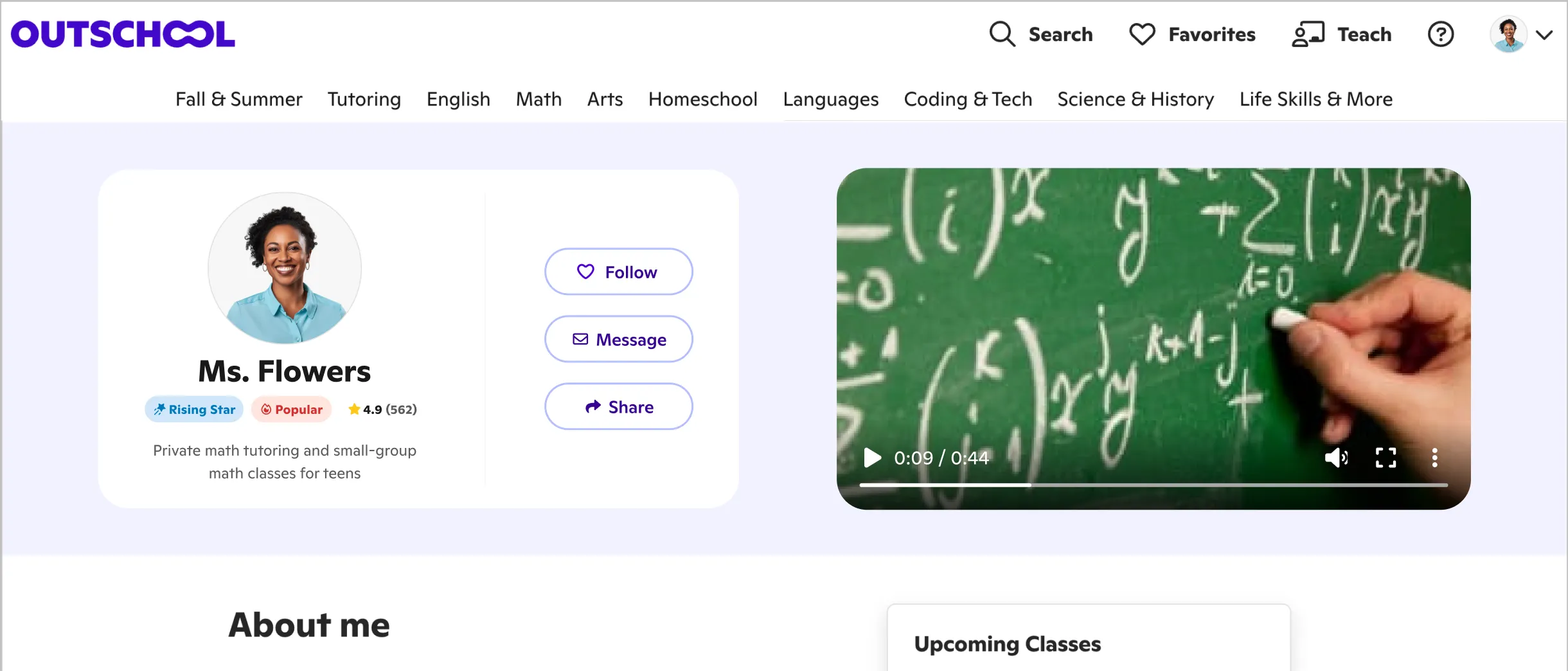
You can also earn a frame to display on your Outschool profile photo by completing at least one learning opportunity in each of the three ACE pillars. This frame lets families know you’re an ACE educator — a champion of learner agency, a community-builder, and someone with the expertise to coach learners effectively in your virtual classroom.
Set your own schedule, price, and curriculum, and reach motivated learners around the world.