Thank you! Your submission has been received!
Oops! Something went wrong while submitting the form.
Disclaimer: Outschool and its affiliates do not provide tax, legal or accounting advice. This material has been prepared for informational purposes only, and is not intended to provide, and should not be relied on for, tax, legal or accounting advice. You should consult your own tax, legal and accounting advisors to inquire about your own unique situation.
Taxes are, as they say, one of life’s only certainties, but they don’t have to be a source of dread. Even though some extra steps are required for folks without a simple one-and-done wages form to file (aka – business owners like you), it’s nothing you can’t handle. In this guide, we’ll help you get to know the ins and outs of filing taxes as an independent contractor, including:
We’ll go over the broad basics of filing taxes as a self-employed individual in the United States (where a large majority of our educators are based as of March 2022), and we encourage you to further explore your specific state, region, or country’s tax requirements and consult a tax professional to ensure you’ve got the details down before getting ready to file.
For educators based in Canada, the U.K., Australia, or New Zealand, you can find tax guidance in these resources:
One of the biggest differences between filing taxes as an employee of a business and as a self-employed independent contractor is being responsible for taking your own taxes out of your income (remember: educators on Outschool are independent contractors, not employees).
When you work as an employee, your employer will typically be responsible for deducting taxes from your paychecks before any money ends up in your pocket. In the U.S., you determine how much you’d like your employer to take out of your paycheck when you fill out Form W-4 (usually included in new-hire paperwork). Then, at the end of the year your employer provides you with Form W-2, which includes info on all the taxes that have been withheld from your paychecks.
As an independent contractor or business owner, you are responsible for taking those taxes out of your payments, and Outschool will not provide you with a W-2 form. Instead, you may automatically receive a 1099-K form from PayPal if you live in the U.S. and meet certain income requirements. For income earned in 2021, PayPal will automatically provide this form for anyone who has received more than $20,000 in payouts. For income earned in 2022 and beyond (meaning: beginning with the taxes you’ll file in 2023), this threshold will be lowered to $600 in payouts. Otherwise, you’ll need to request your tax reporting forms from PayPal directly. We’ve included more info on forms and reporting in this help center article. If you aren’t sure which forms you need to file your taxes, best practice is to consult a tax professional.
There’s no rule that says you need to immediately subtract what you owe in taxes from your Outschool payments, but here’s why it’s recommended:
But how do you know how much to set aside from each payment you receive from Outschool? We go over how to estimate your business expenses in this handbook post, but a good rule of thumb is about 20-30% of your earnings will go toward taxes (a tax professional will be able to give you the most accurate estimate based on your financial situation). In general, it’s better to withhold a little more than you think you’ll need, and then give yourself a “tax refund” down the road if you come in under budget! We created this downloadable template that helps you stay on track by automatically estimating taxes based on payments that you record, or you can incorporate this step into your existing bookkeeping routine.
Download budget template
To make managing your personal and business finances simpler, it can be incredibly helpful to open a business bank account. You can safely store your estimated tax money in your business account and transfer your “take-home pay” to a personal account, feeling confident you’ve got what you need for business expenses put away.
Another fun quirk about being an independent contractor is that you may need to pay taxes more than once a year. Remember how employees have taxes taken out of their paycheck right away so that the government gets their money, too? Well, Uncle Sam still wants you to pay the government in advance if you make over a certain amount as a freelancer or self-employed business owner. These are known as quarterly or estimated taxes.
If you expect to make over $1000 over the course of the year teaching on Outschool (or in conjunction with other self-employment income) and live in the United States, then you should be paying estimated state and federal taxes every 3 months. In a typical year, quarterly tax payments follow this schedule:
Pro tip: Set yourself up for success and add these dates to your calendar now! And remember: a tax professional is the best person to consult if you have lingering questions about when and how to pay quarterly taxes.
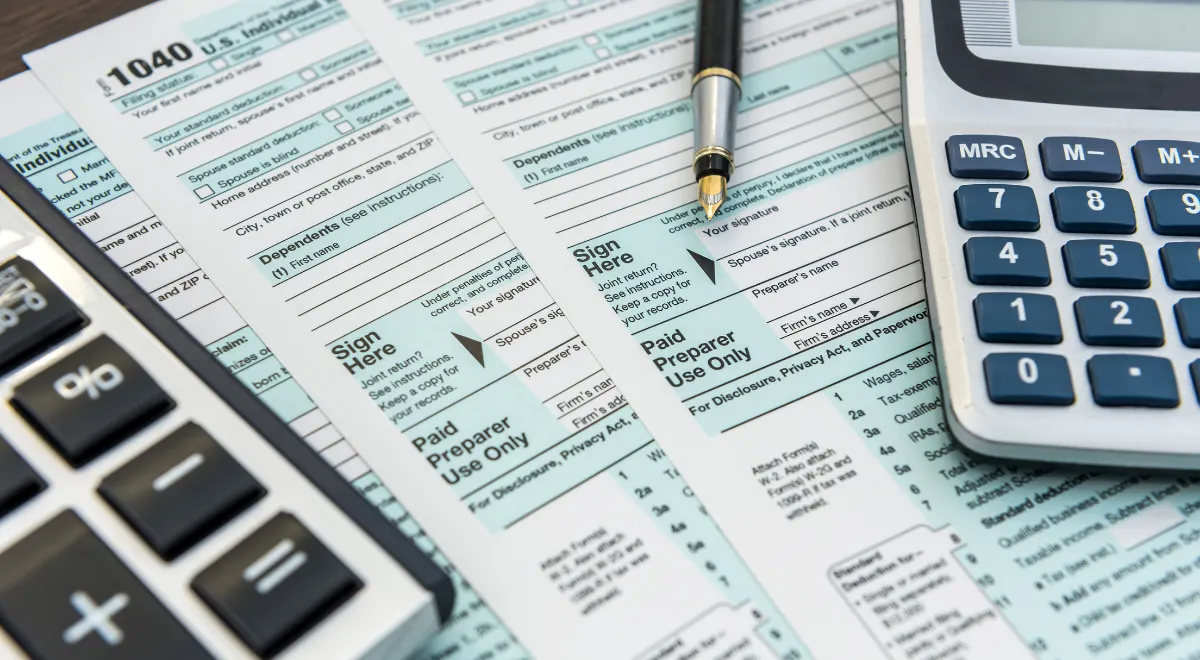
To figure out how much you need to pay in each installment, all you need to do is complete Form 1040-ES or consult a tax professional. You can even pay your estimated federal taxes online at IRS.gov using direct deposit or a credit/debit card. Don’t forget to look up your state’s guidelines for filing estimated taxes, as well. When you go to file your annual taxes, you’ll report what you’ve already paid in quarterly taxes.
If you’re setting tax money aside and tracking your income, quarterly taxes won’t require too much heavy lifting. Once you’ve gone through the process a few times, it will get easier to dive back in every couple of months. And keep in mind – there can be penalties for not paying estimated taxes, so if you’ll earn more than $1000 this year, make sure quarterly payments are on your to-do list or give your accountant a call.
Even if you pay estimated taxes quarterly, you’ll still need to file an annual tax return each year. The good news? Your annual return is where you have the opportunity to:
To report your income from Outschool, you’ll most likely use the 1099-K form you receive from PayPal. Once you have your annual income report in hand and begin creating your return, your tax professional or automated online tax filing service should ask you to identify which deductions you’d like to take as you go through the process of preparing your annual return. A few common deductions you can look out for as an educator on Outschool are:
There may be additional deductions you can take depending on your family, financial, and employment situation, so it’s always a good idea to speak with a tax advisor to make sure you’re covering all your bases.
We hope these tips help you feel empowered to become a self-employed tax pro! Outschool created this guide for informational purposes only, and we hope it gives you the confidence to take any questions you may still have about filing your taxes to a tax professional.
As your teaching business grows, practicing good tax habits will help you be able to stay focused on what matters most: delivering incredible classes to your learners. To become an even better business manager, check out these resources:
Set your own schedule, price, and curriculum, and reach motivated learners around the world.